Many of the greatest tennis players of all time gained enormous success on the doubles court alongside their singles careers.
Think Martina Navratilova. She amassed an astonishing 31 women’s doubles major titles alongside 18 Grand Slam singles triumphs. Or John McEnroe, who still is the only man to have held the No.1 singles and doubles rankings simultaneously. The Williams sisters also won 14 doubles majors and three Olympic gold medals together.
But these days, the number of players who frequent the pointy end of both draws is slim.
Enter Katerina Siniakova, the world No.1 women’s doubles player who, last month, romped to the Japan Open singles title in Osaka. The Czech star downed American Ashlyn Krueger 6-1 6-0 in a final that lasted just 64 minutes.
It was her sixth WTA singles title, earning her a bumper 37-place ranking rise back inside the top 50.
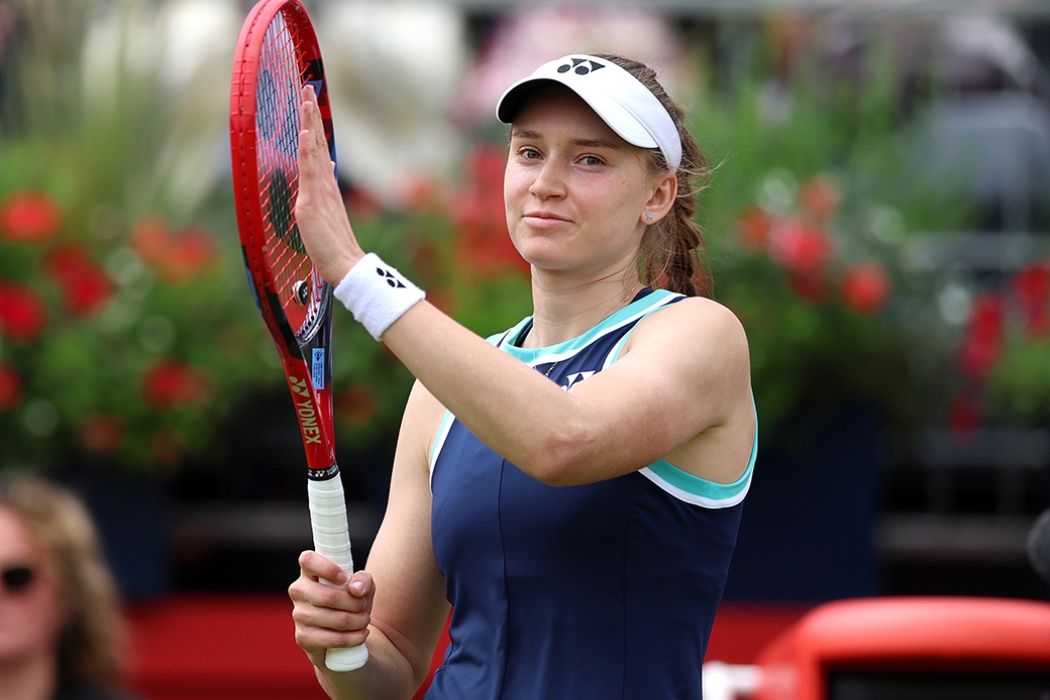
“I played a very good match," the 30-year-old said. "I don't remember when I played so well. Everything was going my way, so I really enjoyed it. I had a lot of confidence. I'm just really proud of how I played.”
Siniakova is one of a very small group of players across the WTA and ATP Tours who is consistently achieving big things in both formats.
She will aim to take that form into the WTA Finals next week, after her and American partner Taylor Townsend became the first pair to qualify for the prestigious year-end event back in August. They will face No.8 seeds Jasmine Paolini and Sara Errani in their first match on Monday (AEDT).
Not many would back against the duo to successfully cap off a remarkable year in which they won two majors and titles at Indian Wells, Miami and Madrid.
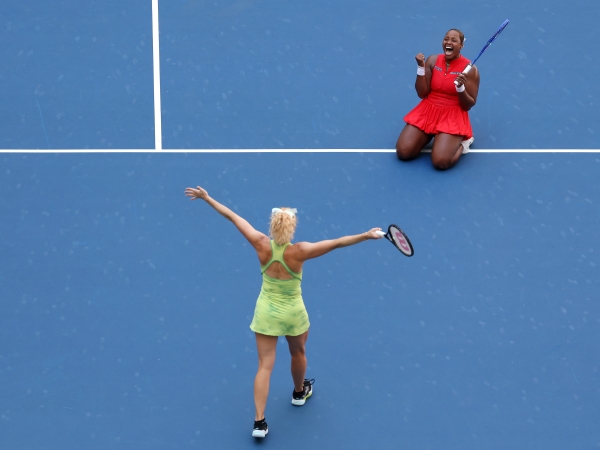
It would add further weight to Siniakova's status as one of the greatest doubles' players, after she completed a career Slam (victory at every major tournament) for the second time thanks to her US Open triumph with Townsend in September.
She's also on track to finish the year as the world's top doubles player for a record sixth time, which would see her overtake Navratilova for the most No.1 doubles year-end finishes in WTA history.
The Czech also owns two Olympic gold medals – in women’s doubles and mixed doubles – alongside 12 major women’s doubles titles.
Beyond the Osaka title, other singles highlights include her triumph over then-top seed Caroline Wozniacki to win the Bastad title in 2017 and upsetting Elena Rybakina to secure the crown in Portoroz four years ago. She also boasts a win over a world No.1, defeating Naomi Osaka at Roland Garros in 2019.
It’s quite the resume for a player who regularly fields questions about why she continues to play singles and doubles.
"I always love to play more, actually," Siniakova told ESPN prior to Wimbledon this year. "For me, doubles are fun. It's different and really nice to have a teammate.”
Sharing the court means sharing the pressure, which many players appreciate in an otherwise intensely solo sport where having an off day is not an option and individual mistakes are magnified.
“Doubles really helped me at the beginning of my career by giving me more match experience and getting used to the nerves,” the Czech told TennisMajors.com in 2024. “Sometimes you can also be more relaxed because you are not alone there.”
It’s a sentiment echoed by Jelena Ostapenko, one of the few players who has won a Grand Slam title in singles, women’s doubles and mixed doubles. She told The Sit-Down podcast in March that playing doubles helps her get more experience at match intensity, which is harder to replicate on the practice court.
“I think most of the time yes [doubles helps me in singles] because it’s still a match,” the Latvian said. “Doubles, of course, for me is less nerves than singles but it’s still a match – you still have some match elements to work on. So I think you can take it as good practice stuff for singles.
“In doubles I have no pressure,” she added, chuckling. “So I play really like in a good way relaxed. I wish I can bring this mentality to my singles.”
Where many players decide to focus on either singles or doubles, that distinction never felt natural to Siniakova.
“Everywhere, when I was young, I played singles and doubles,” she told TennisMajors.com. “I didn’t focus on it, I just wanted to be good in singles and doubles. It was really nice, but then when I turned pro, it got more separated, and yet I never thought I wanted to play just one and not the other.”
Townsend, the world No.2 in doubles and the other half of the world-beating partnership with Siniakova, is another who is making her mark in both formats.
She reached the fourth round in singles at the US Open this year despite being ranked No.96, before going all the way in doubles to complete her career Slam.
Being a regular in both draws has its stresses and typically leads to players having less downtime amid an already-gruelling tennis schedule. But the American crowd favourite wants to squeeze everything out of her time on the road.
“Doubles gives me a different perspective… and it feeds me in a different way than singles does,” the American told USOpen.org. “But ultimately, as a competitor, I just love being out there and competing.”