In what is already one of the strongest women’s tennis eras in decades, the Australian Open field for 2027 is shaping as even deeper and more competitive.
And that’s because the game’s two new major champions arrive as bona fide title threats.
Within weeks of one another, Mirra Andreeva and Linda Noskova claimed their first Grand Slam trophies at Roland Garros and Wimbledon respectively. Last month, in the same week, they qualified for the season-ending WTA Finals, where both will debut at the prestigious eight-player event next week at Indian Wells.
"Every match will have to require like 150 per cent of your focus, of your mental side, of your physical side as well … [Because] here, first round 'Bam!' You can play against Aryna [Sabalenka] or Elena [Rybakina],” Andreeva told wtatennis.com.
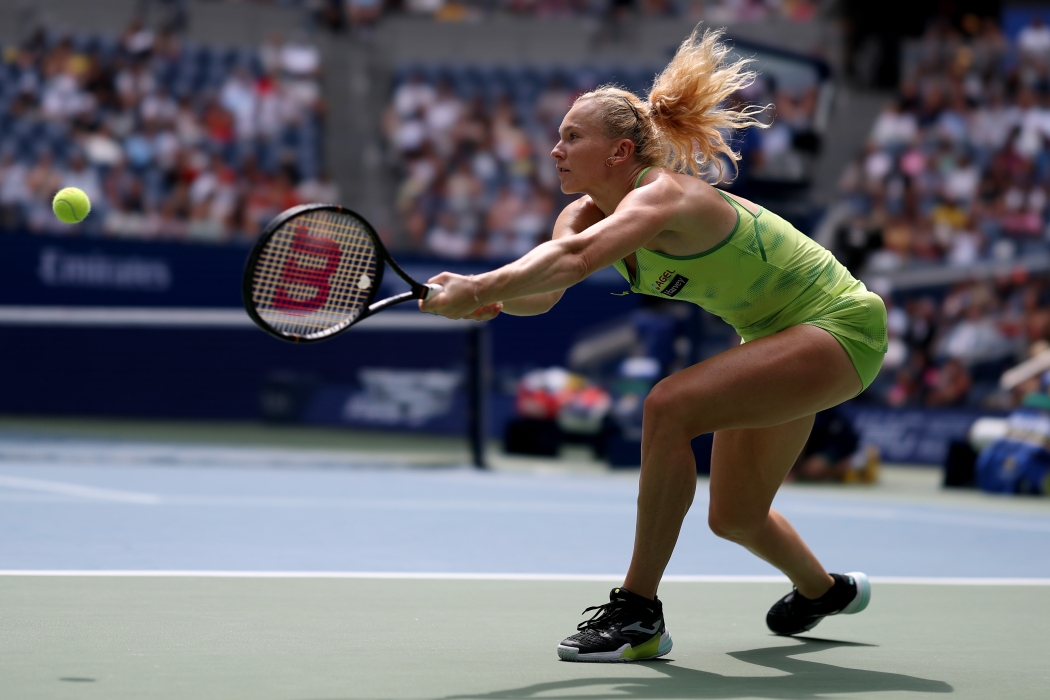
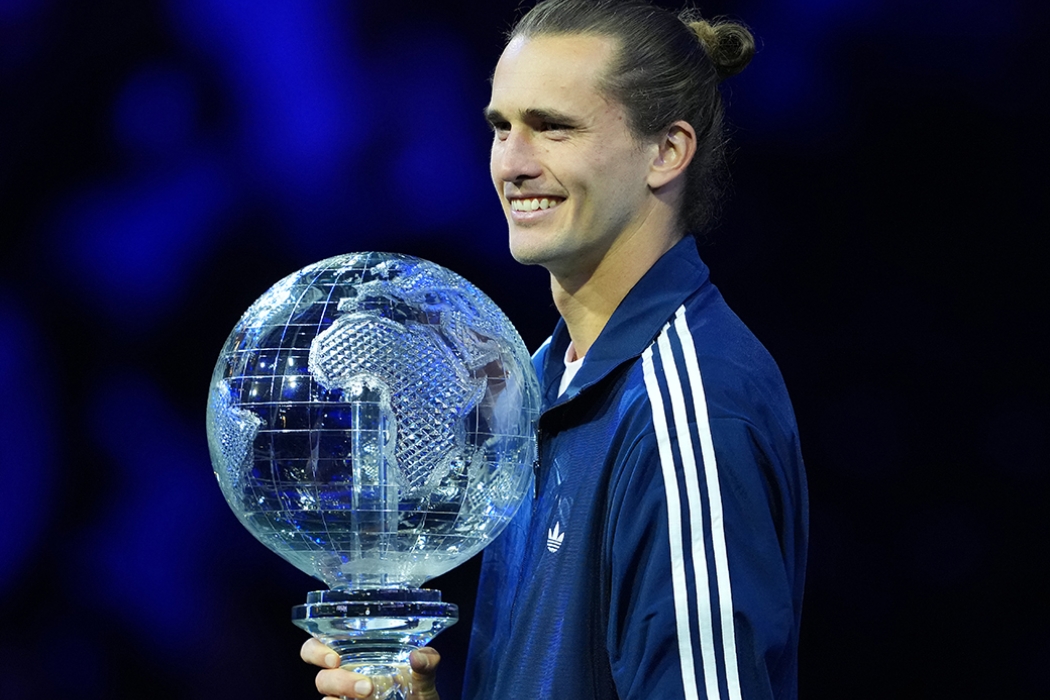
“Of course, that's not going to be easy, but I personally worked for that the whole year, so I'm just excited to see what it's going to feel like."
Andreeva and Noskova were prodigious teenagers – at 19, Andreeva still is – who captured plenty of attention from keen tennis observers. Yet they may have slipped slightly under the radar of casual Australian fans who follow the AO, a tournament recently dominated by Sabalenka and Rybakina.
The duo performed solidly, if not spectacularly, at AO 2026. Andreeva was seeded eighth and reached the fourth round, while Noskova, the 13th seed, exited in round three.
Twelve months on, both will arrive as reigning major champions with a very real chance to claim more Grand Slam silverware at Melbourne Park. There’s even more strength to that argument given Australia is the place both first flourished on the international stage.
Path to the top
Cast your minds back to 2023. It was in January that year Noskova, then 18, beat Victoria Azarenka and Ons Jabeur to reach her first WTA final at the Adelaide International. A few weeks later, a 15-year-old Andreeva reached first Grand Slam junior final at the Australian Open.
They finished that season inside the top 50, having started it outside the top 100. Andreeva was actually ranked 312th to begin 2023, transitioning brilliantly from the juniors to the pro ranks with four top-20 wins.
Their rises foreshadowed what would happen at AO 2024, where both created shockwaves.
In the second round, Andreeva thrashed sixth seed Jabeur 6-0 6-2 at Rod Laver Arena – becoming the youngest player in the Open era to dish out a bagel to a top-10 seed at a Grand Slam event – on her way to the second week. Just days later, Noskova stunned world No.1 Iga Swiatek on the same court and eventually progressed to her first Grand Slam quarterfinal.
A few months later, Andreeva went one better at Roland Garros, reaching her first major semifinal with an upset of No.2 seed Sabalenka, while Noskova in August broke through for her first WTA title. Both finished 2024 inside the top 30.
In 2025, Andreeva accelerated, claiming back-to-back WTA 1000 titles in Dubai and Indian Wells – beating Swiatek and Sabalenka, the world’s top two, back-to-back at the latter – and rising to the brink of the top five. By the end of that season, it was Noskova who was firing, with finals at the China Open and in Tokyo vaulting her near the top 10.
Their parallel journeys intersected at the Brisbane International in 2026, where Andreeva and Noskova clashed in the second round. Andreeva ultimately prevailed 7-5 in the third.
Coming to fruition
As 2026 unfolded, their various strengths shone through.
Andreeva, lauded for her tactical nous, shot variety and point construction, thrived on clay. She was the game’s best performer on the surface this year, winning 22 of her 25 claycourt matches. Her title in Linz and final in Madrid were followed by the biggest victory of her career in Paris, where she dropped only one set to become the youngest Roland Garros champion since Monica Seles in 1992.
“These feelings are something extra special,” Andreeva revealed. “I feel like this thing is a little bit addicting, and I really want to do my best to experience all of this for the second time.”
As the tour shifted to grass, Noskova came alive. The Czech used her venomous serve and flat, powerful groundstrokes to scoop the title in Berlin, then travelled to the All England Club and won a compelling final against fellow Czech Karolina Muchova.
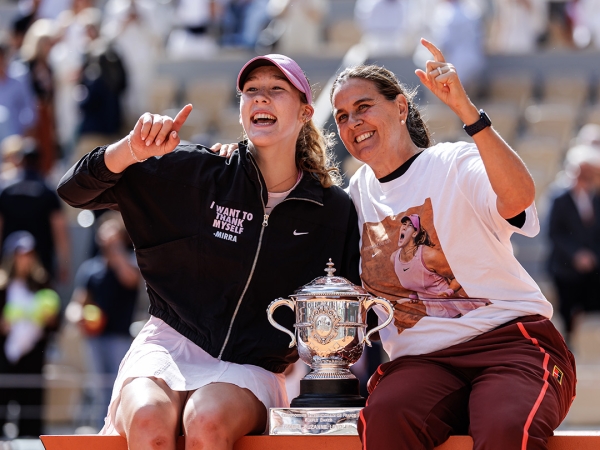
Impressively, there’s been no sharp letdown for either since they hoisted the biggest trophies of their blossoming careers.
Noskova advanced to the US Open quarters, almost unseating Sabalenka in one of the best matches of the season. In China, Andreeva reached the Beijing final, peaking at world No.3 after her fourth appearance in a WTA 1000 final.
“I feel like especially after these matches when you're so close to getting to another semifinal of a Grand Slam in one year or beating the best player in the world, it kind of reminds you of where you are standing or what position you're in,” Noskova reflected as she departed New York.
“I have to take some positives from this whole tournament. It was not easy coming here from such a success I had on grass court. I will just try to keep going. I feel great on court, which is always my main point, and ranking doesn't really matter.
“But it gets me to some cool places."
Reshaping the landscape
Andreeva and Noskova’s emergence as Grand Slam champions bucked the trend of stability and dominance established by a core group headlining women’s tennis.
The four previous Slams had been won by Rybakina, Sabalenka, Swiatek and Coco Gauff, all multiple major champions. That quartet had claimed 13 of the previous 16 Slam trophies dating back to 2022. Rybakina and Sabalenka restored some order when they met in the 2026 US Open final.
Yet two new, and younger, champions are now in the mix.
It sets the stage beautifully for AO 2027, just over two months away and where a deepening talent pool will converge on Melbourne Park to fight for bragging rights.