The original version of this article was published on Front Row with the AO, our new Substack which you can check out here.
Hailing from a nation where clay is the predominant tennis court surface, Czech players have enjoyed an extraordinary level of success on grass and at Wimbledon.
This year alone, Karolina Muchova and Linda Noskova have set up an all-Czech Wimbledon women’s final, having both won WTA 500 grasscourt titles in the build-up.
“It's a tradition at this point, I would guess, but I would say we are all kind of brought up in the same way in Czechia, in our game styles, in our tennis,” said Noskova, who like Muchova could become the third Czech champion at the tournament in the past four years.
“We are very creative, I would say, so grass allows us to kind of use any side of tennis, if it's serve and volley back in the old days, if it's slices and volleys in this new era.
“I would say that we have all these sides that we can use, that grass allows us, and it's showing.”
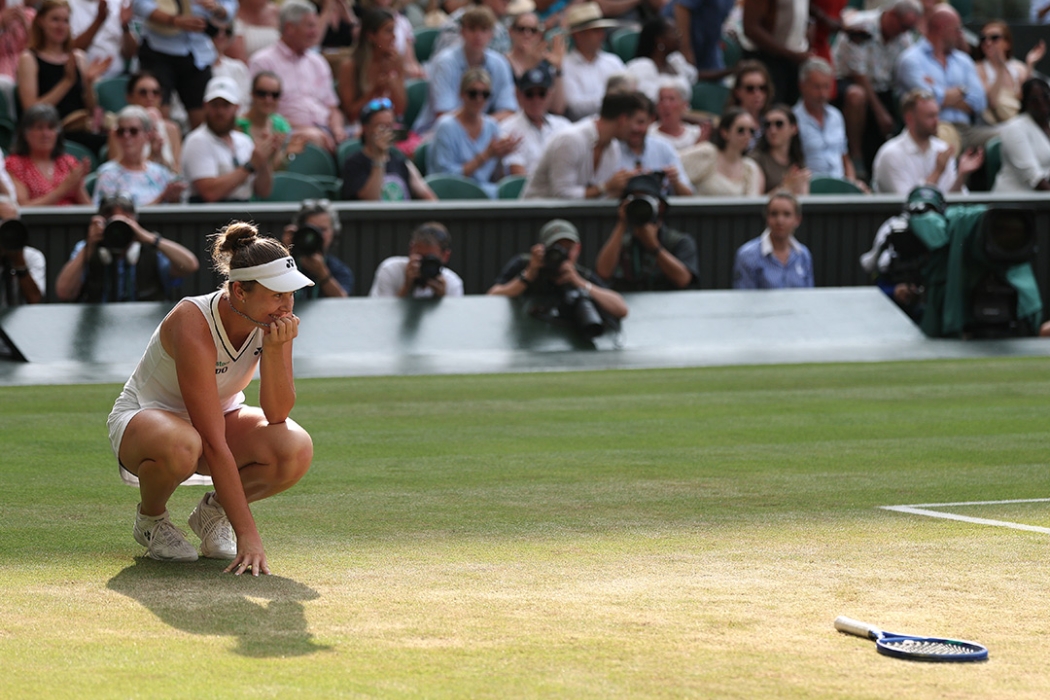

Muchova beat countrywoman and 2024 Wimbledon champion Barbora Krejcikova in the fourth round, while Czech Marketa Vondrousova lifted the trophy in 2023, triumphs which came after Petra Kvitova’s two titles in 2011 and 2014.
Over the years several other Czechs – Karolina Pliskova, Barbora Strycova, Lucie Safarova and Marie Bouzkova – have all flourished at the All England Club.
Another Czech champion, 1998 winner Jana Novotna, mentored Krejcikova, and the greatest Wimbledon singles champion of all was Czech-born American Martina Navratilova.
In the men’s singles this year, Czech Jiri Lehecka also reached the second week. He was once coached by retired Czech star Tomas Berdych, himself a Wimbledon finalist in 2010.

“Probably we don’t have a single court in whole Czech Republic of the grass, and I played the final,” Berdych commented in an interview on The Sit-Down podcast.
So what’s behind the consistent grasscourt success of players from this small nation of just over 10 million? And what explains the creativity Noskova referenced?
Berdych believes the weather in Czechia, and the specific playing conditions this creates, is at the core. Play on outdoor claycourts is usually only possible from April to October, with wintry temperatures and snow in the other months forcing players indoors.
PODCAST: Listen to Tomas Berdych on The Sit-Down
This drastic switch in conditions fosters well-rounded players, and often, fast indoor conditions prepare players well for quick, slick lawns.
“I mean if we go a little bit more specific, yes, that’s definitely one of the reasons that you wouldn’t call any of the Czech players … really only a hardcourt player or if he’s a claycourt player,” he said.
“It was the same case with me and I even remember, now it’s many years ago (laughter), in the winter there was not even a proper ‘indoors’ or indoor courts. It used to be like the, let’s say indoors in the schools [on floorboards]. You can imagine how that fast was. Normally they play basketball on it, and then we went to play tennis.
“So yes, I think it develops the player slightly different, because of course the technique for that, I mean, you have to be able to hit the ball back, right, and if it’s that fast, your technique needs to be really well.”
Berdych says indoor facilities have developed to a much better, tennis-specific level in Czechia. Yet the system continues to promote this well-roundedness in its players.
“The transition is very important and you can see, they have good results on the clay in the summer, then they can play well even on the grass,” he said.
“So I think this is definitely the reason… we can point to a reason why I think Czechs does that well.”