Linda Noskova said resetting after a “disaster” at Roland Garros has been the tonic for her run to a first Grand Slam final.
Noskova achieved this career breakthrough thanks to a 6-4 6-4 win on Thursday over Marta Kostyuk, who unlike the Czech had a brilliant Roland Garros and backed that up with a second major semifinal just weeks later at Wimbledon.
However, Noskova probably would have thrived at Wimbledon even if she hadn’t lost to Maria Sakkari in round one in Paris.
The 21-year-old has developed into one of the game’s best grasscourters, winning the WTA 500 title in Berlin and appearing in the second week at the All England Club for the second straight year.
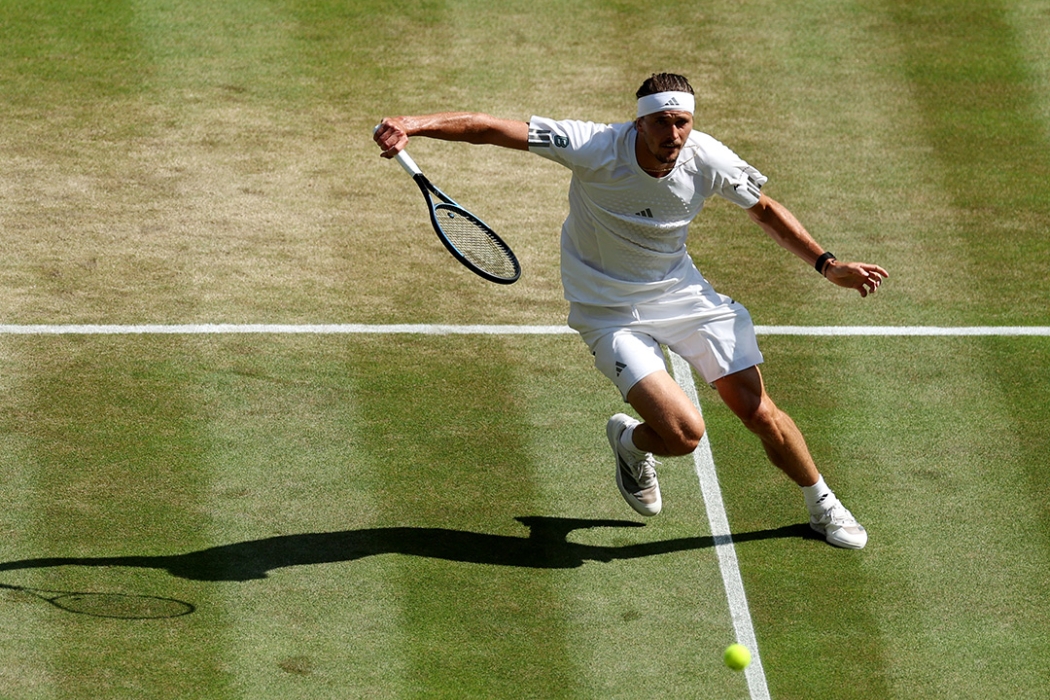
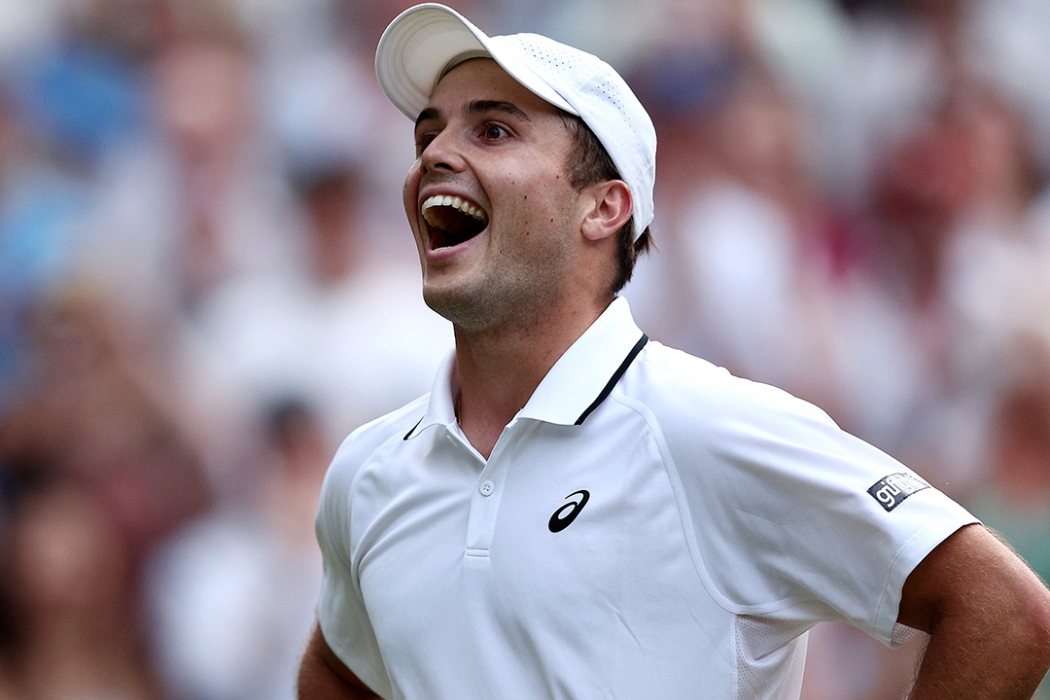
In 2025, she came close to upsetting eventual finalist Amanda Anisimova in the fourth round. This year, she’s taken it further, beating Eastbourne winner Madison Keys, Elise Mertens and Kostyuk in her past three matches, all in straight sets, to arrive in the biggest match of her career.
There, she’ll face countrywoman Karolina Muchova, ensuring a third Czech women’s champion in the past four years at Wimbledon.
AO on SUBSTACK: Why Czech players thrive on grass
READ MORE: The story of Linda Noskova's rise
“I think I'm playing great tennis. It's always when I feel good and relaxed off court is probably when it shows the most on court,” Noskova said.
“At this stage, everybody has the level; it's just the small percent that makes the biggest difference. I feel like I'm using my game, my game style on grass, a lot, and it's paying off.
“Today, walking on the Centre Court, with Karolina, actually, we had a warm-up there this morning, and it was my first-ever time being there, not even as a spectator, so it was a nice moment.
“But I would say that I have not even realised [the magnitude of this] still 'cause I was focusing on the match. Now I'm focusing on the next match.
“After the whole tournament finishes, I guess I will have to look at the photos to believe all this.”
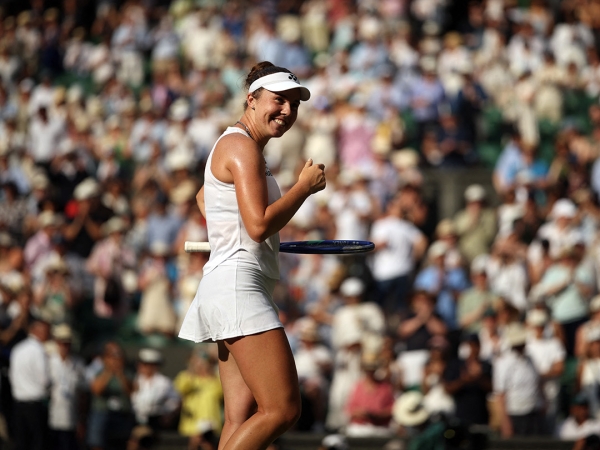
Noskova enters the final having won the most grasscourt matches of any woman since the beginning of 2025. She’s an impressive 19-4 on the surface in that time.
She could also become the first player since a 17-year-old Maria Sharapova, 22 years ago, to win Wimbledon after winning a tour-level lead-up title on grass. (Muchova could achieve this too, after winning the Bad Homburg title the week before Wimbledon).
Noskova’s progress, and success, is not restricted to grass.
A semifinalist at Indian Wells four months ago and 28-11 in 2026, Muchova actually enjoyed her Grand Slam breakthrough as a teenager at Australian Open 2024. There she beat world No.1 Iga Swiatek at Rod Laver Arena and rode that momentum to a first major quarterfinal.
Her eventual rise to the top 10 last month is built around one of the game’s most formidable serves, a valuable point of difference in a women’s game proliferated by exceptional returners.
“I have been working on my serve for a couple of years now. It has been a great help for me lately,” Noskova revealed. “Obviously on grass court or hard courts, you can use your serve as the most powerful tool.
“I always try to just focus on myself when I have my service game. Whatever happens on the return games happens. It's not really in my power all the time.
“But my serve is what I focus the most on.”
This was the difference against Kostyuk, who generated only one break point in their semifinal. She converted it, but there was only one other game in which she extended scores to deuce as Noskova served.
Otherwise, Noskova clicked through service games at an efficient rate, helping explain the one-hour, 19-minute match time – 76 minutes shorter than Muchova’s epic semifinal win over Coco Gauff earlier on Centre Court.
“It always comes out of nowhere, I guess,” said Noskova, after her best Slam run in a year. “You can't really plan your success or good times. If I could do it, I would definitely be planning it on every Grand Slam.
“But after Roland Garros I was very, let's say, mentally tired 'cause the clay season was long for me. I've had a lot of good matches, a lot of great tournaments, but French Open was a disaster for me.
“I kind of had to restart, reset, focus on just enjoying the time on court.
“This is where it got me.”