With question marks hovering over the biggest stars in the game, the 2026 Wimbledon Championships feel unusually open and extraordinarily hard to predict.
On the men's side, how will defending champion Jannik Sinner rebound after Roland Garros? How will 39-year-old Novak Djokovic fare at a tournament he has won seven times? And which other players might capitalise on the absence of two-time Wimbledon winner Carlos Alcaraz?
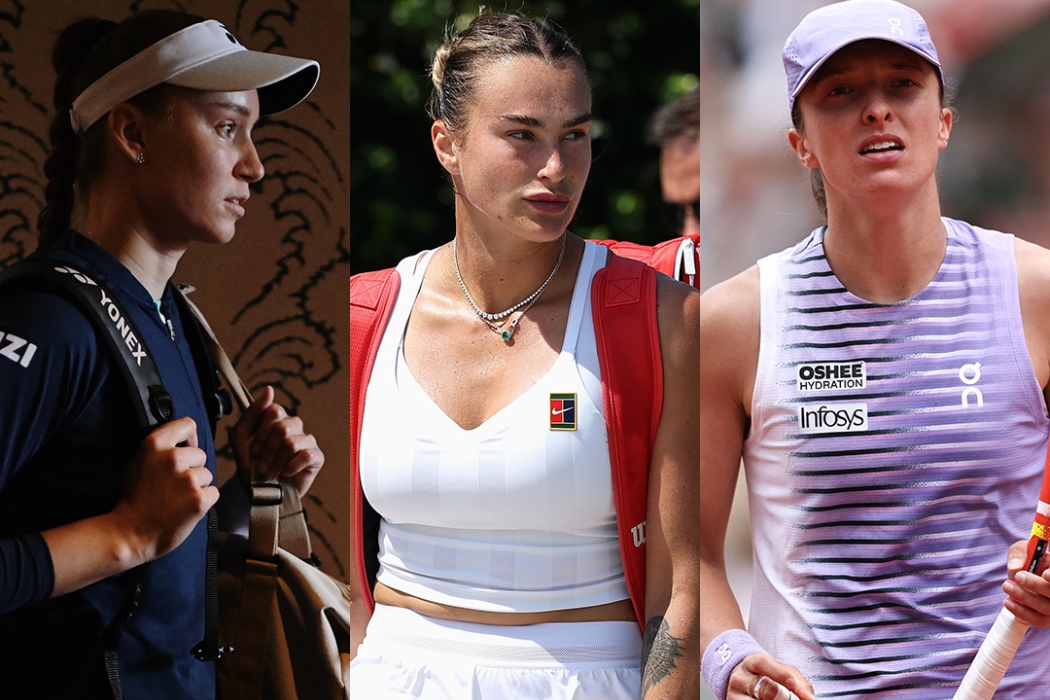
On the women's side, the world's top three women – Aryna Sabalenka, Elena Rybakina and Iga Swiatek – enter with less-than-ideal form on grass and all with something to prove. The past nine Wimbledons have been won by nine different women, making the 2026 champion tougher to call. And how will 44-year-old superstar Serena Williams perform, four years after her most recent singles outing?
We put all these questions to our panel in the latest edition of our Expert Picks series.
Our experts
Wally Masur: Former world No.15 who served as Australian Davis Cup captain
Nicole Pratt: Former world No.35 and Australian women’s coach lead
Simon Rea: Senior data analyst at Tennis Australia and former coach of Sam Stosur and Nick Kyrgios
Jaimee Fourlis: AO 2022 mixed doubles finalist who qualified for Wimbledon the same year.
How will Serena fare in her singles comeback, almost four years after last playing?
MASUR: “Firstly, it is pretty incredible how I mean, even in the World Cup, we've got Messi and Ronaldo nudging 40, playing in their fifth and sixth World Cups. Athletes these days seem to be able to sustain this high level far longer than in the past. The big question mark over Serena, of course, is her four-year hiatus away from singles. We know she's a great player, a great athlete, a really damaging serve. Does she come in and play really loose and just do some damage with no expectation? [However] as great as players are, they don't operate in a vacuum. They build consistency and confidence and start to play at a subconscious level because they win so much… Is Serena missing all of that now, and does she overthink it? Do things just not come spontaneously because she doesn't have that sort of volume of work behind her? So I'm really curious to see how she goes. But she's an extraordinary player and an extraordinary athlete. So I think she'll give a pretty good account of herself.”
PRATT: “I have seen her at Queen’s and on the practice courts at Wimbledon and her quality of ball-striking is still top 10. The only question mark will be movement, and emotionally it’s different. She is here playing for her children; will that create more pressure or will we see a free Serena enjoying every moment? One thing is for sure – she would not be back unless she feels she can win matches. At age 44, and four years out of the game, it’s hard to see her contending for the title.”
REA: “I think anything's possible. Never discount a champion. I wouldn't at all be surprised if she won multiple matches. Put it this way – I think it's going to be an intimidating, imposing task for whoever draws Serena in round one. And I think we're all intrigued to see how Serena handles that moment, how ready she is for competition. I think if she manages to get through a match or two, she's only going to be better for the run, so to speak, and even more dangerous towards the middle weekend.”
FOURLIS: “I think in terms of her singles prep, I was personally quite surprised because she hasn't actually played a singles tournament since US Open [2022] and only coming into playing Wimby with two doubles tournaments under her belt. So it'll be quite interesting to see how she goes, but I feel like she would know herself well, so she would have to have prepped like she's playing singles for this tournament. So, it's going to be very interesting. I think all eyes are going to be on her. And I think that's what she loves also. So, I don't think there'll be any pressure from her side. It's kind of just now for her to show up and actually perform, which is what she does the best.”
The past nine Wimbledons have been won by nine different women. What makes it such an open tournament, and will that continue in 2026?
MASUR: “We have a better lead-in now, in terms of how many events the players get to play. The lesser players are playing virtually every week, whereas the high-profile players are sort of picking and choosing. And it's not really working out for them. The Sabalankas and the Rybakinas, you'd think they'd want a bit more grasscourt tennis under their belt. It is very hard to find a full form line in both the men and the women, but particularly the women. It's hard to go past Sabalenka and Rybakina when they're firing on grass, but their best tennis doesn't seem to be quite there at the moment. Can they work their way through the first week and find their best tennis in the second week? That’s something I feel Pete Sampras did unbelievably well on the grass at Wimbledon, and he had that great quote: ‘You can't win Wimbledon in the first week, but you sure can lose it’.”
PRATT: “I think we may see a surprise Wimbledon champion. It’s there for the taking, whoever believes they deserve to lift the trophy. Why it’s so wide open is because there are so few tournaments before Wimbledon and being so close to the French Open players are opting in some cases to play one lead-up event. In this amount of time it’s tough to be clear and confident with the adaptation you need to perform well on grass. Grass for me is a surface that favours players that move well, have variety and those that can keep a level head.”
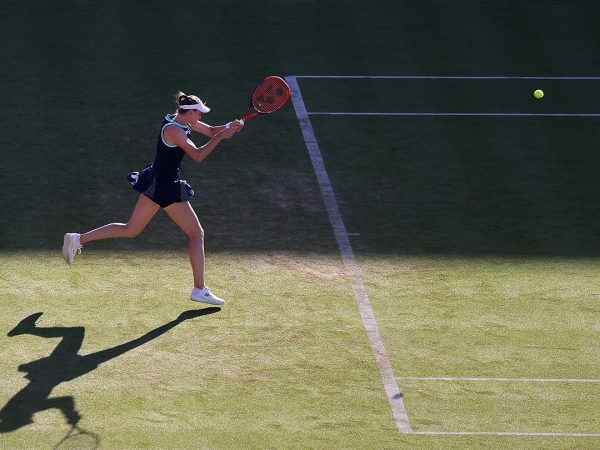
REA: “I think what happens at Wimbledon on the grass is the margins are so fine. Everyone gets a little more value out of their service game, the surface being that little bit faster… so I think the matches are often decided by such fine margins. It brings an evenness, I think, to the playing group. And I think there's every chance on the woman's side that it does continue. I'm looking at the form of someone like Karolina Muchova, Jess Pegula on the grass coming in, and I like the way they're shaping up. It hasn't been the year so far that Anisimova would have liked to have had, but gee, at her best, I wouldn't like to be facing her on a grass court. So every chance, I think, that that pattern does continue to hold.”
FOURLIS: “Probably. There's so much unpredictability about playing on grass. And I think there's so much variability in terms of how girls play now. We have a range of different girls that can play on different surfaces but also have the ability to change and adapt. And that's probably why we've had multiple champions at Wimbledon over the last couple years. Once it comes to grass, everything goes. Because it's so fast, if you have the ability to come to the net, that's very important. Since the claycourt season finished, a lot of the top players have lost quite early. You try and take a lot of confidence from those lead-up tournaments, and sometimes they work for you, but sometimes you can go deep in those and be quite fried for when you rock up to Wimbledon. It works for some players, sometimes it doesn't work. So it's going to be really interesting to see how that plays out.”
Will Jannik Sinner bounce back, or will we see a similarly open Wimbledon on the men’s side like at Roland Garros?
MASUR: “Europe is experiencing a heat wave at the moment. It wasn't really his opponent that caused his undoing at the French – it was the conditions. And we saw that too at the Australian Open with Sinner. Obviously the grass absorbs heat, it doesn't really throw it back at you, it's not as damaging, and the points aren't as long. I feel like he's going to bounce back personally. He's such a class player, he plays so well within himself; like as good as he is, it's safe. With his seeding protection in the draw, I think he'll find a way. He's a pretty determined sort of a character. He's very driven, he has a lot of pride. I think he'll be stung into action after what happened to him at the French.”
PRATT: “No question Jannik Sinner will bounce back. He left the French Open and straight away sourced how to better manage extreme heat in competition. With this taken care of he certainly has to be one of the favourites.”
REA: "I'm absolutely expecting so, and we'll get to my tournament picks in a second. But for me, there's every chance in the world that he finds himself a part of the final in two weeks from today. I'm expecting him to be there at the business end for sure.”
FOURLIS: “I did check the weather before we got on the call. [Until] Sunday, it's pretty much a heat wave, so 30-plus. And then from like the Monday, it drops down into the mid-20s. It'll be very interesting to see what he has to say… [about going] into the hospital, what were those tests like, and is it more of a mental thing or is it a physical thing? When that starts, that's going to be the topic of discussion, right? It's not going to be [known] until he actually steps out of the court and performs. In terms of cramping, it can also be a psychological thing when you do get tense and I've had that before, where you do start to cramp up because of the occasion, and I'm not sure if that did happen to him at the French Open. I think there might be a bit of scar tissue because from the Australian Open that played out to the French Open – does it continue to carry on, or is it something that he can essentially wipe away and start fresh?”
Is this Novak Djokovic’s opportunity to secure his all-time record 25th major title at a tournament where he’s been so successful?
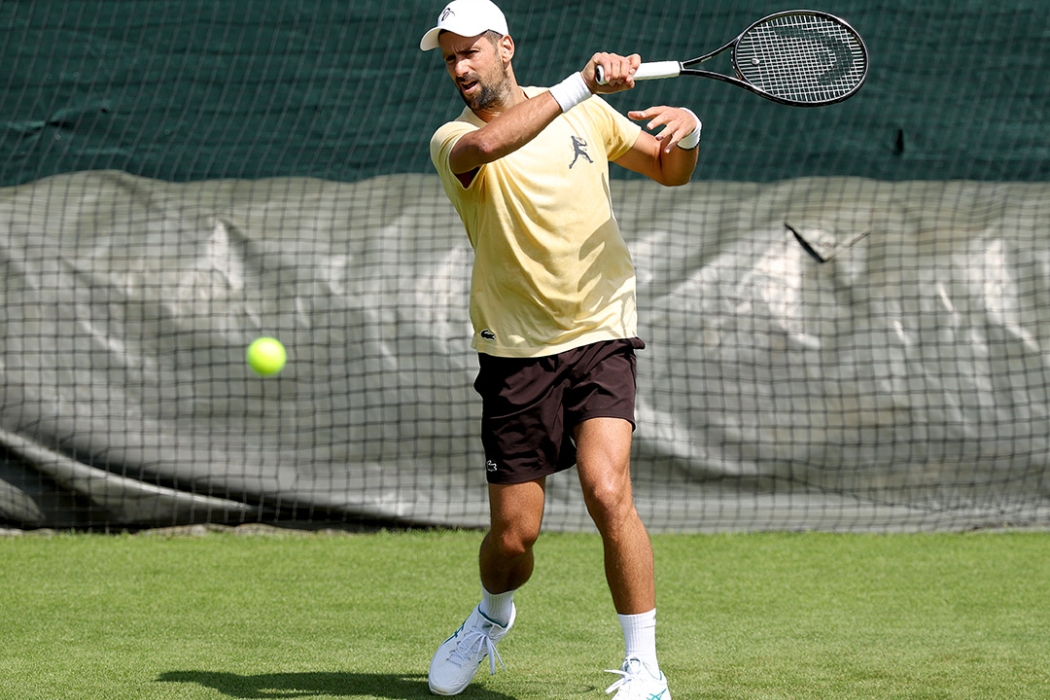
MASUR: “Novak is almost undeniable on the grass. And even when he does lose, it takes real quality to beat him. But he's another year down the track, isn't he? He's playing less and less matches to get to this point of the year. And I don't think you can discount how important those matches are to be really match tough, not just physically but emotionally, so you don't second guess yourself in the big moments. I just feel like time is just slipping away. Will Novak be dangerous? Yes. He'll give a great account of himself. Do I see him winning it? Probably not. But he's got a mind like a steel trap. If he sets his mind to it, you just never know.”
PRATT: “You can never count Novak out. Much like Serena it will depend on his body and his ability to play back-to-back matches at an incredibly high level. He still has an aura around him that the other guys feel and that’s worth a point a game to Novak. He has an incredible ability to control tempo; the way the match is played with the time in between points is generally on his terms.”
REA: “I think the grass courts of Wimbledon provide him at this stage of his career with his best opportunity. It's not going to take quite the same toll on the body. We know about his record at Wimbledon. We know he's still playing at an incredibly high level. I think it's probably fair to say he'll need a little bit of good fortune somewhere along the way – I don't know that he's got a five-set quarterfinal, five-set semifinal [in him]... I think he would need to get to the final in peak physical shape. Whether he could beat Sinner, not sure. So he might then need another dose of luck in terms of the draw opening up a little bit more for him. But do I expect him to be there certainly in the second week of the event? Absolutely.”
FOURLIS: “I feel like this is his opportunity to step up. It probably will come down to his physicality and how much that will affect him on court. We know mentally he's an absolute beast and nothing stands in his way. But at the moment, is he able to play five sets for two weeks to be able to break through and win that Grand Slam? I'm sure he has looked at both sides of [the equation]; this is a good opportunity, but at the same time in his mind, he's probably thinking, I just need to focus on every match. I need to lock in and do what I need to do. And it's a get-in, get-out situation for him – try and win as quickly and easily as possible to be able to rest the body and then bounce back for the next match.”
This has traditionally been such a successful Slam for Australians. Which Aussie will shine brightest in 2026?
MASUR: “Demon's still the obvious one. As Australians we're more familiar with the grass courts than the majority of the field. Ajla Tomljanovic played extremely well [in s-Hertogenbosch], making a semi. Rinky gave a great account of himself at Queen's. And even a guy like Dane Sweeney, he's a good little player, he could give a great account of himself on the grass, but if in terms of someone pushing deep into the second week, I just got to stick with Demon.”
PRATT: “Alex de Minaur is coming into Wimbledon with grasscourt wins. If he stays to his seeding – which I think he will do – then we will have an Aussie in the quarterfinals at least. His best result has been a quarterfinal and he is hungry to go further, as grass is one of his favourite surfaces.”
REA: “It was fantastic to see Dane Sweeny qualify at Roehampton. Just recently he teamed up with Peter Luczak on a trial coaching basis. What ‘Looch’ has brought to the team this week at Wimbledon, it's so noticeable in terms of feeling settled in how he wants to approach his opponents, clarity on tactics. Dane's dad's also here with him, so they were over the moon yesterday. And I think he's just such a phenomenal athlete. I think he's capable of springing a surprise or two on the grass. Obviously, Demon's going to be at the top of my picks. On the women's side, I think with a little bit of luck in the draw, Talia Gibson can find herself winning multiple matches here at SW19 the next week or so. If she runs hot at the right time, who knows what's possible there? And I'm really hoping that Kim Burrell – who's had a really solid 2026 so far – can get through a match or maybe even two, find her way into the third round of a Grand Slam.”
FOURLIS: “You grow up Aussie, you learn to play on grass, you learn to love grass, and it's such a staple in our way of life. It's something we always look forward to. I know, especially myself as a player, grasscourt season is one of the best seasons. Playing in all-white at Wimby, that's what you grew up dreaming about and to have that actually a reality, that's pretty exciting. But I'm very excited to see Talia [Gibson]. She had some really big wins in Nottingham. But also Ajla [Tomljanovic]. I think grass is one of her best surfaces and she's done really well there in the past … She's kind of my one to watch. She's also been kind of a little bit under the radar as well.”
Who will win the men’s and women’s singles titles?
MASUR: “I think Sinner's going to be the one to bounce back and take it. And I'll be dead boring [on the women’s side] – if Rybakina and Sabalenka catch fire, they've got the biggest games and on grass, the ability to finish a point in one shot is huge. [If they meet in the final] I'll say Rybakina. Unlike Sabalenka, she has won at Wimbledon before. I guess maybe that stands for something.”
PRATT: “The men’s winner will be Sinner. The women’s winner will be an American – there are a bunch of names in the mix like Pegula, Keys and Anisimova, and a dark horse in Jovic.”
REA: “I'm going to go with Sinner in the men's event and I'm going to toss up between Elena Rybakina or Karolina Muchova in the women's. I think Rybakina is more likely, but Muchova is my dark horse.”
FOURLIS: “I think on the men's side, I'm going to go Novak. And on the women's, I've got two. First would be Aryna – I feel like there's a lot of redemption there for her to try and get her season a little bit more steady because it probably has been a little bit up and down. This is probably her moment, but also I'm gonna go for Pegula.”