Throughout a 2026 Roland Garros where stark momentum swings, stunning upsets and unlikely names dominated conversation, Mirra Andreeva remained steady.
As sweltering conditions characterised week one, and gusty winds swirled through week two, the talented teen adjusted, adapted and navigated her path all the way to the title.
Attaining heights many had long predicted she would reach, Andreeva dominated qualifier Maja Chwalinska in Saturday’s final in Paris, triumphing 6-3 6-2 in one hour, 22 minutes.
She becomes the youngest women’s winner at Roland Garros since Monica Seles in 1992, and repositions herself from a talented top-10 member to one of the sport’s truly elite.
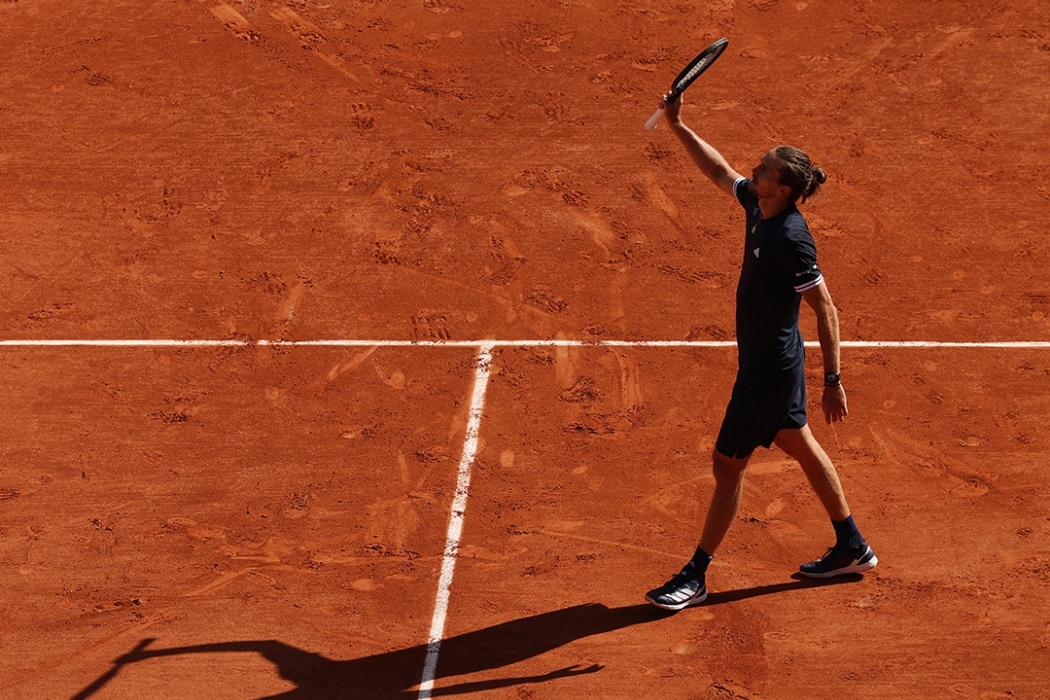
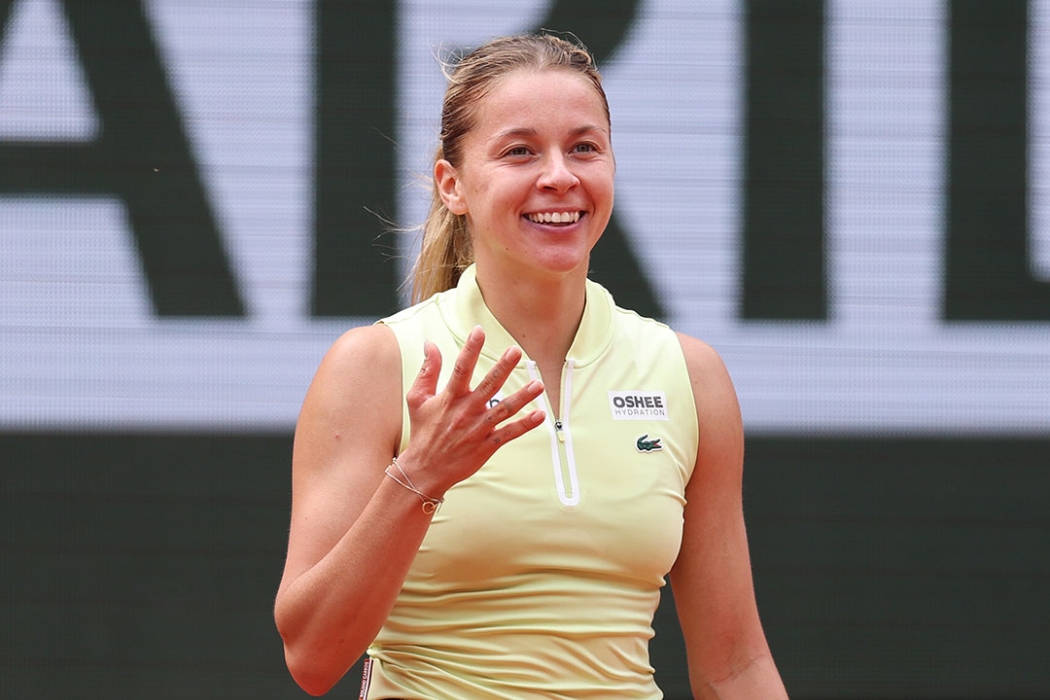
“I still cannot believe that I'm doing a press conference with a Grand Slam trophy by my side,” said Andreeva, who assumes No.1 position in the WTA Race to the Finals.
“It's been one of my biggest dreams in my life, and I'm just super happy that I was able to give my best and win the match and win this tournament.
“I've done a lot of visualisations before. Not just this tournament, but I've had dreams, I've had a lot of thoughts on how it's going to happen, if it's going to happen, when it's going to happen, where.
“I would say that the feeling in real life is so much better… looking at this trophy and realising that this is actually true, and I can call myself a Grand Slam champion.”
Such a mature, assured performance from the 19-year-old was no guarantee.
Despite her undeniable talent, remarkable completeness as a player, and a short but significant history of impressive results at the top level, there had been several moments in the past 18 months where her emotions had overwhelmed her and affected her performance.
But not in Paris, where the work she’d done on the mental side of the game, and the lessons she’d absorbed from past greats of the game – including coach Conchita Martinez – coalesced perfectly on one of the sport’s biggest stages.
The wind which reared its head in the quarterfinals and spectacularly unwound world No.1 Aryna Sabalenka? The unknown quantity that was Chwalinska, the qualifier whose tricky claycourt game had unwound nine consecutive opponents in Paris?
Little of that seemed to both Andreeva, who from 3-2 down in the first set won nine games in a row to effectively end the final.
Chwalinska avoided the bagel and won a second game in a row as Andreeva failed to serve out the match. But the teenager showed few signs of being rattled, breaking serve at love in the following game and sinking to her knees as the victor.
During the trophy presentation, as has become a sweet tradition, Andreeva thanked herself. Yet she alluded to those struggles, crediting herself for successfully “fighting so many demons inside of me”.
“I feel like I did handle my nerves a little bit better these two weeks,” Andreeva later revealed.
“The beginning of the tournament was very tricky, though. I'm not going to lie. Obviously, I've had some emotional matches and some emotional moments on the court as well.
“I've actually talked to my psychologist before semifinal match and before final match, because I thought that it would help me be in the right state of mind before these, I would say, most important matches of my life. She gave me a lot of advices and a lot of techniques that I could try and use on the court to help myself to experience all of these things a little bit better and easier.
“I just decided that, like my psychologist says, that you can always choose how you're going to be on the court and how you're going to play and who you're going to be as a person as well. So I just decided to choose to be a fighter.”
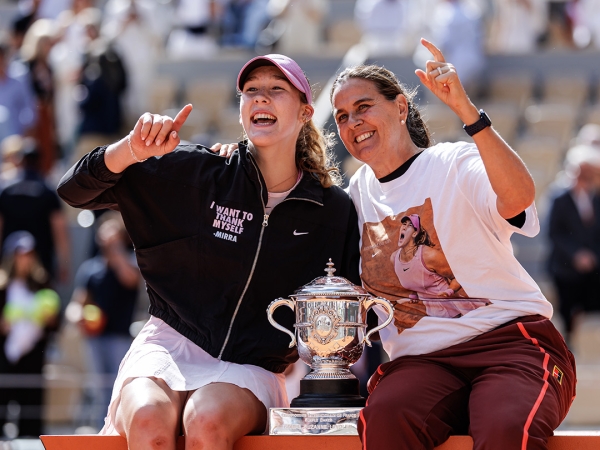
Andreeva also said she was inspired by Roger Federer’s serene on-court “aura”, wanting to emulate the Swiss great’s behaviour to reduce her own outward frustration.
The manner in which she cruised through the draw at Roland Garros was reminiscent of Federer at his dominant best.
After losing her only set of the fortnight in the second round, Andreeva then won her final 12 in a row – dropping a total of just 25 games in those 12 sets won. And she completed a magnificent claycourt season, claiming titles in Linz and Paris, reaching the final in Madrid and semis in Stuttgart and winning 22 of her 25 matches.
Rising to world No.6 in the live rankings, and within striking distance of a top-four debut, Andreeva’s motivation has only increased since this breakthrough.


“These feelings are something extra special,” said Andreeva, who admitted she actually liked the attention that comes with being in the public eye as a top player.
“And, honestly, now I'm already thinking of how I'm going to prepare for the grass season, how I'm going to play grass tournaments.
“I feel like this thing is a little bit addicting, and I really want to do my best to experience all of this for the second time.”