Prior to Roland Garros, Maja Chwalinska had only twice played in the main draw of a Grand Slam tournament.
She’d never cracked the top 100, never competed in the main draw in Paris, and her lone win in a major main draw, until this fortnight, came at Wimbledon four years ago.
Now, the Polish player stands one win away from a Grand Slam final – and she will not be playing world No.1 Aryna Sabalenka to get there.
Instead, she faces Diana Shnaider in the biggest match of her career, after the 25th seed recovered from 6-3 5-3 down against Sabalenka to pull off another staggering upset in this most topsy-turvy edition of Roland Garros.
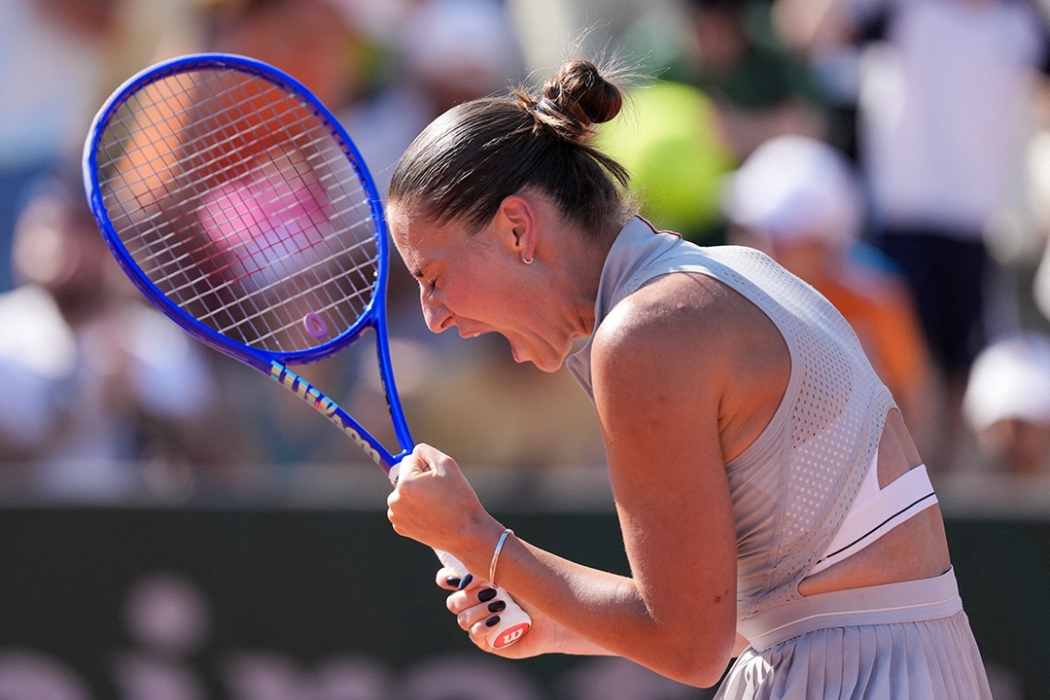
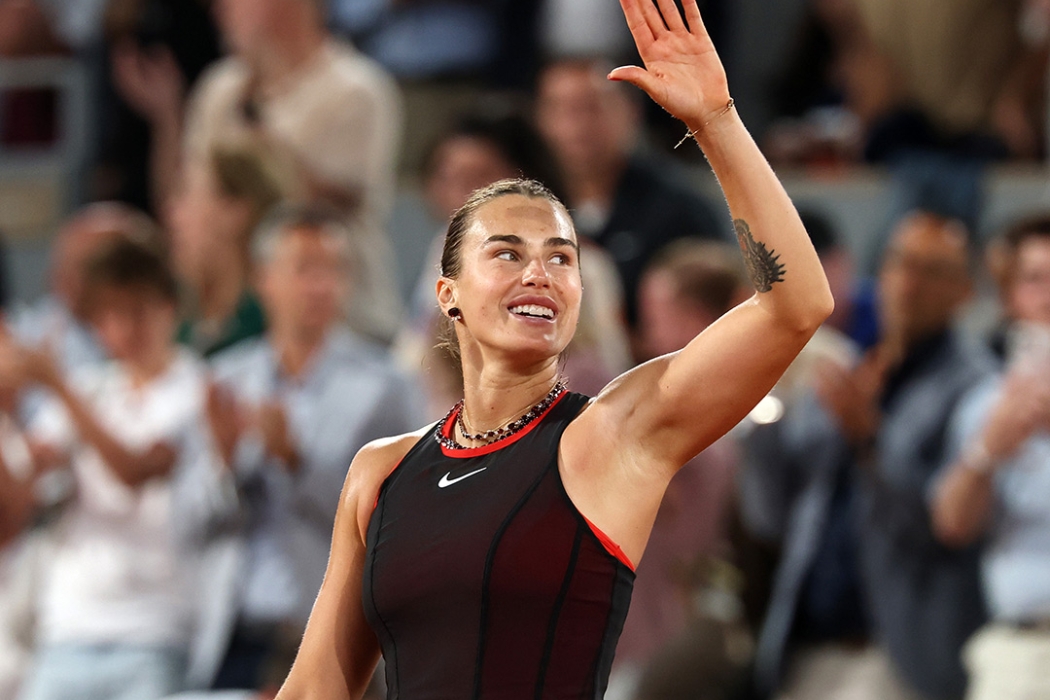
It will be just the third women’s Slam semifinal between left-handers in the Open era, but unlike the previous two, both combatants are completely untested on this stage.
“Not really,” Chwalinska smiled when asked if she’d comprehended the magnitude of her achievement. “I feel like I just, for some reason, I don't process it. I'm just focusing on every single match. I honestly don't feel like it's a huge, huge moment for me.
“But definitely after the tournament finishes, I will kind of have time to, I guess, be grateful for what happened and process it as well. But for now, I'm just very happy, but I know that I need to focus on the job.”
Qualifiers in the Roland Garros women’s semifinals are nothing new. This decade alone, Nadia Podoroska (2020) and Lois Boisson (last year) advanced to the same point.
But the manner in which Chwalinska has carved her way across the clay and through opponents has been astounding.
Having surrendered only one set in eight consecutive wins so far, the crafty Pole has navigated a variety of conditions. This year in Paris these have veered between searing heat in week one, to cool, grey, blustery conditions in which she outplayed Anna Kalinskaya in Wednesday’s quarterfinals.
With her variety of spins, angles and paces, Chwalinska dominated seasoned performers Zheng Qinwen and Elise Mertens in the first two rounds – overwhelming both 6-4 6-0 – then beat former world No.3 and Roland Garros semifinalist Maria Sakkari 1-6 6-3 6-2, the one set she has dropped.
Against Kalinskaya, she finished with 24 winners against only 15 unforced errors, while the 22nd seed sprayed 47 errors on Court Philippe Chatrier.
Such assured play is even more remarkable when you consider Chwalinska’s backstory; she took several months away from the tour, in 2021, to combat depression.
"In 2019 I started to feel bad," she revealed in an interview with wtatennis.com. "First on the court, but after I also started to feel bad off the court, and it led me to depression. Something I enjoyed the most suddenly became a source of suffering. I associated tennis with pressure, stress and crying.
"I was dealing with that until last year's Wimbledon [in 2021], when I decided to take a break. I didn't know that I would come back, to be honest, because things were not fine. There were dark thoughts. It was tough to even leave the house. I didn't have any desire for anything."
A leading junior who reached the AO 2017 girls’ doubles final with compatriot and friend Iga Swiatek, Chwalinska is showing what she can do at the elite level.
Thriving on the WTA 125 circuit in 2026, Chwalinska won the Oeiras title last month in Portugal, and after beating Kalinskaya improved to 25-9 this season. With her run in Paris, she’s expected to soar into the world’s top 30.

That’s where Shnaider currently is, and although she’s more proven at this level than the qualifier, her appearance in the semifinals in Paris is also a surprise.
The 22-year-old had only once previously cleared the third round at a major – she appeared in the fourth round of the 2024 US Open – and had lost 13 of her 14 previous meetings with top-10 players.
She entered Roland Garros with an underwhelming 5-4 record on clay in 2025, and 13-11 for the season.
Yet she handled the wind, and the occasion, far better than Sabalenka, playing brilliantly from 5-3 down in the second set to win an astonishing 10 consecutive games – and the match.
“[At] 5-3, whatever, I have to change something up now,” said Shnaider, who kept her unforced errors to 26 while Sabalenka committed 57.
“I feel like I kind of had the relief where I was, like, I gotta go for my shots, I have to be more aggressive, I got to step in, because she's pushing me too much back and just winning those short rallies.
“And then I was starting to step in more on her second serve, putting more pressure, being more aggressive. Then she got, like, just some couple unforced errors here and there, so that momentum a little bit shifting towards my side.
“Then I kind of believed more in myself.”
Shnaider and Chwalinska’s first meeting, more than four years ago, came at a $60,000 ITF event in Turkey, when Shnaider was ranked No.471 and Chwalinska 268th.
Their second comes on one of world’s biggest courts, where the winner’s prize money cheque will exceed one million Euros, for a place in a major final.
“Yeah, it's crazy,” Shnaider said.
“Of course I remember playing her. I even remember where was it. It was 60K in Istanbul. It was semifinal.
“She's a very tricky player, so I'm not surprised that she's good. Sometimes, it just takes time. She's very tricky with the dropshots and slices. Obviously she's a lefty. So it's gonna be a big switch for me for tomorrow's match. Happy for her.
“I'm expecting a huge fight tomorrow. I feel like both of us is gonna be leaving it all out tomorrow with huge opportunity in front of us.”