Before interviewing the biggest stars of tennis, Barbara Schett was once in their place – having competed on the WTA Tour where she secured three singles and ten doubles titles.
On this week’s episode of The Sit-Down podcast, Schett reflected on her professional playing career spanning from the 90s into the mid 2000s – remembered as one of the golden ages of women’s tennis.
“It was a great era. It was a time where people knew all the players by their first name,” she explained.
“There was Martina, there was Mary, there was Jennifer, Venus, Serena. That was pretty cool, I thought. They were trailblazers too in a certain way for their generation. I think they were exciting players with big personalities, different personalities.”
Schett was among this cohort of players, known for her baseline play and creativity.
Her best year on tour came in 1999 when she achieved her career-high ranking of No.7 and made her deepest run at a major by reaching the quarterfinals of the US Open.
“I was just really consistent,” she recalled.
“I never had that one big result where I went into a final of a Grand Slam. To be honest, I also never really believed in it which now in hindsight was a mistake. My big goal was always to crack the top 10 and once I did that, I was like I’m happy with this.”
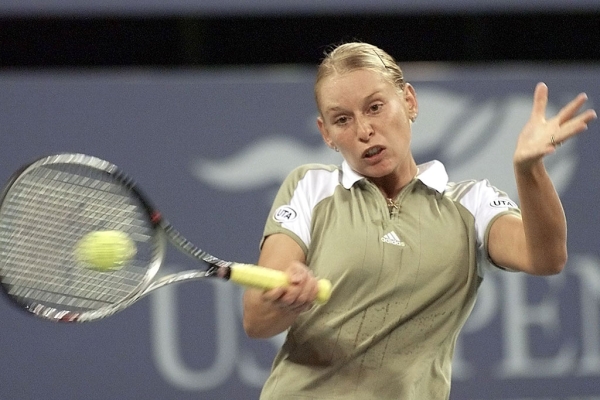
The Austrian dropped only nine games to secure her spot in the final eight in New York that year, where she faced then 19-year-old Venus Williams.
“I was so confident at that time. I just knew when I went on the court I was going to win that match. I’m not going to lose that. I felt very fit physically. I felt mentally very strong. I knew my tennis was there,” Schett said of her form at the time.
READ: Lilli Tagger cracks top 50 after first WTA title
However, tragedy struck when Schett lost her grandmother the day before the quarterfinal, ultimately impacting her performance against the American.
“I’m still very happy with that result. I think of it many times especially when the US Open comes around,” she said.
“I didn’t love playing against hard hitters. For example, somebody like Lindsay Davenport was very hard for me to play against because she served well and played every ball two centimetres in front of the baseline, so I always felt like I was on the pressure. Obviously, the Williams sisters later on. Steffi Graff was very hard for me to play against as well because she was a big role model.
“I preferred to play against Martina Hingis because she didn’t hit the ball very hard and for me, I felt like I had a little more time to be creative, so I enjoyed playing against her. I didn’t mind playing against Kim Clijsters, Justine Henin or Arantxa Sanchez Vicario, but the hard hitters were my biggest problem.”
Beyond the scores, these on-court rivalries would blossom in a sisterhood.
And since retiring from her professional playing career, Schett has transitioned into a successful broadcast career through her roles as a commentator and presenter – working in both English and German across a variety of organisations.
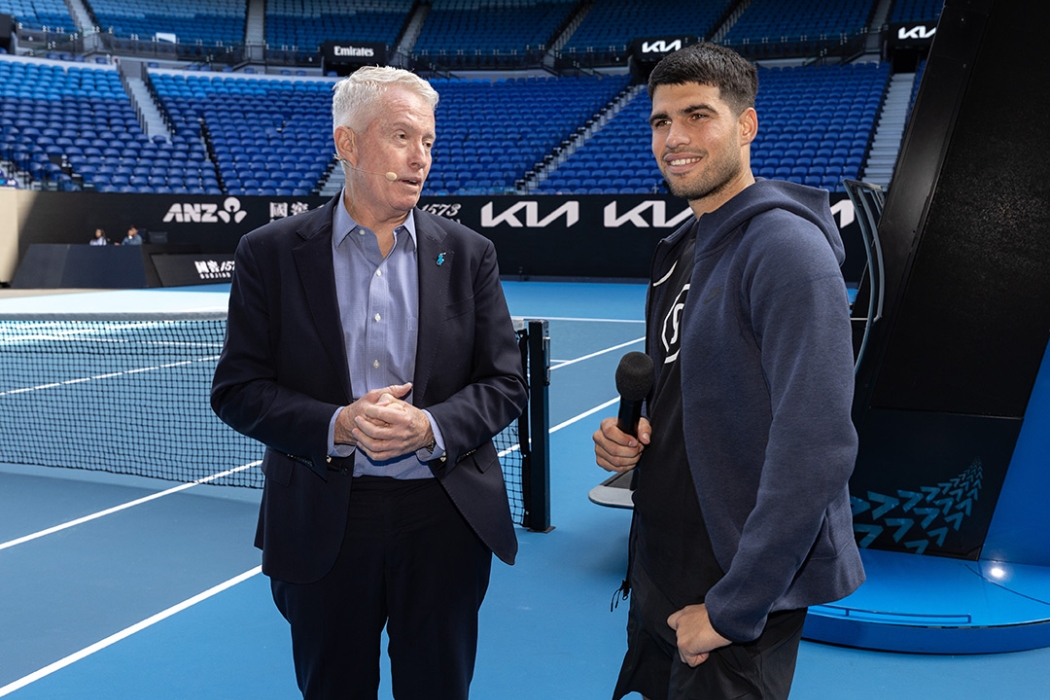
“I retired in 2005 and then pretty much started working for TV because I wanted to be connected to tennis somehow,” she shared.
“Since then, I’ve been travelling to pretty much all the Grand Slams and a few other events as well. Obviously, I have big passion and love for the sport.
“It worked out to be really, really great. I never thought my second career was going to be longer than my tennis career.
“I really love what I do.”
Listen to the full episode of The Sit-Down, a weekly podcast released each Monday featuring an in-depth interview with a notable tennis identity. Subscribe in your favourite podcast player so you never miss an episode.