This article first appeared in the August/September 2026 issue of Australian Tennis Magazine. To order your copy, visit tennismag.com.au.
When Alexandra Eala stood atop the podium at the South East Asian (SEA) Games last December, it was the most attention a champion at the closed event had gathered in almost three decades.
The biennial end-of-season tournament – contested for pride over points when most of the tennis world had already shifted focus to how many players were holidaying in the Maldives – hadn’t welcomed such a high profile women’s star since Thai former top-20 player Tamarine Tanasugarn in the mid-’90s.
The 20-year-old Eala hadn’t even cracked the top 30, but such was her profile in her success-hungry home country, The Philippines, her triumph in Nonthaburi was nonetheless significant.
“It’s a very different field, because this is something so unique to South-East Asia, and it means something that a lot of people from Europe or America might not get,” Eala said following her gold medal run. “This has been something that people from my region look up to and dream about since they’re young.”
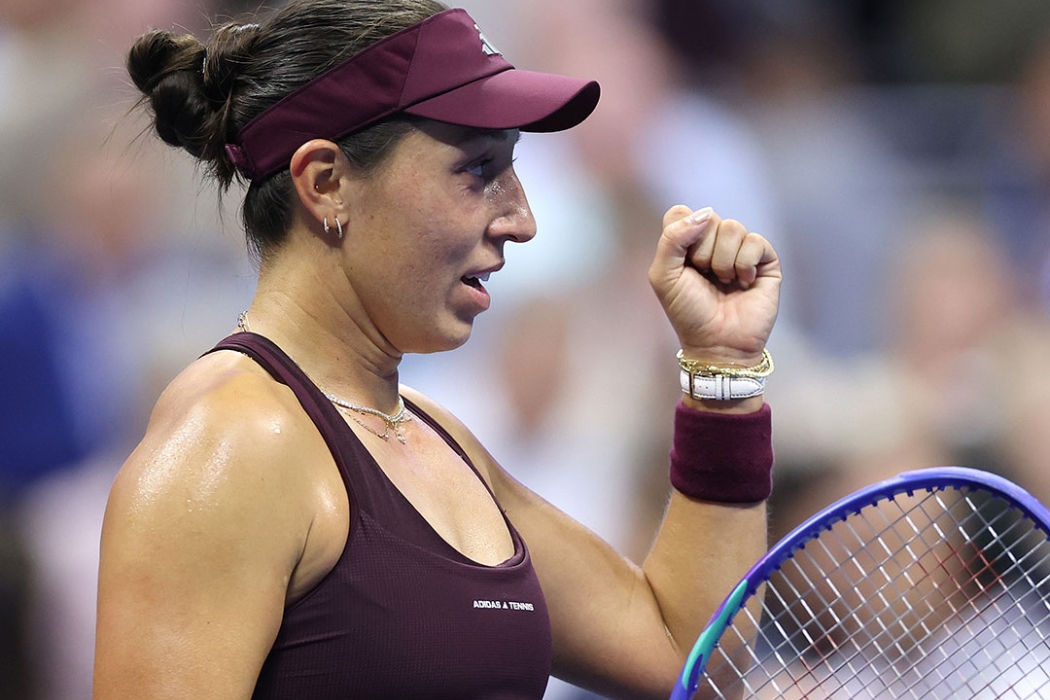
Few could have predicted three of the four medallists on the podium in Thailand last December were set to elevate South-East Asian tennis further in the conversation at Wimbledon only seven months later.
Silver medallist Mananchaya Sawangkaew, of Thailand, proved one of the breakout names on the grass in southwest London in 2026, while Indonesia’s joint bronze medallist Janice Tjen ensured all three reached at least the second round.
Lanlana Tararudee – a silver medallist at the SEA Games in Phnom Penh in 2023 – ensured a historic first at Wimbledon this year when her opening win over Lilli Tagger ensured two Thai women made the second round of the same Grand Slam event for the first time in the Open era.
For 24-year-old Sawangkaew, three silver medals from as many events on home soil last December unlocked greater belief on the bigger stages. “It’s helped me a lot because I played against, like, Alex [Eala] and Janice [Tjen] and they’re good players,” she told Olympics.com. “It’s helped give me motivation to be like them.”
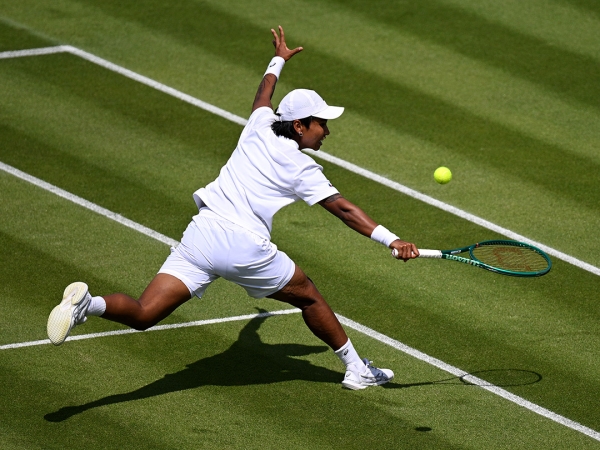
At Roehampton, the then world No.164 saved three match points in the final round of qualifying to deny Oceane Dodin before her first Grand Slam main-draw victory over the injured Roland Garros finalist, Maja Chwalinska. It marked her first top-30 win and she backed it up over Alycia Parks to become the first Thai woman into the third round at SW19 since 2008.
Sawangkaew and Tararudee were the first Thai players since Luksika Kumkhum in 2018 to win a round at Wimbledon. In 2008, Tanasugarn made her maiden Grand Slam quarterfinal following six previous fourth-round finishes in London.
“They [Tanasugarn and Kumkhum] text me also like congratulations,” Sawangkaew said. “Tamarine, she just text me, ‘congratulations, and enjoy with the grass court’, something like that. I was surprised that she text me. She’s so kind to me.”
Eala’s breakout run at the All England Club, in which she dethroned reigning champion Iga Swiatek – her second win over the Pole since announcing herself in Miami last year – was the standout of the South-East Asian quartet.
It was a showdown that gained maximum exposure given it was also her Centre Court debut, and the upset secured her maiden fourth round appearance at a major before former finalist Jasmine Paolini ended her campaign.
“I think that day-to-day work and that work ethic is really what keeps me grounded and keeps me locked in,” Eala said. “Then I guess the responsibility or the effects or the impact I have on other people and the inspiration that I can bring is a result of that work ethic.”
The confidence Sawangkaew and Tararudee gained from their respective Wimbledon charges quickly carried to further success. Sawangkaew closed in on a top-100 return with a semifinal at the Newport WTA125 event on grass, while 22-year-old Tararudee – who beat Bianca Andreescu in March for the WTA 125 Austin title – added a second in Istanbul to nudge the top 80.
The emergence of South-East Asian women making waves together at Wimbledon was among the key shifts in the composition of singles main draws in 2026. In 10 years, the United States maintained its superior collective depth across men’s and women’s fields – from 11 men and 18 women in 2016 to 18 men and 18 women this year.
However, the Americans were no longer the dominant presence at the pointier end of the tournament.
In 2016, of three Italian men who started in the main draw, none reached the fourth round. Ten years later, now the world’s leading men’s tennis nation had six in the main draw, four of which were seeded.
World No.1 Sinner became the first Italian to defend his Wimbledon crown, while Flavio Cobolli returned to the quarterfinals for the second year running. Matteo Berrettini and Lorenzo Sonego also reached the third round.
While Czechia has maintained a steady conveyor belt of elite women’s players, the European powerhouse took it to another level at this year’s Championships.
In 2016, four of seven Czech women were seeded, including two-time former champion Petra Kvitova. Only 28th seed Lucie Safarova reached the fourth round.
Of the 10 Czech women who started this year, four were seeded – including the eventual champion, Linda Noskova, and finalist Karolina Muchova – while two others reached the fourth round.
Noskova joked it could be something in the beer from her home country that led to such prolonged success, but the most prolific Czech-born great, Martina Navratilova, put it down to competition and opportunities.
“There are clubs everywhere [in Czechia], every small town has two, three or four clay courts and there is so much more good coaching now,” she told the BBC.
It was a familiar story south for the Italians and while far from boasting comparable depth in stocks, opportunities or coaching, the likes of Eala, Sawangkaew, Tararudee and Tjen were at least ensuring a broader wave of home grown idols to look up to in South-East Asia.