There was a moment, late in the AO 2026 semifinal between Carlos Alcaraz and Alexander Zverev, when commentator Robbie Koenig declared: “At the apex of the pain, that is where success lies”.
It’s a maxim the ailing Alcaraz had to hope was true. At that point, he was 3-5 down in the final set after five hours of gruelling tennis and looked destined to miss out on a maiden Australian Open final.
He had been limping since he clutched at his right thigh at 4-all in the third set, when he was two games from a straight-sets victory over Zverev. He’d been hitting drop shots galore to shorten points and conserve energy. He’d lost significant leg drive and speed in his serves. And he’d vomited into his towel.
For two-and-a-half hours, the world’s best player looked second best.
Meanwhile, Zverev had fought back to force a decider and was now just one game away from another final in Melbourne.
The German hadn’t recovered from two sets down to win a match in over three-and-a-half years. And he’d never beaten a world No.1 at a Grand Slam. Surely this was the moment he was going to silence the doubters.
But when all looked lost, it was the Spaniard who reached deep into his reserves and found something extra. Alcaraz climbed a mountain of pain, felt its burning, aching, and yet pushed through it – even revelled in it.
The noise was deafening when he rebounded to break Zverev’s serve and level the fifth set at 5-all. The crowd rose to their feet as Zverev fell on his haunches. No one was leaving to catch the early tram.
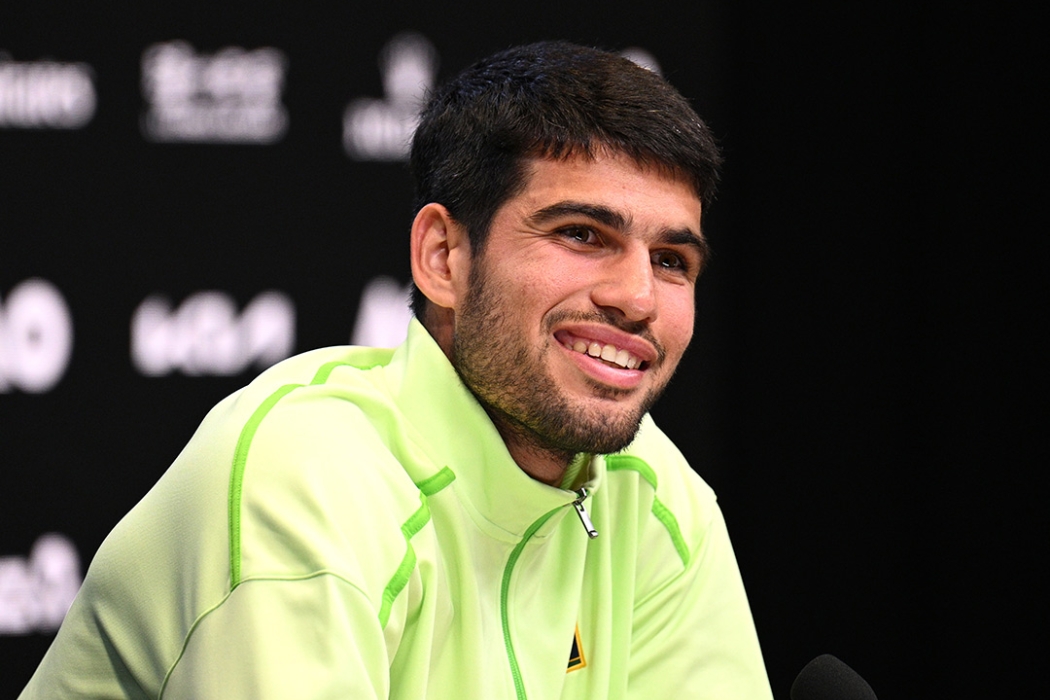
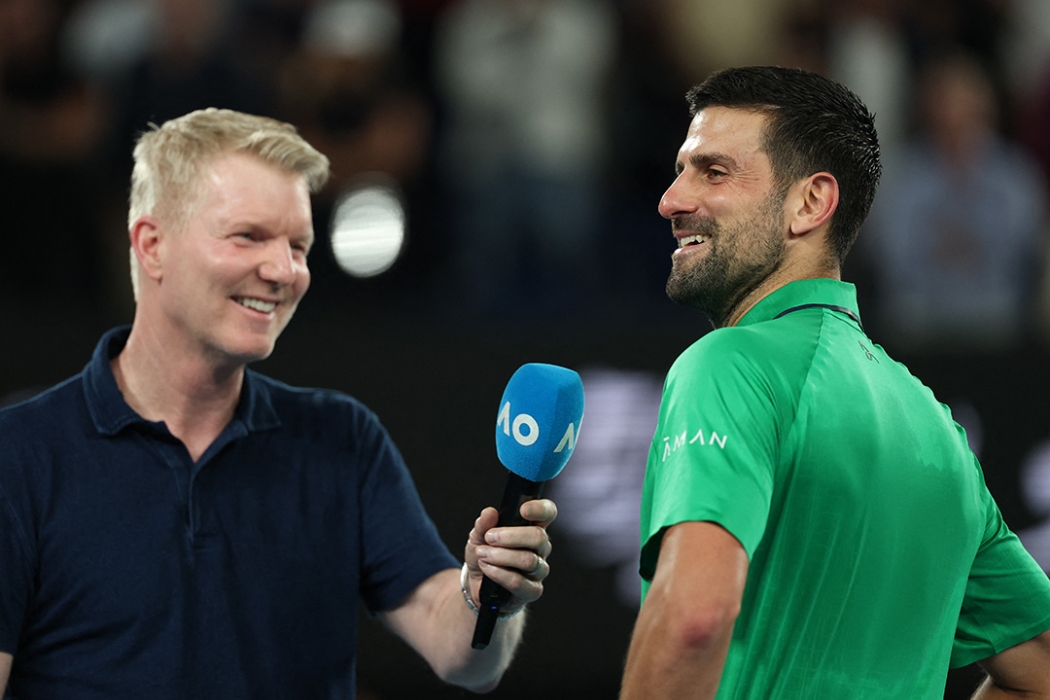
Back on serve and back in business, Alcaraz conjured a drop shot winner and a couple of down-the-line forehand rockets and was suddenly 6-5 up. Now it was Zverev fighting to stay in the match. At deuce, he hit a routine forehand wide.
Match point for Alcaraz. How had that happened? The chair umpire begged the crowd to be quiet.
With his tournament on the line, Zverev whacked a bullet serve to the Alcaraz backhand, sending him outside the court lines. The Spaniard, on the stretch, managed to return it. It should’ve been an easy putaway for the German. Except nothing is easy against Alcaraz.
Zverev sent a backhand to the other side of the court, which Alcaraz sprinted to reach. Most players, in this situation, attempt a lob so they give themselves time to make it back to the middle of the court.
But Alcaraz ripped a running forehand passing shot which Zverev couldn’t return, before collapsing onto his back in disbelief as the clock ticked over to five hours and 27 minutes.
It was the longest semifinal in Australian Open history.
"Physically it was one of the most demanding matches that I have ever played in my short career,” the Spaniard said. “But ... I knew what I had to do. I had to put my heart into the match."
It was a triumph befitting a player who was already building a Hall-of-Fame-worthy career at just 22 years of age.
And it was a match befitting a final. Yet it represented just half the action at Rod Laver Arena that day, as the top four men’s seeds met in the AO semifinals for the first time in 13 years.
During what was the third-longest match ever at Melbourne Park, Jannik Sinner and Novak Djokovic had been warming up in the subterranean player areas, waiting and watching as day turned to night.
It was a tantalising matchup between the man tipped to lead the men’s game alongside Alcaraz for the foreseeable future, and the most decorated singles player in tennis history.
The Italian began the favourite as many questioned whether Djokovic – at 38 years old – could keep up with the next generation of stars.
Sinner’s favouritism was initially justified as he stormed out of the blocks to take the first set in 38 minutes. But momentum shifted in the second stanza. The Serbian earned an early break and raced to a 4-1 lead, then closed out the set as the stats showed he was hitting his forehands 8km/h faster than the man 14 years his junior.
“You just feel like there’s a heap of drama just ahead of us,” commentator John Fitzgerald said early in the third set.
He was right.
The pair went toe-to-toe for the majority of the third set, until the 10th game when Sinner nabbed the break, and the set, as Djokovic sent a lob long.
The match then see-sawed back in Djokovic’s favour early in the fourth set when he broke the Italian’s serve at the first opportunity. At 3-2 up, he sent his fans into raptures as he won a 19-shot rally with a crosscourt forehand belter, before closing out the set to force a decider.
Sinner attacked Djokovic’s serve vigorously, generating eight break points across the fifth set. But he converted none as Djokovic put up his famous defensive wall.
The 38-year-old was at his resilient best, capitalising on his first break point chance to go 4-3 up before holding strong on serve to earn a historic victory.
“I’m lost for words,” said Djokovic after the four-hour, nine-minute epic. “It feels surreal to be honest, playing four hours, almost 2am, reminiscent of 2012 when I played Rafa in the final.”
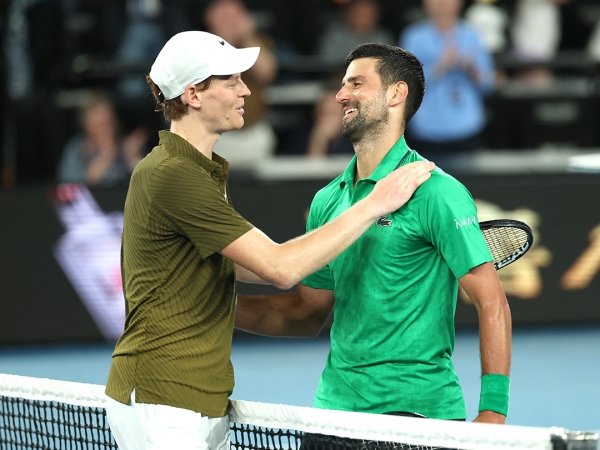
The triumph further added to Djokovic’s legend and meant he became the oldest player in the Open era to reach an AO men’s singles final.
There hadn’t been any five-setters on Rod Laver Arena across the tournament prior to the men’s semifinals. Then there were two in one go in what became one of the greatest days of tennis to light up Melbourne Park.