One of the reliable things about a Grand Slam is the chaos it delivers.
Every year, fans fill out their brackets with optimism, only to be blindsided by results that even the sharpest minds could not predict.
AO 2026 was no exception. Here are five moments nobody saw coming at Melbourne Park.
Bartunkova ends Bencic’s winning streak
Belinda Bencic arrived in Melbourne fresh off a flawless United Cup including wins over Iga Swiatek, Elise Mertens and Jasmine Paolini, prompting many pundits to circle her name as a sure-fire second week threat.
Enter Nikola Bartunkova.
The No.126-ranked Czech came through the qualifying event before ousting local favourite Daria Kasatkina in round one, then ended Bencic’s unbeaten start to 2026 to reach the third round of a Grand Slam tournament for the first time.
The result carried extra sting, given Bartunkova had lost in the opening round of her previous three WTA events.

Djokovic does the unthinkable
“I said it would be difficult, but not impossible.”
Those were Novak Djokovic's words after toppling defending champion Jannik Sinner in an epic five-set semifinal, a victory that was instantly etched into his legendary folklore.
Beaten by Sinner in their previous five meetings, the 38-year-old summoned something extraordinary to become the oldest player in the Open era to reach an Australian Open men’s singles final.
“I’m lost for words,” Djokovic said after ending Sinner’s quest for an AO three-peat — a feat only he has achieved in the Open era among men.
“It feels surreal to be honest, playing four hours, almost 2am, reminiscent of 2012 when I played Rafa (Nadal) in the final.”
Djokovic’s win also snapped Sinner’s 20-match streak and marked the Italian’s first failure to reach a Grand Slam final since Wimbledon 2024.
Tien turns surprise into a pattern
Last year, 19-year-old Learner Tien stunned Daniil Medvedev en route to the fourth round on his Grand Slam debut in a run many dismissed as either a fluke or a fleeting flash of brilliance. Melbourne 2026 settled that debate.
Tien not only beat Medvedev again — the world No.12 fresh off a Brisbane title — but did so in straight sets, also handing the former world No.1 a bagel for the first time at a Grand Slam.
FAST LEARNER: Deep AO 2026 run shows rate of Tien’s rise
In his first Grand Slam quarterfinal, Tien pushed world No.4 Alexander Zverev to four sets, drawing the very best tennis out of the German.
“I don't think I've played someone with this level from the baseline in a very long time,” Zverev said.
“I don’t know what (his coach) Michael Chang has done with him in the off-season, but the way he’s playing is incredible.”

Jovic announces herself
Not since 2007 has the Australian Open produced a quarterfinalist as young as Iva Jovic.
Wind the clock back 11 years further, and the 18-year-old is the first since Venus Williams to reach the final eight without dropping a set.
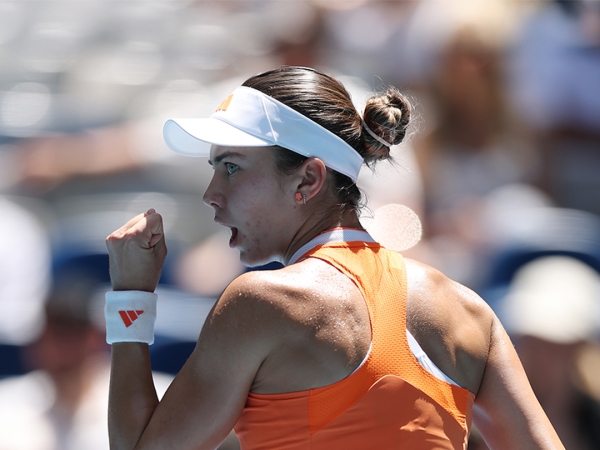
After a rapid rise up the rankings in 2025, Jovic was already tipped as a future star, but a Melbourne run that included straight-sets wins over Yulia Putintseva and seventh seed Jasmine Paolini confirmed that her ceiling is even higher than previously thought.
BRIGHT FUTURE: Jovic departs as youngest AO quarterfinalist in 19 years
“I hope to be in many quarterfinals, so I don't think this win or loss is going to make or break my career,” Jovic said after her loss to world No.1 Aryna Sabalenka.
The American leaves Melbourne inside the top 20 for the first time, having already climbed 164 places since AO 2025.
Demon's dominance
On the eve of the tournament, Australian former pro Wally Masur declared that "Demon's got a shocking draw" when assessing the Australian No.1's chances at AO 2026.
Indeed, Alex de Minaur was confronting the possibility of having to go through two-time US Open semifinalist Frances Tiafoe and newly-minted top-10 star Alexander Bublik, just to get to his projected quarterfinal position, where world No.1 Carlos Alcaraz would most likely lie in wait.
All three of those match-ups eventuated, and Alcaraz ended up outplaying the local star en route to his seventh Grand Slam title. But the manner in which De Minaur outplayed Tiafoe, then took apart Bublik, en route to the quarterfinals surprised everybody.
Against 29th Tiafoe, De Minaur was imperious, striking more aces and winners than the powerful American, as well as 12 less unforced errors, to win in straight sets. And against Bublik, he surrendered just six games to win in a rapid-fire 92 minutes, the second-quickest men's match of the tournament.