An earlier version of this article first appeared in the October/November 2024 issue of Australian Tennis Magazine, now in its 50th year and continuing to bring you in-depth coverage from the international tennis circuit plus features, instructional content and more. Visit the online shop to preview and order your copy.
It’s not uncommon for tennis professionals to have parents from different nations while growing up in a third country.
And for players who possess links to multiple regions and cultures – either through family ties, where they grew up, their tennis developmental journey, or a combination – you can see why they thrive in a globe-trotting sport.
Here are 10 players with fascinating backgrounds – many of whom are soaring on tour this year.
Jasmine Paolini
Italy’s Jasmine Paolini – this week into the fourth round of the Cincinnati WTA 1000 tournament – was born and still lives in Tuscany. Yet she enjoys links to several other places, including Africa and Poland.
Paolini’s father, Ugo, is Italian, while her mother, Jacqueline, has mixed ancestry. Her maternal grandmother, Barbara, is Polish and lives in Lodz while her maternal grandfather, Salomon, is Ghanaian. He lives in Copenhagen, giving Paolini a connection to Scandinavia, too.
Paolini can speak three languages, including Polish, and has increasingly thrived on tour, last year reaching back-to-back Grand Slam finals at Roland Garros and Wimbledon. Within the past 12 months she has peaked at world No.4 in both singles and doubles.
Earlier in 2024 she was asked by the official Indian Wells website how her heritage had shaped her tennis prowess.
“Ghanaian, maybe I feel like I’m fast on court. And I think that part of my family helped me. Maybe from Poland, I have the determination, maybe. But, of course, I also have the Italian energy,” she replied with a laugh. “It’s a mix. And I’m really proud of it.”
Lulu Sun
Another player who excelled at Wimbledon last year was Lulu Sun.
Her game developed through exposure to multiple environments and systems; born in New Zealand to a Chinese mother and Croatian father, she spent childhood stints in Shanghai and Switzerland and later played college tennis in Texas.
Her nomadic lifestyle continued in the 2023 off-season, where she initially trained in Slovakia with a new coach before heading to Florida to continue preparing for 2024.
“Chinese obviously from my mum’s side is very disciplined, hard-working. From my dad’s side, Croatian, he’s from the seaside, so very laid-back and calm. I guess that’s a good combo,” she told The Athletic.
“Also, I think from my mum’s side I get that I guess feistiness and competitiveness. And then the Swiss side is, like, neutral, yeah (laughing). Then from New Zealand, I get that adventure side.”
Cameron Norrie
Brit Cam Norrie shares Kiwi and college parallels with Sun, and has also thrived at Wimbledon, reaching the semifinals in 2022 before a return to the quarterfinals this year.
He was born in South Africa but grew up in New Zealand, then relocated to Great Britain, where his parents – Scottish father and Welsh mother – were born. He then moved again, to America, playing college tennis at Texas Christian University. And through his time at college, he befriended Argentine Facundo Lugones, who now serves as his longtime coach.
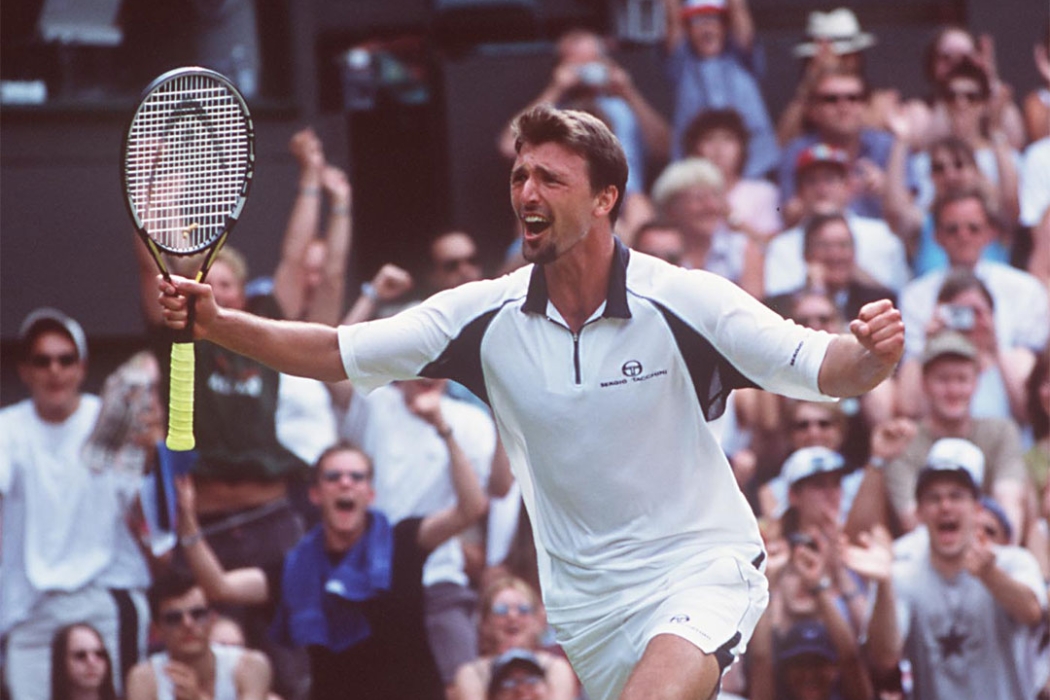
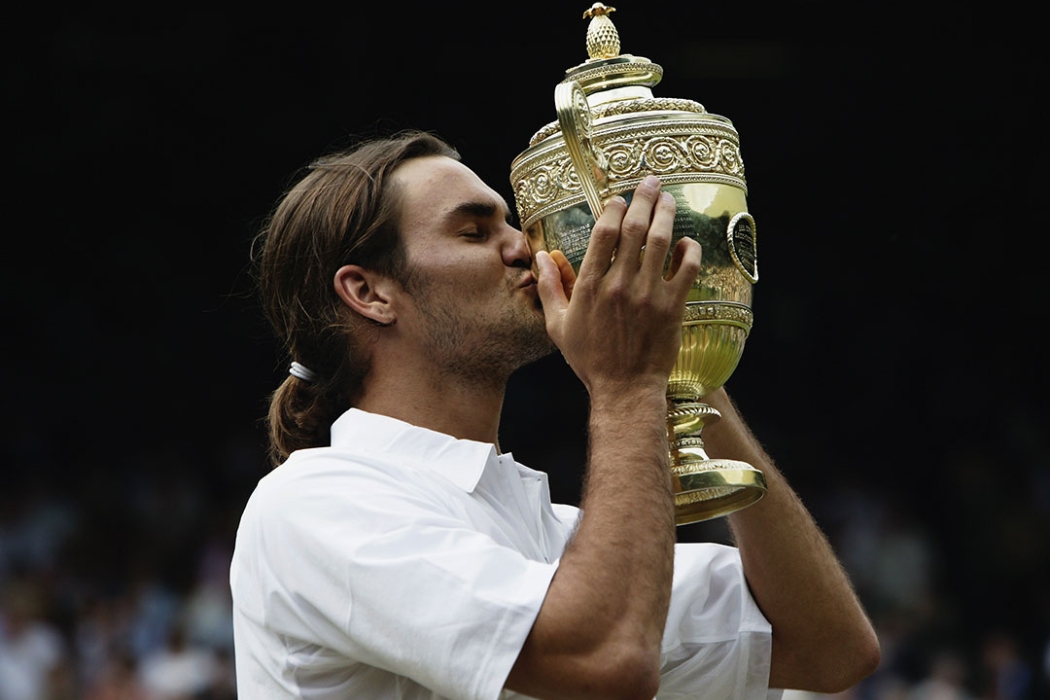
Connections to multiple countries and cultures have no doubt shaped Norrie into the well-rounded, all-surface player he is – as did the decision to relocate from New Zealand to the UK.
“I think that’s one of the reasons why I’m here today [succeeding in professional tennis], especially New Zealand with the lack of exposure with tournaments and everything, it was tough,” the former world No.8 told The Guardian.
“Obviously I needed to be somewhere that there were more tournaments and people knew a little bit more about guidance, and then getting better and being a professional player. So, moving over [to London] at 16 was perfect for me.”
Alex de Minaur
Like his friend Norrie, Australia’s Alex de Minaur relocated to Europe despite first picking up the game in Sydney’s southern suburbs.
This move was made easier by his background; his mother, Esther, is Spanish, and the family settled in her hometown of Alicante.
His Uruguayan father, Anibal, met Esther when both worked in the hospitality sector in Sydney, and De Minaur divided his time between Spain and Australia growing up, speaking both English and Spanish fluently.
It also helps explain his well-rounded game, with clay the predominant surface in Spain while hard courts and grass are more common in Australia.
De Minaur enjoyed exposure to all three during his developmental years, and it came to fruition in 2024, when he reached consecutive quarterfinals at Roland Garros, Wimbledon and the US Open on all three surfaces.
According to his ATP bio, De Minaur “credits [his] dual upbringing as helping to shape his game”.
Alejandro Davidovich Fokina
At the recent ATP 500 event in Washington DC, De Minaur saved three championship points in a thrilling final to beat Alejandro Davidovich Fokina – a player with ties to all corners of Europe.
Born in Spain to a Swedish-Russian father and Russian mother, he is now based in Monaco, where De Minaur is a fellow resident.
Speaking with former pro Alize Lim for Tennis Majors, Davidovich Fokina revealed his Spanish and Russian roots – and the diametrically-opposed mentalities associated with each – left him feeling lost during his high school years, but that he’d managed to find balance after working with a psychologist.
Now, he’s thriving, reaching three finals in 2025 and hitting a career-high ranking of world No.18.
Naomi Osaka
Davidovich Fokina may have links to Eastern, Western and Northern Europe, but for Naomi Osaka, her connections extend to the Eastern, Western and Northern hemispheres.
The four-time major champion has roots in Asia (her mother is Japanese and she represents Japan), the Caribbean (her father is Haitian) and the United States, where she spent her childhood in New York and Florida and now lives in California.
Earlier, we mentioned a multicultural upbringing can help players adjust more seamlessly to life as a globetrotting pro. In Osaka’s case, it also has financial benefits; she has frequently appeared on the Forbes’ list of the world’s highest-paid female athletes, helped by her broad endorsement portfolio.
She was once the world’s highest-paid female athlete, with her 2020-21 haul of $60 million representing the highest earnings in a 12-month period for a female athlete in history.
Emma Raducanu
Another player on that Forbes top-10 list is Emma Raducanu, born in Canada to a Romanian father and Chinese mother. Her cultural connections span even further, given she represents Great Britain after relocating to London at age two.
Raducanu showed off her language skills after her 2021 US Open triumph, in a video thanking her Chinese fans in fluent Mandarin.
Sports marketing consultant Tim Crow told The Guardian: “As far as [Raducanu’s] brand appeal is concerned I think you can draw parallels with Naomi Osaka. Because of the multicultural aspect of her heritage, she is able to resonate in so many markets.
“She is a world citizen: she appeals so far beyond a typical white, British, middle-class female tennis player.”
Leylah Fernandez
Raducanu’s 2021 US Open triumph came in a final against Leylah Fernandez, born across the same country in French-speaking Montreal to an Ecuadorian father and Canadia mother of Filipino descent.
She now lives in majority Spanish-speaking Miami, Florida; it’s little wonder Fernandez is trilingual.
Previewing that Raducanu-Fernandez final, the Associated Press wrote: “They will attract an audience to their US Open women’s final that extends far beyond the fans who will be at Arthur Ashe Stadium.”
According to AP, that was because of their links to different regions – North America, Asia, Europe (through Raducanu’s father) and Latin America (through Fernandez’s father).
Denis Shapovalov
Another Canadian, Denis Shapovalov, has travelled his own global path. He was born in Tel Aviv, Israel to a Jewish-Ukrainian mother and Russian father before emigrating to Canada as a baby.
His mother, Tessa, guided Shapovalov in his formative years having accrued professional playing and coaching experience within three different tennis systems – Soviet, Israeli and Canadian.
“She’s the whole reason I play tennis today,” wrote Shapovalov – who now lives in the Bahamas – of his mother in The Players’ Tribune.
Gabriel Diallo
Shapovalov’s younger countryman, Gabriel Diallo, has emerged as a force on tour in 2025.
He was ranked 89th at the start of March, but after reaching the Madrid Masters quarterfinals, winning his first ATP title in ‘s-Hertogenbosch and accruing more than 30 match wins this season, he has cracked the top 35.
Like Fernandez, Diallo was born in Montreal, with connections to Eastern Europe (his mother is Ukrainian) and West Africa (his father is Guinean).
According to the Madrid Open website, which profiled him during his breakout run, “Gabriel speaks perfect English, French, and Russian and can get by in Spanish. His partner is from Barcelona and he has picked the language up from her.”
The 23-year-old also spent several years living in the United States, playing college tennis for the University of Kentucky.