This feature originally appears in Australian Tennis Magazine’s April/May issue, which has a special theme of ‘turning points’. Now in its 50th year, Australian Tennis Magazine continues to bring you in-depth coverage from the international tennis circuit plus features, instructional content and more. Visit the online shop to preview and order your copy.
Across the course of their legendary careers, champions of the sport win hundreds of matches – for the most prolific, more than 1000.
Some of those wins stand clear as having greater impact than others, an invaluable career-boosting shot of confidence.
These 10 match victories this century changed the course of the winner’s career for the better.
Serena Williams d Venus Williams
Miami 2002 SF
Serena Williams may have won 23 Grand Slam singles titles and cemented her status as arguably the greatest women’s player in tennis history, but at the time of this match, she’d only won one major, and many were wondering if she’d win another, given it was nearing three years since her 1999 US Open title.
In six previous meetings with sister Venus, she’d lost five.
This is why her 6-2 6-2 Miami semifinal thumping of Venus – who’d recently peaked at world No.1 and had won three of the previous four Miami titles – was so significant.
“I think that was the biggest win of my career,” she declared. “I was just playing unbelievable … My gosh, I was really focused.
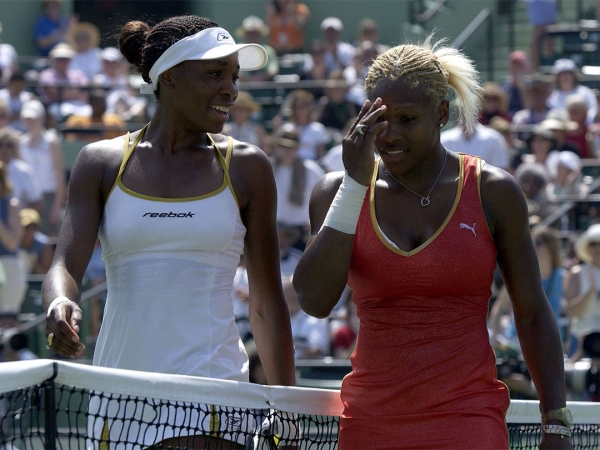
“I think it definitely removed a mental block for me. But this is just one match of many. Just one win. You can't just beat someone one time. You have to beat them several times.”
That’s exactly what she did, beating Venus the next five times – all in Grand Slam finals.
Ranked No.9 at the time of the Miami Open in 2002, she swept the remaining three Slams of the season to become a dominant world No.1. Her subsequent win at Australian Open 2003 meant she simultaneously held all four major titles to complete the ‘Serena Slam’.
Roger Federer d Mark Philippoussis
Wimbledon 2003 final
Roger Federer had long been touted as a future superstar, but prior to Wimbledon 2003, he had played 16 Grand Slam main draws and never gone beyond the quarterfinal stage.
Everything clicked at the All England Club that year when Federer won his final 13 sets to storm to his first major title. After outplaying No.8 seed Sjeng Schalken for his first major quarterfinal win, he beat Andy Roddick in straight sets in the semis, and Mark Philippoussis 7-6(5) 6-2 7-6(3) in the final.
“I proved it to everybody, you know. It is a big relief to me because there was pressure from all the sides, also from myself. I wanted to do better in Slams,” Federer said.
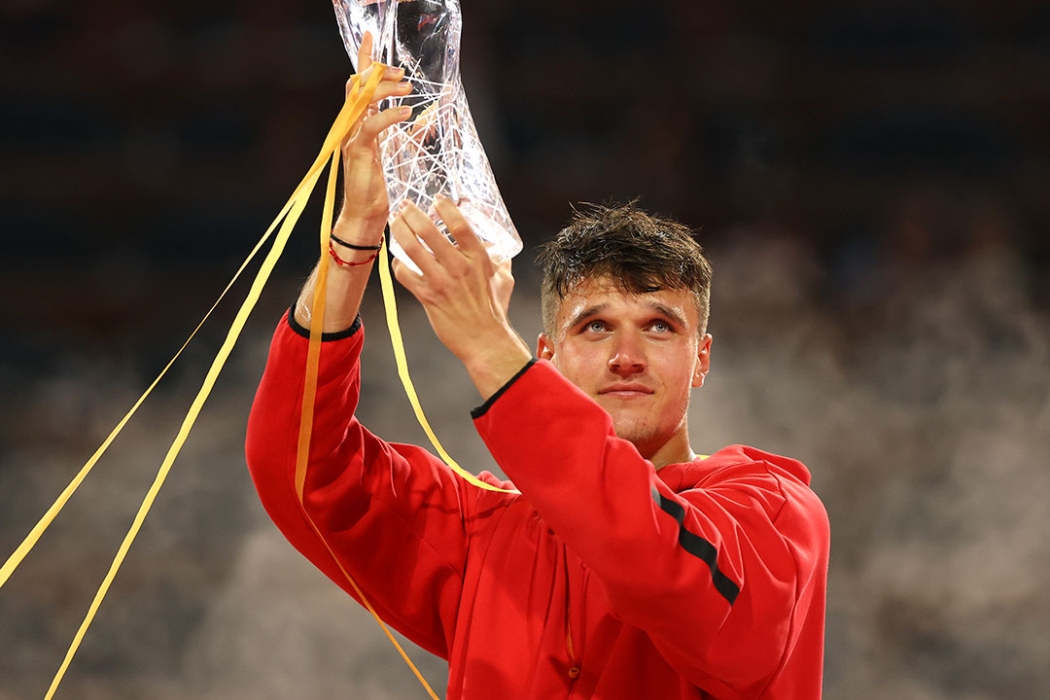
It was a result that well and truly released the shackles. Federer went on to win five consecutive Wimbledon titles, and eight overall, among his staggering eventual haul of 20 Grand Slam singles titles.
Before winning Wimbledon 2003, the Swiss' win-loss record in his first 16 Grand Slam main draws was 29-16 (64.44%).
His next 16, after Wimbledon 2003? He won 10 of them and built a win-loss record of 95-6 (94.06%).
Rafael Nadal d Roger Federer
Miami 2004 final
Like Federer, Nadal was a prodigious talent but was especially formidable on clay. So when he met Federer in the third round at Miami in 2004, aged 17, few expected him to beat the world No.1 – the reigning Wimbledon and Australian Open champion – on a quick hard court.
Instead, Nadal completely outplayed Federer, surprising the Swiss 6-3 6-3 in their first professional meeting.
“I played almost perfect tennis today because I was playing inside the court, dominating the exchanges and pressing him so he couldn’t play his game,” Nadal said. “I served extremely well today, probably I never served like this in my life.
“I’m very happy because I played one of the best matches in my life.”
The result also meant Nadal had created a blueprint for approaching matches against Federer, one he steadfastly and successfully followed to win six of their first seven meetings.
Little more than a year after that result, Nadal hoisted his first Grand Slam singles trophy at Roland Garros, having beaten Federer again, en route in the semifinals.
Novak Djokovic d Gael Monfils
Davis Cup 2010 final
Novak Djokovic’s two singles victories in the Davis Cup final of 2010 helped deliver Serbia a 3-2 victory over France, and its first Davis Cup title.
Roared on by a passionate crowd at Belgrade Arena, Djokovic described the triumph as the “number one” moment in his career at the time. “It was two days and two nights celebration,” he said. “It was an historical win, maybe once-in-a-lifetime opportunity to play and win the Davis Cup at home in front of almost 20,000 people.”
TWO DECADES OF AO DOMINANCE: Novak down the years
It was a result that buoyed him. Those victories in Belgrade were the first two in an outstanding 43-match winning streak, which delivered seven straight titles (Australian Open, Dubai, Indian Wells, Miami, Belgrade, Madrid and Rome).
“The Davis Cup win may have a big role in my great performance here in this tournament,” Djokovic said after his AO 2011 triumph. “After we won Davis Cup title I was feeling great on the court, just eager to compete.”
Djokovic’s 41-0 start in 2011 remains the best start to a season since John McEnroe in 1984.
Andy Murray d Roger Federer
2012 Olympic gold medal match
Entering the London 2012 Olympic Games gold medal match, Andy Murray had several negative records to overcome.
He’d lost his past three finals, and six of his past eight meetings with Roger Federer, his opponent in the Olympic final. Just three weeks earlier, Federer had beaten Murray on the same court for the 2012 Wimbledon title, his third straight win over the Brit.
With the backing of a parochial crowd at Centre Court this time around, Murray overwhelmed the Swiss 6-2 6-1 6-4.
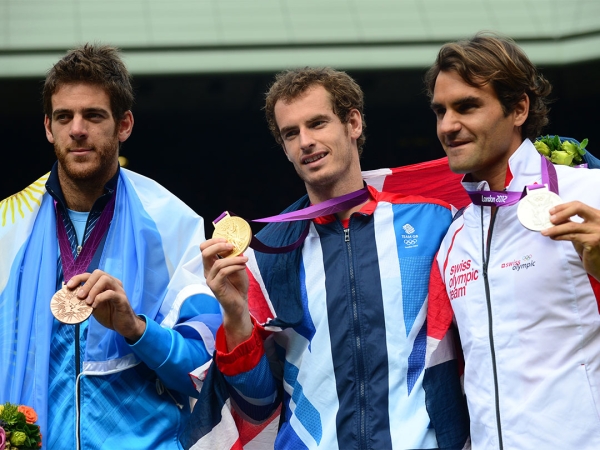
“When I look back on the match, it will be one that I'll look at as the biggest win of my career for sure. It's definitely one of the best matches I played,” Murray assessed.
“I think come US Open time, I hope that this will have given me the confidence to go in there and believe in myself a bit more than I have in the past, give myself a shot at winning there.”
Having slipped to 0-4 in his first four major finals, Murray won the US Open just six weeks later. When he returned to the All England Club, he won the 2013 Wimbledon title, ending a 77-year wait for a British men’s singles champion.
After he won gold, Murray won 24 of his next 25 Grand Slam matches, including two of the four majors.
Angelique Kerber d Victoria Azarenka
Australian Open 2016 QF
Angelique Kerber had never beaten Victoria Azarenka when they entered Rod Laver Arena for their AO 2016 quarterfinal. She’d lost all six meetings, including one two weeks earlier in the Brisbane International final.
Despite losing the first set, Azarenka gained control of this meeting too, when she led 5-2, 40-0 on serve in the second set, with a bundle of set points to force a third.
Kerber significantly increased the speed and intensity of her ball striking and erased those set points, and two more at 4-5, to completely change the course of the match for a 6-3 7-5 win.
“She doesn't lose it, I actually won it,” Kerber said. “It's changed. It was not always like this. In the past I had a lot of matches where I was hoping, just trying to move, catching every ball. But against top players, like also Vika, you must [be] going for it.”
Kerber went on to win her first Grand Slam title two matches later over Serena Williams. It commenced a banner season during which she also reached the Wimbledon final, won the US Open, and ended the year at world No.1.
Naomi Osaka d Aryna Sabalenka
US Open 2018 fourth round
Naomi Osaka had long been earmarked as a future star, and started to show real promise with her Indian Wells title in 2018.
But she kept hitting a mid-tournament block at the Grand Slams – until later that year at Flushing Meadows.
In the match of the fortnight, and in what remains their only meeting, Osaka upstaged another future star, Aryna Sabalenka, in a gloriously big-hitting battle. She wept after clinching a 6-3 2-6 6-4 victory, which landed her in a Slam quarterfinal for the first time in 11 attempts.
“Every time I play a Grand Slam, people ask me am I going to go farther than the third round. Then in Australia I went to the fourth round, then people were like, ‘Are you going to go farther than that or is that where you're going to stop?’” Osaka explained.
“I’ve always dreamed of playing here and going to the quarterfinals and further. So I’m just glad I could do one of my goals.”
Osaka went on to win the tournament over Serena Williams, the first of four Slams she won between 2018 and 2021.
Each time the Japanese star has won a fourth-round match at a Grand Slam tournament, she has gone on to win the title.
Ash Barty d Petra Kvitova
Miami 2019 QF
Ash Barty had climbed the rankings in the past two seasons and recently reached her first major quarterfinal at Australian Open 2019.
Two-time major champion Petra Kvitova trounced her there, which made her Miami victory over the Czech two months later all the more resonant.
Barty entered their quarterfinal meeting in Florida 0-4 against the powerful lefty. But she earned a 7-6(6) 3-6 6-2 triumph and a few days later went on to win the title.
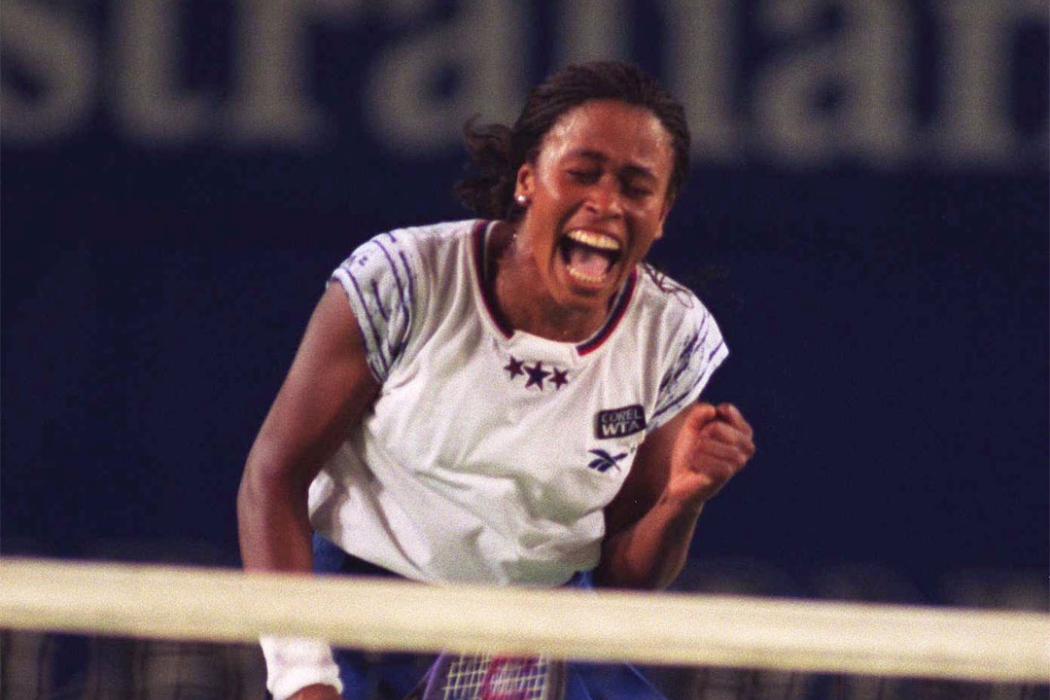
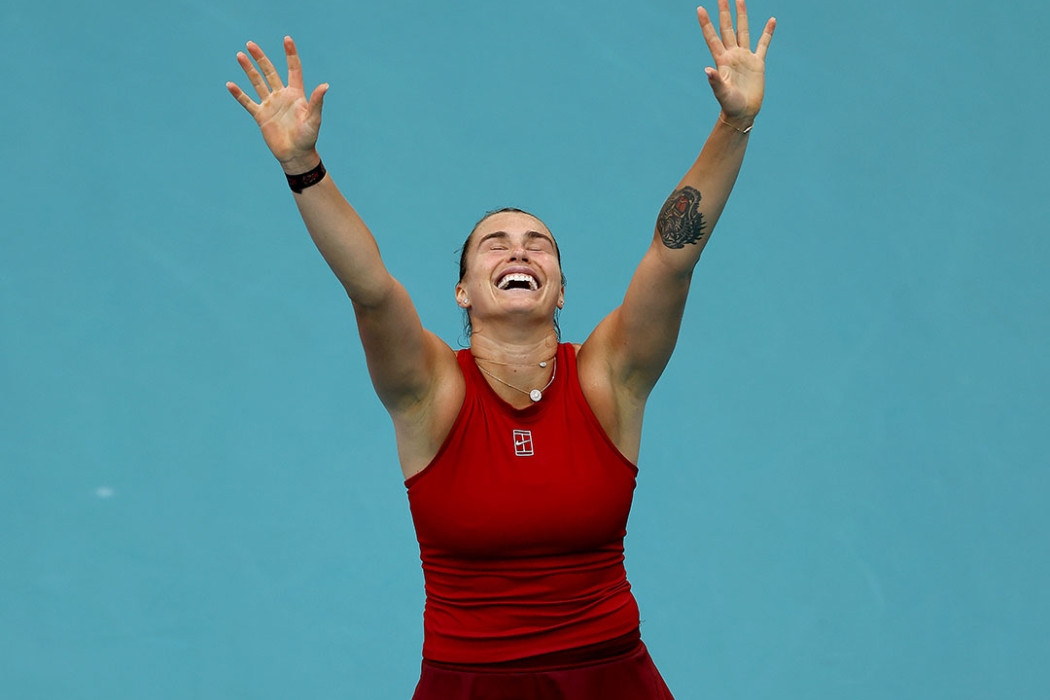
“It’s amazing that I have been able to achieve it,” the Aussie said after being Kvitova, which assured her top-10 debut. “But there is still a long way to go, and I’m not satisfied. I’m still hungry to get better as a person and as a player. If that means that the ranking gets higher and higher, that’s pretty cool, as well.”
The Miami title was her first at WTA 1000 level. Two months later, she claimed her first major title at Roland Garros and hit world No.1 – an extraordinary rise in the space of just half a year.
The Kvitova win was the first of four consecutive victories over the Czech, and Barty ultimately won five of their last six meetings.
Aryna Sabalenka d Elena Rybakina
Wimbledon 2021 4R
For all of her power and big-match abilities, Sabalenka struggled for the first few years of her career at the majors.
By mid-2021 she’d won 10 career titles, including four at WTA 1000 level – two in Wuhan, plus Doha and Madrid – but she had failed to pass the fourth round in her first 14 Grand Slam main-draw appearances.
This changed when she won a pulsating last-16 encounter with Elena Rybakina at Wimbledon in 2021.
“I’m really happy I finally broke this wall. I’m in the quarterfinals,” she said after her 6-3 4-6 6-3 win. “Really looking forward for the next match. Hopefully I can keep going.”

The upswing in her Grand Slam record was instantaneous. Sabalenka went on to reach the semifinals that fortnight, and from Wimbledon 2021, she reached at least the semifinals at eight of her next 10 majors.
The zenith came at Australian Open 2023, when she won another incredible match against Rybakina for her first Slam title.
She defended her title at AO 2024 and won the US Open title that year, ending the season at world No.1.
Jannik Sinner d Novak Djokovic
Davis Cup 2023 SF
Any belief Jannik Sinner may have lacked to break his Grand Slam duck at Australian Open 2024 was attained with his win over the great Novak Djokovic just two months earlier.
In the 2023 Davis Cup semifinals, a trophy the patriotic Serbian had openly targeted, Sinner stared down three match points before emerging a 6-2 2-6 7-5 winner.
Italy went on to secure the trophy and Sinner entered the 2024 season brimming with confidence.
“At the end of the year I played really good. I have still the confidence inside me, for sure,” he said upon arriving in Melbourne.
“It gives you a good feeling when you lose so many times and then you win finally because it shows also the progress you're making as a player.”
Sinner had lost four of his first five meetings with Djokovic before flipping the script in that Davis Cup encounter, which ended Djokovic’s unbeaten 21-match run in Davis Cup singles matches.
When they met again in the Australian Open 2024 semifinals, Sinner repeated the feat, stunning Djokovic in four sets to reach his first major final. Djokovic had never previously tasted defeat in an AO semifinal.
Sinner went on to win the title and also the US Open in a season in which he won 73 of 79 matches and rose to world No.1.