Twelve months after Roger Federer made his sparkling return to Melbourne Park by capturing an unlikely 18th Grand Slam title in 2017, the Swiss star sat stoic in an interview room ahead of his campaign for a second straight Australian Open crown.
“It does feel a little surreal, yeah,” he offered about being back.
Surreal is putting it lightly. When he arrived in Australia last January, Federer hadn’t played a competitive match since Wimbledon nearly six months prior. The two weeks and seven tennis matches that followed encapsulated one of the greatest tennis achievements in the history of the sport.
MORE: Federer unfussed in run to round two
Federer would go on to have an explosive 2017.
What made Federer’s run inside Rod Laver Arena so spectacular were those six months away. His body was falling apart, and he needed to right it. But his time away cast doubt over his return: Would he be the same Roger? How can a guy in his mid-30s be able to return to the top of the game? Such a comeback is unprecedented, isn’t it?

Tennis has always been full of comebacks, and perhaps more recently than ever before. Last year it was Federer and his dreamy Melbourne assault. Serena did it here in 2007, Kim Clijsters made a glorious return to the game after her first child in 2009 and 2010, and Rafael Nadal has done it several times in his career with nagging knee and wrist injuries setting him out for months.
So how hard is a comeback? And how rare is it to make a successful one? Even – at that – a Grand Slam championship-winning one?
That’s what six-time Australian Open champion Novak Djokovic and 2014 winner Stan Wawrinka are trying to do at AO2018. Neither of them had played a single match since losing at Wimbledon in July, and both are safely through to Thursday’s second round after opening triumphs.
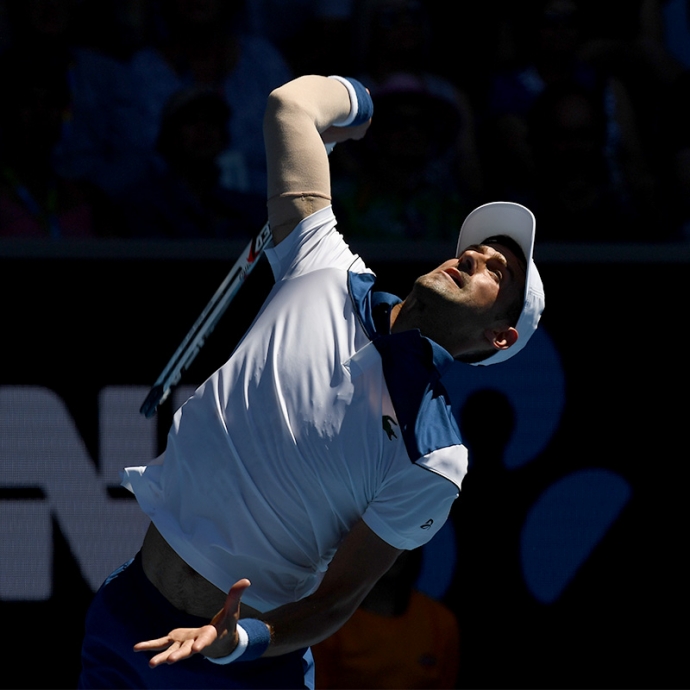
But how long can we expect them to stick around? Do they have the same DNA as champions like Federer, Serena, Clijsters and Nadal to bring out their best while simultaneously shaking off their rust?
Federer has his own theories.
“I do maybe think if you put Rafa, myself and Novak together, I think because we have margin maybe against a lot of the players normally, when we do come back, we can find that level,” he told reporters at Melbourne Park. “Even though we're not feeling good, we can still find a way and eventually play good again, whereas others would struggle early on and it becomes more difficult.”
“Mentally and physically we're going to be there. The question is, is our game good enough.”
Federer said it will be “interesting” for him to follow the comeback attempts for Djokovic – who had an elbow issue – and Wawrinka – who was dealing with a bad knee – over the coming days.
On Thursday, it gets no easier for the multi-Slam winners, with Djokovic set to face the dynamic (and always dangerous) Frenchman Gael Monfils, while Wawrinka has a lesser-known foe in American Tennys Sandgren.
“You don’t know how you’re going to start off,” Djokovic offered after his round-one win over another American, Donald Young. “Playing a practice set and playing an official match in a Grand Slam is quite different … I used my experience (and that) enabled me to keep my focus.”
MORE: Novak of old breezes by Young
Djokovic dropped just seven games in three sets played against Young, but Wawrinka was made to work a lot harder against Ricardas Berankis, a 6-3 6-4 2-6 7-6(2) victor who trailed in that fourth set.
“(It was tough) in all aspects of the game,” Wawrinka said. “In general, I’m happy to get through a match like that, to fight the way I did, to win the match like this.”
How deep either of them can go is what tennis fans will watch and see. Former finalist Andy Murray chose surgery over pushing his body Down Under this year, while Kei Nishikori is due at a Challenger event next week in the US in a softened, slow comeback, having not played since the American hard court season.
Milos Raonic wasn’t that lucky, though. His comeback – having not played since Wimbledon, either – fell short in Australia, going 0-2 in January, including a loss to Alex de Minaur in Brisbane and a first-round exit in Melbourne.
MORE: Lacko stuns Raonic in first round
Think of all that goes into a comeback, not just physically, but mentally too. And to do so at a major? It’s no simple task. That’s what made what Federer did here last year so sensational. Everything coming together so quickly, so (seemingly) effortlessly. The hard work happens behind the scenes. And again, it’s a run that has put Federer into position of the great standard bearer – even of comebacks.