Match points have been a theme of Linda Noskova’s Wimbledon 2026 campaign.
The Czech youngster saved a match point in her 2-6 6-3 7-6[11-9] third-round victory over Sorana Cirstea, then did not drop another set as she advanced to her first major final six days later.
There, she was completely controlling that final against countrywoman Karolina Muchova. She built a 6-2 5-2 lead and held three championship points in the eighth game – all of which Muchova saved.
Muchova, who also stared down a match point in her thrilling semifinal win over Coco Gauff, saved a fourth championship point in the next game, and a fifth in the next, before forcing a third set.
How Noskova reset and regained control in that final stanza could become the subject of sports psychology studies for years to come.
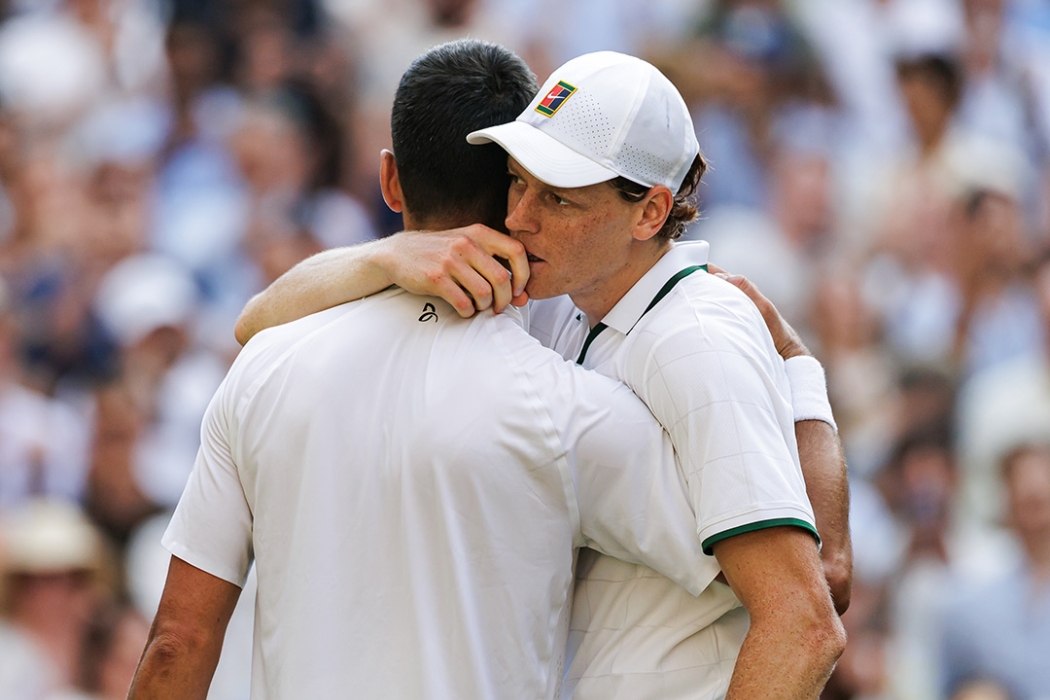
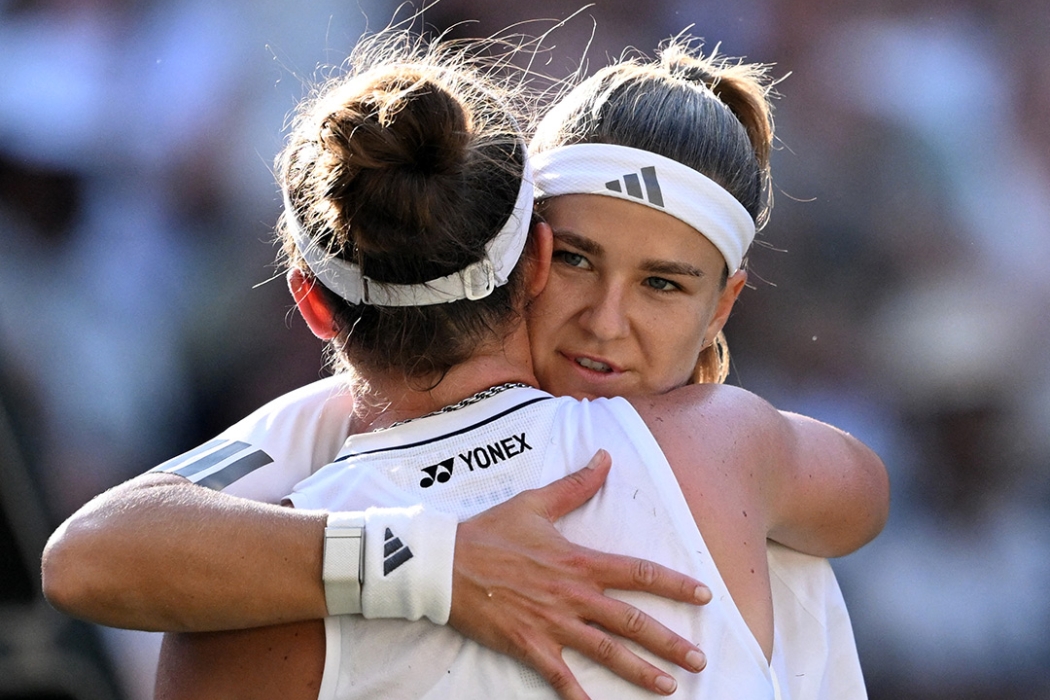
"That is one of the all-time greatest efforts, mentally, that you'll ever see on this court," said three-time Wimbledon champion John McEnroe, watching on from the commentary booth.
Noskova’s eventual 6-2 5-7 6-3 triumph, in two hours and 28 minutes, saw the 21-year-old become the third Czech women’s champion in the past four years at Wimbledon, plus the 10th different winner in the past 10 editions of the tournament.
RELATED: Why Czech players thrive on grass, at Wimbledon
The win cements her status as one of the game’s premier grasscourters and elevates her to a career-high world No.7 in the WTA live rankings.
It also means women’s tennis sees the arrival of another young gun at the top of the sport. Noskova joins two-time major winner Gauff, reigning Roland champion Mirra Andreeva and top-10 star Victoria Mboko as exciting talents aged 22 and under.
She and Andreeva are the first pair of 21-and-under players to win Roland Garros and Wimbledon in 23 years, after Justine Henin and Serena Williams in 2003.
“It is definitely something that I'm going to remember forever, but it will definitely take me a few days to realise it,” Noskova said after winning the third, and biggest, title of her career.
“In the second set, it was very tough for me. My hand kind of froze at certain moments. My feet were not as quick as they had been before.
“I will focus on the positives (smiling). On the last match point, I didn't even realise that I had a match point. I kept going. That's what really won it for me, that I didn't exactly put it into my head.”
After losing the second set and blocking her ears as the crowd roared, Noskova exited Centre Court and took a few minutes to reset in the bathroom. Extraordinarily, she returned and resumed playing as if the disappointment of what just transpired never had.
She saved three break points in the first game then broke Muchova on her way to a 3-0 lead – an advantage she never relinquished.
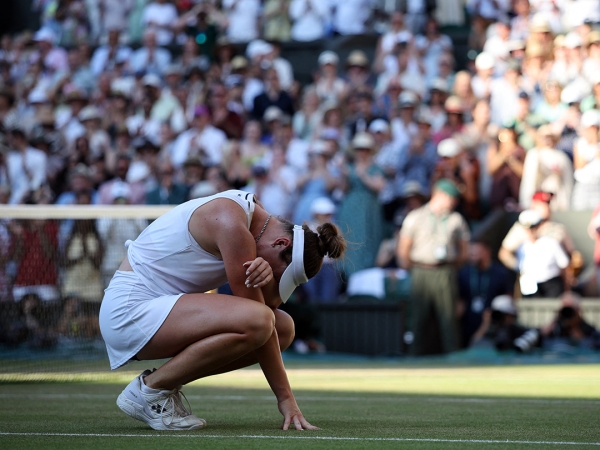
“I was just telling myself that the match is starting over. I was in the bathroom. I just splashed some cold water on me, started over again,” she explained.
“But what really helped me, like the first step I took off court, the trophies were there. I was like, ‘I'm not going to take the small one, I'm taking the big one’. I have been so close. This will probably be the heartbreak of my life.
“I would say that maybe the key point was the first game [of the third set] that I held my serve.”
Australian fans in particular can trace the beginning of Noskova’s steep rise back to her breakthrough results Down Under.
RELATED: The story of Linda Noskova's rise
As an 18-year-old qualifier ranked outside the top 100, she stunned two top-10 players in reaching the Adelaide International final. A year later, she upstaged world No.1 Iga Swiatek under lights at Rod Laver Arena en route to her first major quarterfinal at Australian Open 2024.
In 2026 she has attained an even higher level. After reaching the Indian Wells semifinals on hard and quarters in Stuttgart and Madrid on clay, Noskova soared on grass, winning the Berlin title – which saw her crack the top 10 – then continuing that form through Wimbledon.
Her triumph connected her with several greats of previous women’s tennis generations.
She is the first Wimbledon champion to win a WTA-level lead-up title on grass since Maria Sharapova all the way back in 2004.
She is just the third woman in the Open era, after Venus Williams (2005) and Serena Williams (2009), to win Wimbledon after saving a match point.
She is also the youngest Wimbledon champion since compatriot Petra Kvitova in 2011.
Both Kvitova and Sharapova were watching on from the Centre Court Royal Box as Noskova completed her triumph.
“It means a lot. It definitely means that if I focus on myself, if I enjoy my time on court, if I know that I can win, if I want to just keep [my] head down, if I want to go from point to point, I can win such a tournament,” Noskova said.
“I tried to copy the feelings that I had in previous rounds. I was not exactly nervous before any of the matches, so I tried to do all my routines, all the things that worked before.
“But today was a lot different. I have been in a few finals. A final is a final. No matter what you do, there's always the pressure. You always want to keep your cool, be OK, be like nothing is happening. But deep inside you know it's very important.
“I was going the way that I wanted almost 99 per cent of the match. But then those key moments that I kind of froze kind of got me into the third set.
“But, yeah, it was the most important side of my life probably that I won.”