While Christiane Amanpour has spent decades reporting on major conflicts and world affairs, the global news icon is enjoying a far different experience in Melbourne this summer. As a tennis super fan, Amanpour was delighted to complete her Grand Slam set at the Australian Open, where she was the keynote speaker at the AO Inspirational Series.
Watching the AO through the dual lens of reporter and sports lover, Amanpour not only sees results and rivalries but also resilience, community and a benchmark for how people rise to pressure. AusOpen.com spoke with the legendary reporter and anchor about the lessons tennis provides beyond the baseline …
Tell us about your experience at the Australian Open …
Well, you know, it reached a complete and utterly unexpected climax with the men's semifinals where I was lucky enough to be at Rod Laver Arena for both of those matches. It was an extraordinary display of sports and injury and obstacles, and unforeseen circumstances and unknown destinations and results. It was just the most magnificent thing to watch … a genius display of how you can basically defy the odds.
Carlos Alcaraz defied the odds. In whatever happened to him. He came back, he lost two sets, but he played two sets practically walking. Practically not jumping for a serve against a very powerful server. Then he comes back and wins the fifth.
Novak [Djokovic] — of course, nobody ever can underestimate or count him out, no matter how old he is. But he should have lost, as he said himself, to [Lorenzo] Musetti. He got two walkovers and who knew that he was going to beat [Jannik] Sinner? You know, the world No.2 too, and I just thought it was extraordinary. You just don't see this in sports, or in life, very often.
That's such a good point. Sports might at times seem trivial in relation to other world events but when you see qualities like that on display, there's a lot to learn from it.
You know, I would never say sports is trivial. No matter what it is, honestly — whether it's hopscotch or marbles or, NFL or Premier League or professional tennis, basketball, horse riding, swimming, anything. All these sports demonstrate the qualities that any human being needs in order to live their life.
Every single person has some area of endeavour. It might not be championship sports, but it's something, and they have to be prepared. They have to train, be healthy, they have to be determined, they have to have vision, they have to want to win. I mean, in business, in medicine, in journalism, whatever it is. I think sports forever has shown an extreme version of those qualities.
And a sport like tennis brings so many global communities and so many different cultures together …
I will say, I'm looking forward to the time when tennis is even more democratic, so to speak. In other words, allows even more people of all socioeconomic levels to really, really have a choice and a chance. I think that British football [for example], it's a bigger pool and I think you can see those kinds of stories. But yeah, there are definitely stories in tennis where people come from unexpected and underprivileged and marginalised communities and do really, really well.
You've interviewed so many amazing people — from prime ministers to royalty and entertainment superstars. What about tennis players?
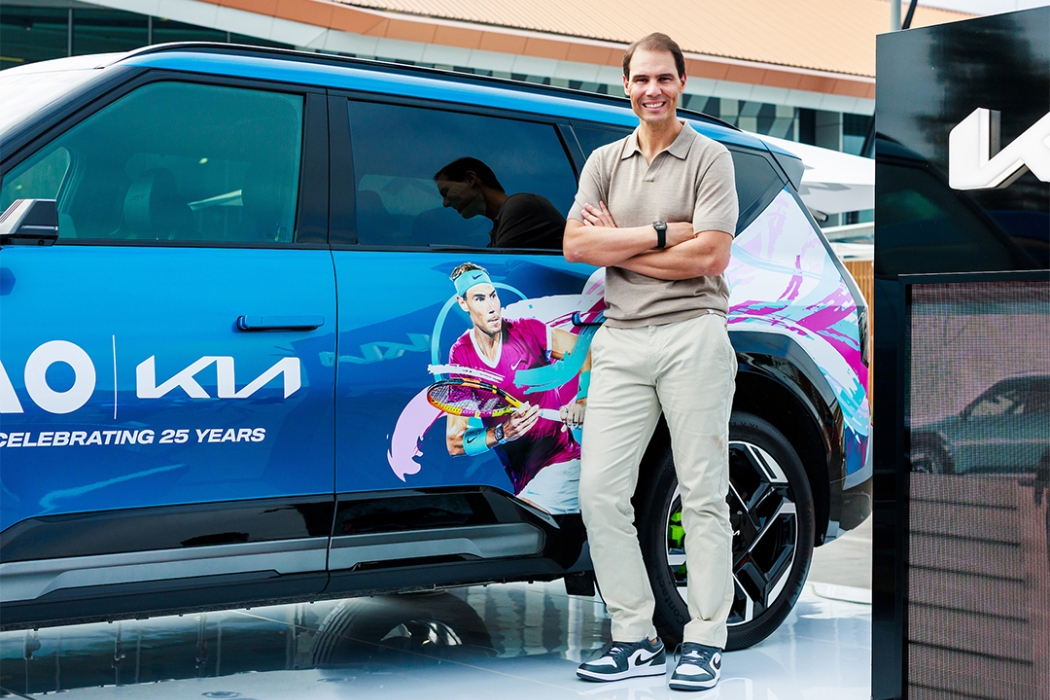
Well, I just ran into Rafa (Nadal) and he reminded me of the two times that I interviewed him. When he was playing, he was the one I was rooting for all the time because I just loved his style and his expression of talent and energy, and the way he was so serious and loved the sport.
As we all know, and it sounds trite, but it's not every day that you can win 14 of one Slam [at Roland Garros]. I mean you just don't, and even when he was in pain and he had feet that he had to, you know, minister to before he could even get on the court, he got through it.
And I loved what I called his rituals. I asked him about them and he was really interesting in his answer. He said to me, actually, after winning the Australian Open the last time, he said, 'Yeah, I'm glad you used the word rituals, because some people think I'm obsessive or OCD or whatever, but it's not like I behaved like I do on the court in my normal life. it's clear that I have a set of rituals that get me through whatever it is — practice, the match, all of that. And I liked it. I liked those quirky things.
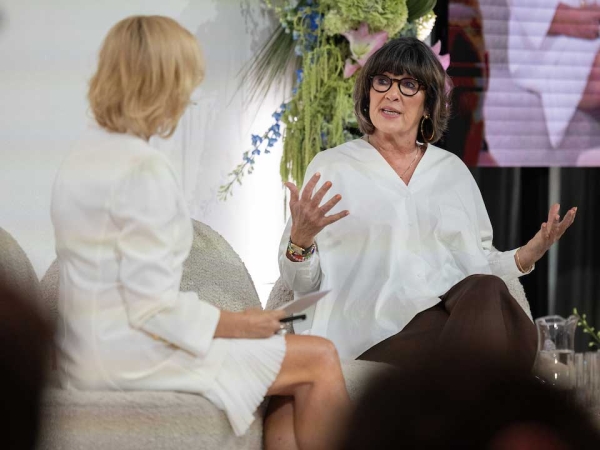
You have a connection with Billie Jean King, which played a part in you attending the AO Inspirational Series. Tell us about that?
I really enjoyed the event because it was a room full of the most incredible, talented and determined women in all fields. And I know, from all the statistics and from my actual firsthand information and experience, that in every walk of life when you have equality, everything works better. Politics, sports, journalism, medicine, science, business, real estate. I mean, every single walk of life.
Career Slam completed 🏆🏆🏆🏆
Thrilled to have you here @amanpour 👋#AO26 pic.twitter.com/i5zwiWPqF0— #AusOpen (@AustralianOpen) January 30, 2026
What role, in your opinion, can tennis play in furthering women throughout the world?
I think it has and it does. And I think when you have great champions like Billie Jean King — and all the other [women's players] — but Billie started championing equal rights for women and it was because of Billie Jean King, that there's equal pay at the Grand Slams and, and that's a 50-plus years endeavour and it's not nothing.
You know what she said [is that] ‘I could have won more titles, but I was doing something else that I thought was equally important’. And she doesn't regret it. I think that's amazing because she was on the cutting edge of this feminist revolution, and she walked a walk, and she understood how not just to be a performer and somebody who's on a stage, but how to translate that into action. And she's still going. She never stops.
Billie Jean, of course, coined one of the most famous phrases in tennis…
Pressure is a privilege. Yes! I should have worn it. I have my t-shirt here [and] I'm going to wear it tomorrow.
What does that mean to you?
It means, probably what it means to her ... in every great endeavour, there's always going to be pressure and there's always going to be stress. The question is, is it manageable and can you handle it? Are you up to it and do you relish it? And I do. And she does.
You know, I sometimes worry about the younger generation who've come up in a much different environment where they don't have to struggle as hard maybe, or don't think they should have to struggle as hard ... but I think they're beginning to understand that if you really, really want something bad enough, and if you want to be the best at what you choose to be, pressure comes with that . And it is a privilege because it means you're along that track to either make it or not make it.
But with it comes pressure and you need that pressure. It's like me as a war correspondent; I need the adrenaline. It's not that I'm an adrenaline junkie. You need it to stay alive and to want to keep pushing the boundaries in order to get close enough to the truth.
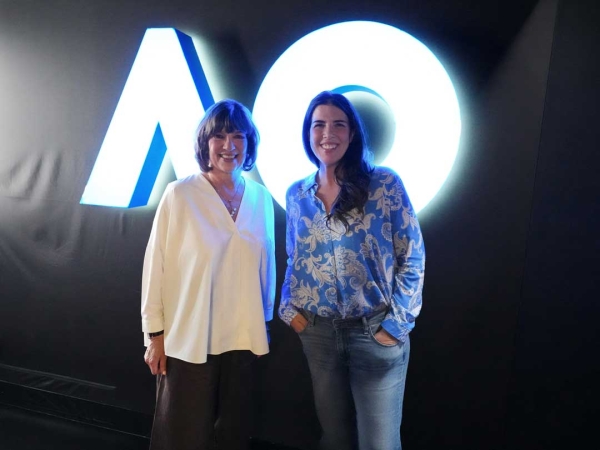
You have been in some of the most intense situations in the world. There is clearly no comparison, but what advice would you give to a player who's stepping out into a big match or challenging situation for the first time?
I think there is some comparison. The stakes are slightly different but now that you asked me. Alex Honnold [the American rock climber] who climbed El Capitan free solo with no harnesses, no nothing and just this week climbed the tallest building in Asia … that's an extreme sport. And I do an extreme profession. It's an extreme profession because when I go into the front lines. I don't know that I'm going to come out alive, dead, wounded, not wounded.
And I think that when you go into battle on a court, just take [Friday] — when Carlos Alcaraz could have been, injured to the point, or hurt to the point that he had to retire, but he pushed through it. And I think that that whole idea of pushing your limits is something that I recognise because nobody is unafraid and nobody's immune from the pressure. It's all about how we all manage that pressure and that fear and that extreme nature of what we do.
And on the other hand, what would you ask someone who has had the biggest and most life-changing win of their career? What would I ask a winner?
For me it's, it's very connected to the mind. You know, for me, the sport is also about your mentality and your mind strength. So I think I would've asked, you know, a question I would've taken some aspect of, that game and what it took and what, where was the turning point and tried to explore that turning point.
To finish, the Australian Open completes your Grand Slam set. How does it compare to other events?
Well, I mean, I've loved it. It's really special. It's my first time in Australia and Australia has this — for me anyway — this openness and not just in space and sky, but just in feeling. This openness and this hospitality and this readiness to accept everybody. And I like that ... just the sheer friendliness of the people.