Novak Djokovic has it down pat how to best manage his emotions while patiently waiting in the wings for hours, ready to be called on court for his showdown at the pointy end of a major.
Even still, there’s only so much pacing the halls, stretching, card games and breathing exercises one can do beneath Rod Laver Arena, careful not to expend too much energy while the longest men’s semifinal at Melbourne Park in history plays out.
For the 24-time major champion and his opponent, two-time reigning champion Jannik Sinner, it was impossible not to keep an eye on world No.1 Carlos Alcaraz as the Spaniard lifted himself past third seed Alexander Zverev to book a maiden Australian Open final.
Fewer expected the 38-year-old Serbian and the second-ranked Italian would later treat Australian Open fans to another epic five-set spectacle, much less that the inexorable Djokovic would emerge as Alcaraz’s final challenger in Sunday’s decider.
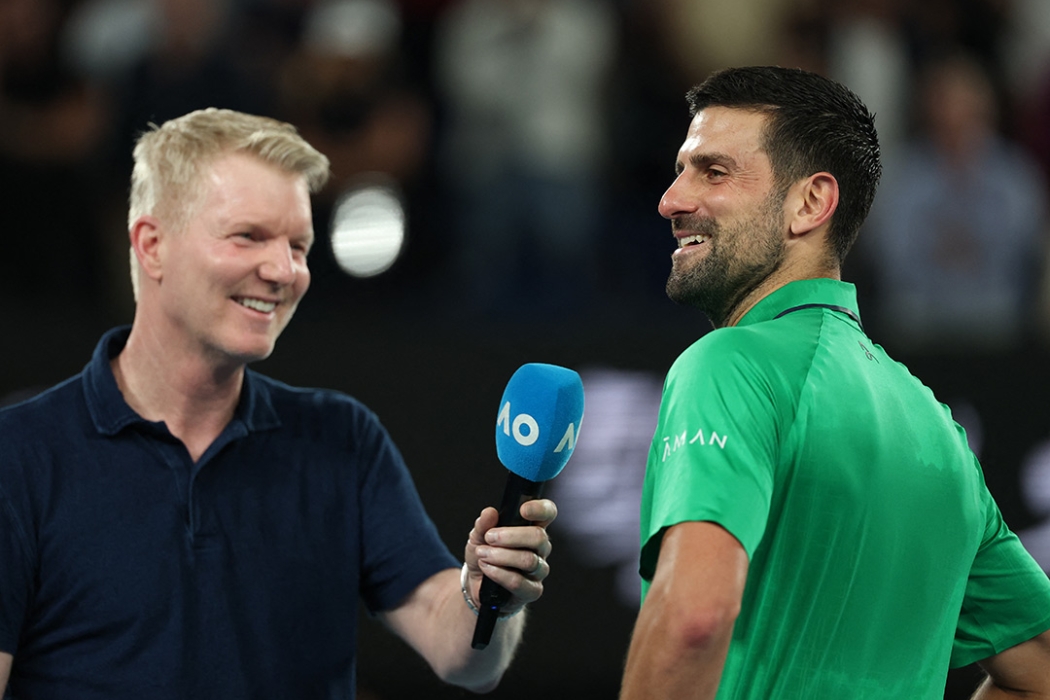
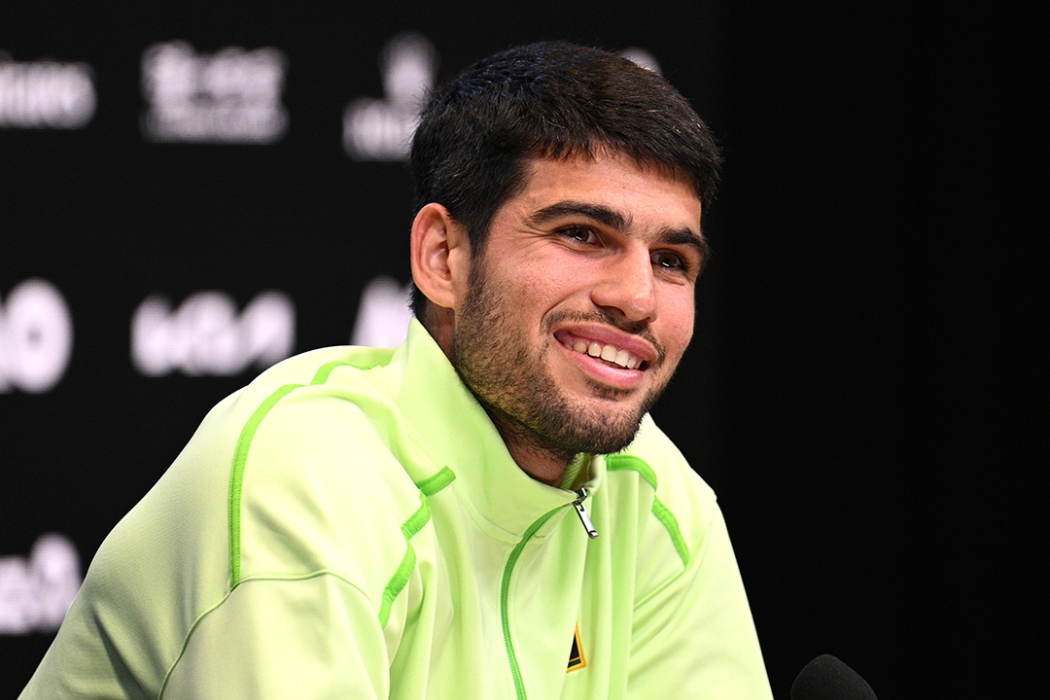
Two last-four clashes for the ages — the first a five-hour, 27-minute record-breaker, the latter a four-hour, nine-minute after-dark boilover — completed a most remarkable day.
“I saw Carlos after his match and he told me: ‘I’m sorry to delay the start of your match,’” Djokovic said. “I told him: ‘I’m an old man, I need to go earlier to sleep.’ So, I’m looking forward to seeing him in a few days’ time.”
With 16 years between the two, age-defying history is on the line. Fourth seed Djokovic, having snapped a five-match losing streak to 24-year-old Sinner, stands just one win from a record 25th major singles crown, an 11th at Melbourne Park. He could become the oldest Grand Slam champion in the Open era.
In his first Australian Open final, the 22-year-old Alcaraz is a win shy of becoming the youngest to complete the career Grand Slam.
Posed with the hypothetical choice between the last piece of the puzzle, the Norman Brookes Challenge Cup, or claiming the remaining three Slams in 2026 – each of which he has already won twice – Alcaraz gained clarity as the tournament progressed.
“I would choose this one,” he said. “I would say I rather win this one than the three and complete the Grand Slam and be the youngest ever to do it.”
Former Grand Slam champions and world No.1s Lleyton Hewitt, Pat Rafter and Marat Safin, and two-time major finalist Mark Philippoussis told ausopen.com how impressed they were at the evolution of both at opposite ends of their careers.
Grand Slam records clearly fuelled both finalists and Safin said Alcaraz’s age helped alleviate some of those expectations.

“When you're young and you're ambitious and everything is interesting and new, it's easy to embrace [pressure],” Safin said. “There are stages when you’ve already been around — you are 26, 27, and it becomes like routine. Then it's complicated to get motivation and you need to find something inside of you to motivate yourself, to continue. I would say that’s a talent.”
Where Iga Swiatek was keen to quieten chatter around her career Grand Slam pursuit at this year’s Australian Open, Alcaraz was a more open book as he chased the same.
He is on the brink of becoming the youngest to win seven men’s singles majors in the Open era, which would surpass Bjorn Borg.
Hewitt said the Spaniard’s happy-go-lucky personality had already worked in his favour in his short career.
“It doesn't surprise me. He’s got all the tools to be a champion and that's what he's been able to do now consistently. The more important the match and the bigger the stage, that's where you see him play his best tennis,” Hewitt said.
“I don't think there's too much that worries him, to be honest, and when you’ve won six Grand Slams and you're only 22, I reckon anyone would feel probably like that too. I have no doubt that he'll win this tournament at some stage in his career.”
Through to his 38th major final, for Djokovic — who holds a 5-4 record over the Spaniard including in the Australian Open quarterfinals last year — it is all about conserving energy and recovery.
Former world No.8 Philippoussis, a US Open and Wimbledon finalist, said a fourth-round walkover over Jakub Mensik and a retirement while trailing two sets against Lorenzo Musetti had helped. It was now a race against time to return his body to optimal condition before Sunday night.
“He had three days to recover [due to Mensik’s withdrawal]. That's a huge thing for him,” Philippoussis said. “It's all about having a little bit of luck where he’s a little fresher. There's a minimum of three sets he didn’t have to play, so that's a big, big difference.”
Both finalists understand the history at stake and how to approach a showdown with so much on the line.
Philippoussis said Alcaraz would frame Sunday’s title match more as an opportunity, knowing he still had plenty of time on his side.
“I don’t think he even looks at it as pressure, I think he looks at it as opportunity,” Philippoussis said. “He has dealt with pressure. He has won multiple Grand Slam championships … I love the fact that he's looking for that one per cent here to keep improving.”
Rafter, who retired at 30 having struggled with motivation, mental exhaustion and persistent injuries, was in disbelief at what Djokovic was able to achieve as he approached his 39th birthday.
“The guy's unreal, fit as he's ever gonna be,” Rafter said. “He looks unbelievable. You just don't wake up on the right side of bed when you get older, that's the problem.
“You got to do it seven times in a row, wake up and go out and perform — good luck. But he's a weapon. If anyone can do it, the greatest of all time can.”