Alexander Zverev will leave Melbourne Park just shy of returning to a championship match after falling short in a five-set marathon semifinal against Carlos Alcaraz at Rod Laver Arena on Friday evening.
Serving for the match at 5–4 in the fifth, the world No. 3 got closer than anyone has come to completing a comeback from two sets down against Alcaraz, only for the Spaniard to summon one last stand in the longest semifinal in Australian Open history.
At 5 hours and 27 minutes, it was also the third-longest match in Melbourne Park history and a physically gruelling battle that left Zverev struggling to process the aftermath.
Sascha, thankyou for helping bring to life one of the most epic #AusOpen matches in history and a great #AO26 campaign 🤝@wwos • @espn • @tntsports • @wowowtennis • #AO26 pic.twitter.com/Hm3XzRjDfO
— #AusOpen (@AustralianOpen) January 30, 2026
“I think I'm way too tired to have emotions right now, so like in two days’ time, I'll probably have more, but right now I'm just exhausted,” he said.
“I think we both went to our absolute limits, so somewhat I'm also proud of myself, the way I was hanging on and came back from two sets to love.
“Of course it's disappointing, but this is the start of the year, so if I continue playing that way, if I continue training the way I train, if I continue working on the things that I've been working on in the offseason, I do believe it's going to be a good year for me.”
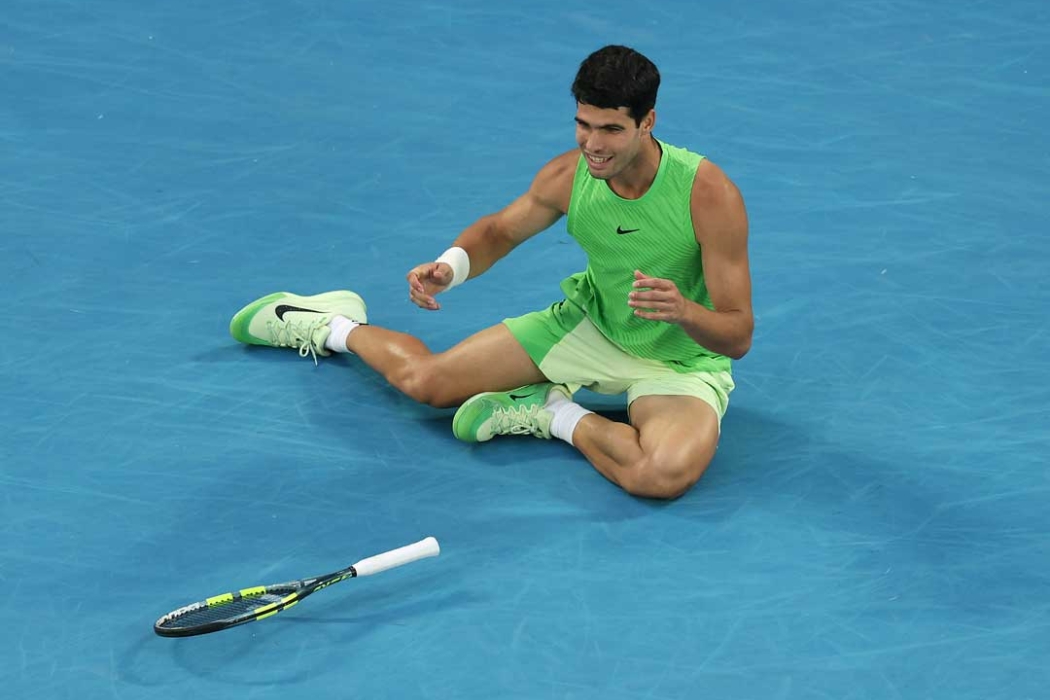
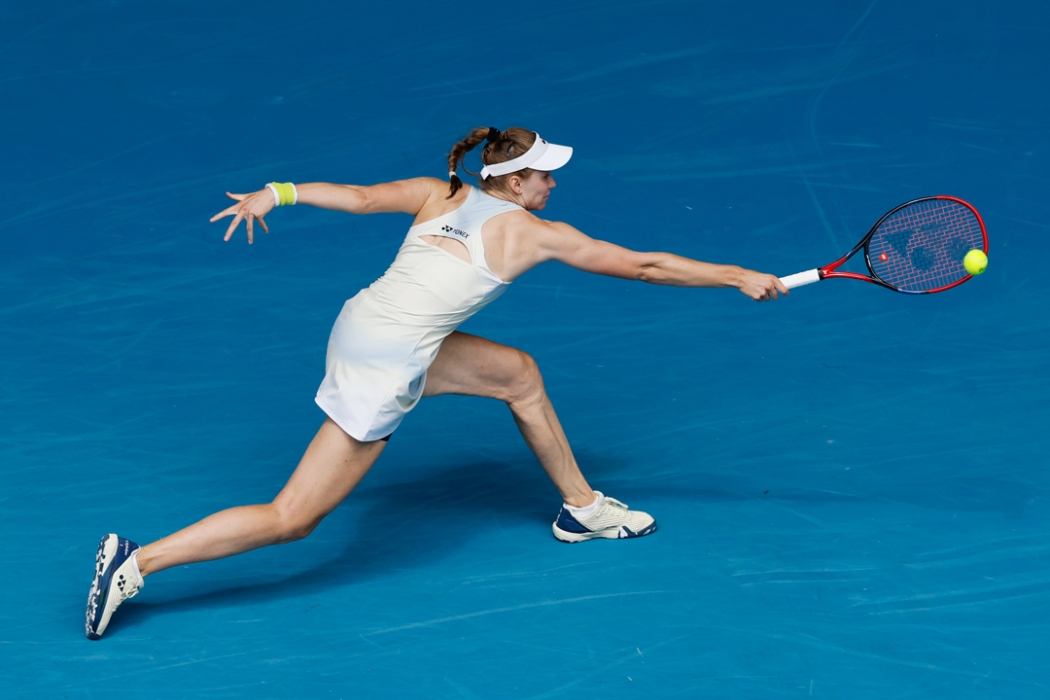
Zverev led 5-2 in the second set but let the lead slip into a daunting two-set deficit until an opportunity opened late in the third, when Alcaraz began suffering severe leg cramps.
“The second set. That one, for me, I felt like I should have won…. I didn't play a good game serving for it,” Zverev said of his biggest regret in the match.
“Funny enough, I don't have many regrets in the fifth set, because I was hanging on for dear life, to be honest. I was exhausted.
“The second set. I think going up, being one set all, and him starting to cramp in the third set, that probably would have made a difference.”
The German capitalised on Alcaraz’s physical predicament with relentless precision, power and stamina, striking 17 aces and winning 71 per cent of his 149 first serve points.
It ultimately took a herculean effort from Alcaraz, who last year saved three match points against Jannik Sinner in the Roland Garros final.
Chasing a career Grand Slam in Melbourne, the world No.1 summoned flashes of transcendent shot-making at do-or-die moments to become the youngest player in the Open era to reach all four major finals.
“I didn't do a good job in the third and fourth sets. I should have won them easier in a way, but he was hitting a lot of winners from the first shot, so I wasn't getting into the rallies. I should have probably been a bit more aggressive,” Zverev said.
“But nevertheless, again, the biggest regret I have is probably the second set, not winning that, because I think it would have changed being one set all, and then him cramping.
“Even at 5-4 [in the fifth], you know, normally I can rely on my serve a bit more. My legs stopped pushing upward… that's the way it is. This is life. We move on."
Zverev is one of just three active players to have reached 10 or more men’s singles semifinals at Grand Slams, alongside Novak Djokovic and Alcaraz. In the Open era, he owns the highest win rate of any player yet to lift a major title.
Despite the heartbreak, Zverev ends his AO 2026 campaign proud of his fighting spirit against one of the sport’s champions, at peace knowing he left everything on the court.
“Unbelievable fight, battle. Unfortunate ending for me, but to be honest, I had absolutely nothing left in me.”