Know your time-out from your toilet break? Our AO Explainer series brings you up to speed on some of the decisions the umpires will be making on court.
Tennis is a simple game. One player hits a yellow ball over a net, and the other tries to hit it back.
Beneath that simplicity is a sport full of peculiarities: the scoring system comes from medieval France, and etiquette is governed as much by custom as by rulebook.
But as the sport has evolved, so have its rules - some to speed things up, others to improve fairness, safety or clarity.
As Australian Open 2026 plays out, here are a few lesser-known rules to be aware of that even diehards don’t always fully understand.
Foot faults
A foot fault occurs if the server’s foot touches the baseline, the court inside the baseline, or the wrong side of the centre mark before the ball is struck. The server must remain behind the baseline and within the correct half of the court until contact is made.
At the Australian Open, foot faults are determined electronically using automated line-calling technology. A foot fault results in the loss of that serve; a first serve becomes a second, and a second serve becomes a double fault.
Shot clock
A 25-second shot clock was introduced at Australian Open 2018 to regulate the time allowed between points. It replaced the previous system, which relied largely on the chair umpire’s discretion and often led to inconsistency.
The clock starts once a point ends and players must begin their service motion before time runs out.
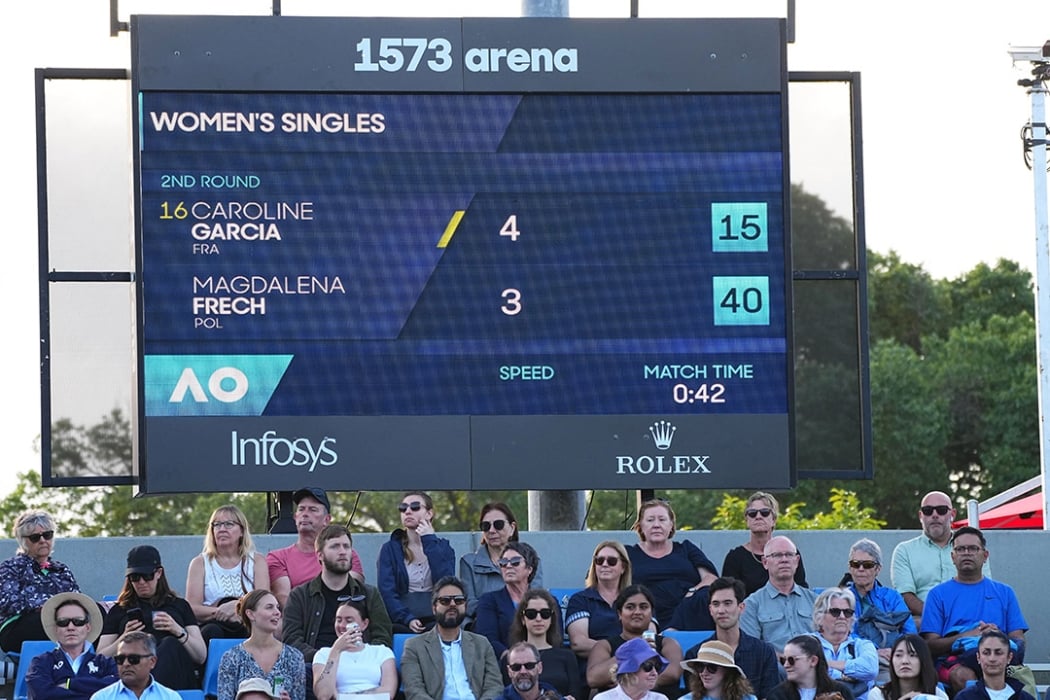
Exceeding the limit results in a time violation: an initial warning followed by the loss of a first serve for a subsequent violation. Electronic shot clocks are positioned at ground level at each end of the court, making the countdown visible to players and fans.
Hindrance
The hindrance rule is designed to prevent a player from interfering with an opponent’s ability to play a shot. If the interference is deemed deliberate - such as shouting, making unnecessary noise, or moving in a way intended to distract - the offending player loses the point.
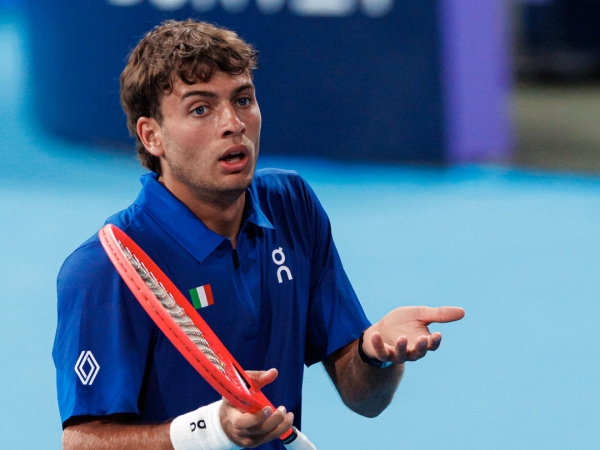
An unusual application of the rule occurred at United Cup 2026, involving Italy’s Flavio Cobolli. During a rally, a ball fell out of Cobolli’s pocket and on to the court, prompting him to stop playing the point. Under the rules, a player cannot claim hindrance against himself. Because the loose ball came from his own clothing, and was therefore within his control, Cobolli was forced to concede the point, despite the incident being accidental.
Coaching
For most of tennis history, coaching during matches was prohibited. That changed at Australian Open 2023, when limited on-court coaching was introduced under strict conditions. Coaches seated at the same end of the court as their players are now permitted to offer brief verbal instructions and communicate through hand signals.
Breaches are enforced on a progressive scale: an initial warning followed by a point penalty for a second offence, and the loss of an entire game for a third.
Sponsors
At the Australian Open, players are allowed up to two commercial (non-manufacturer) logos on their clothing, each no larger than three square inches. These are usually on the sleeves or the front of sleeveless tops and dresses.
Manufacturer logos are treated separately and are allowed in additional positions (such as the shirt front, back or collar) but must remain small. Shorts and skirts may carry limited manufacturer branding, while compression garments have their own narrow allowances.
It can seem as if players carry more sponsor logos today because of this distinction between commercial sponsors and manufacturer branding.
Ball and racquet abuse
These are both serious offences at the Grand Slam level.
Ball abuse covers any act where a player hits a ball angrily, dangerously or recklessly – including blasting it out of the stadium, firing it around the court without regard for others, or striking it in frustration outside the natural play of a point.
Racquet abuse applies to violently hitting, kicking, throwing or deliberately damaging a racquet or other equipment, as well as striking court fixtures or furniture.
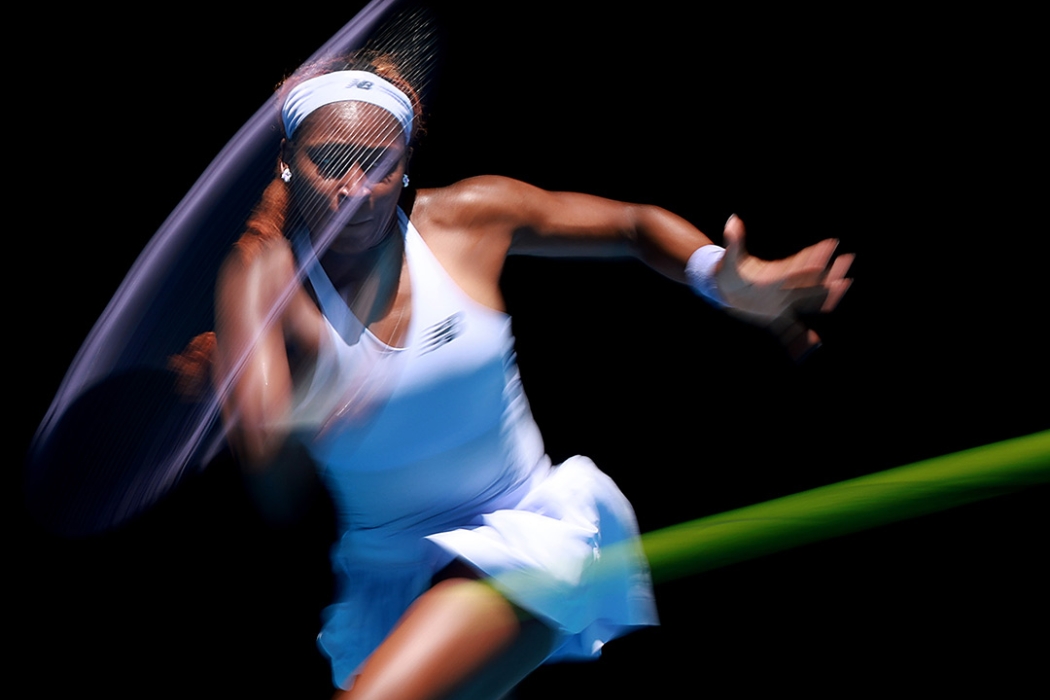
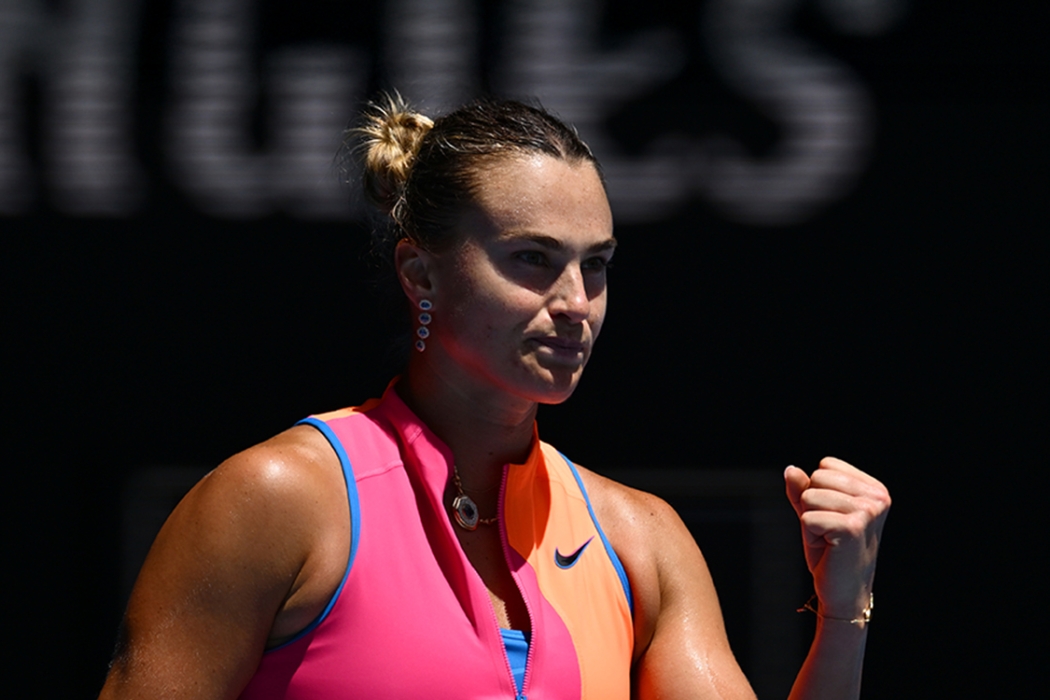
Both offences fall under the same escalating code violation system: a warning for a first offence, then a point penalty, a game penalty, and ultimately disqualification. In severe cases, such as hitting an official or endangering others, a player can be defaulted immediately, with fines often added at the umpire’s discretion.
Medical treatments and time-outs
Players can receive medical treatment during any change of ends or set break for a treatable condition, usually limited to two changeovers or breaks per issue. This includes things like taping, assessment or brief hands-on treatment, and it does not stop the clock.
A medical time-out is a formal stoppage of play. It is only granted when the tournament doctor or physiotherapist determines that extra time is required and is limited to three minutes of treatment. Players are allowed one medical time-out per distinct treatable condition.
Players cannot take a medical time-out for fatigue or muscle cramping, which may only be treated during normal breaks. The final decision on what qualifies – including heat-related illness – rests with the tournament medical staff, not the player.
Toilet/Change of attire breaks
In women's singles at the AO, each player is entitled to one authorised break per match, which must normally be taken at a set break. For men’s singles matches, which are played to best-of-five sets, players can have two breaks, with the second break allowed after the end of the third set.
Breaks taken outside a set break can be allowed, but players risk penalties if they are not ready to resume play on time. Officials also have the authority to refuse permission if a break is judged to be gamesmanship, and players are not allowed to combine a toilet break and a medical time-out without approval.
Challenge system
With full electronic line calling in place, players no longer get challenges. Calls are immediate and final.
This change is a shift from the line-call challenge era and can still catch fans out, especially when a call looks marginal on TV.