It’s hard to find a word that encapsulates Jannik Sinner’s last two years in pro tennis.
The most consistent one, at least from the perspective of many rivals, is ‘demoralising.’
“It’s been too many times playing him and seeing the same thing. I’m not even surprised anymore, when I face him… he’s built this aura from just beating everyone,” said Alex de Minaur after a 3-6 2-6 1-6 loss to the Italian in the Australian Open 2025 quarterfinals.
Two rounds later, world No.3 Alexander Zverev also threw his hands in the air: “He's very, very similar to Novak when he was at his best. They barely miss. Sinner is the best player in the world by far.”
Sinner’s dominance is such that a semifinal appearance for anyone but Alcaraz feels like a title in itself. In 2025 he became the youngest man since 1993 to win back-to-back Australian Opens, and in 2026 he’s on track for a historic three-peat.
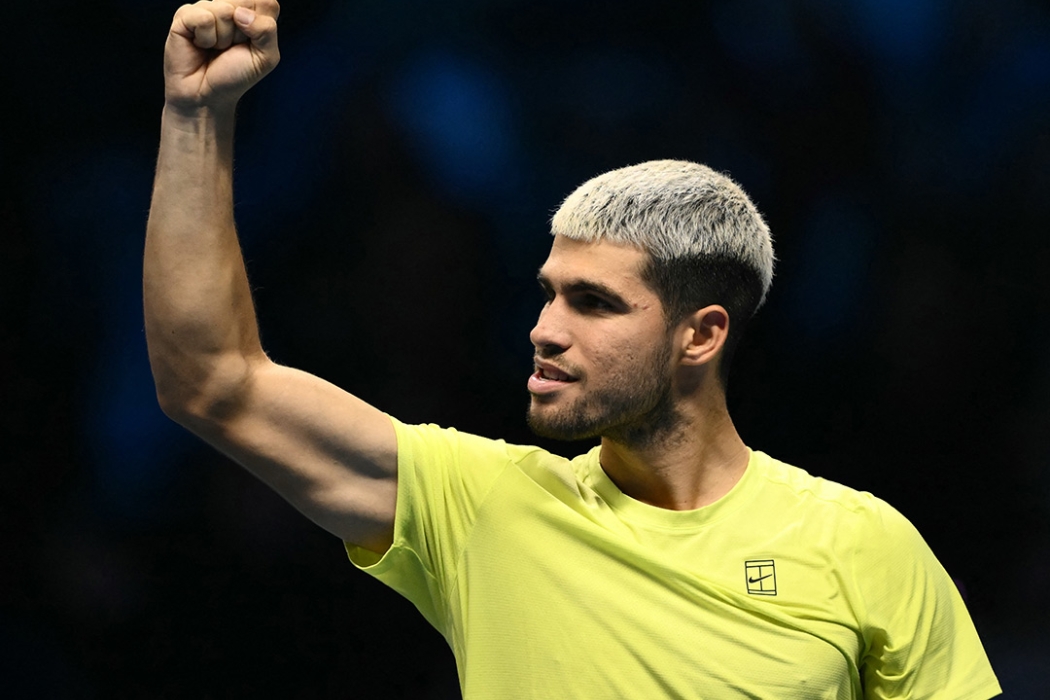
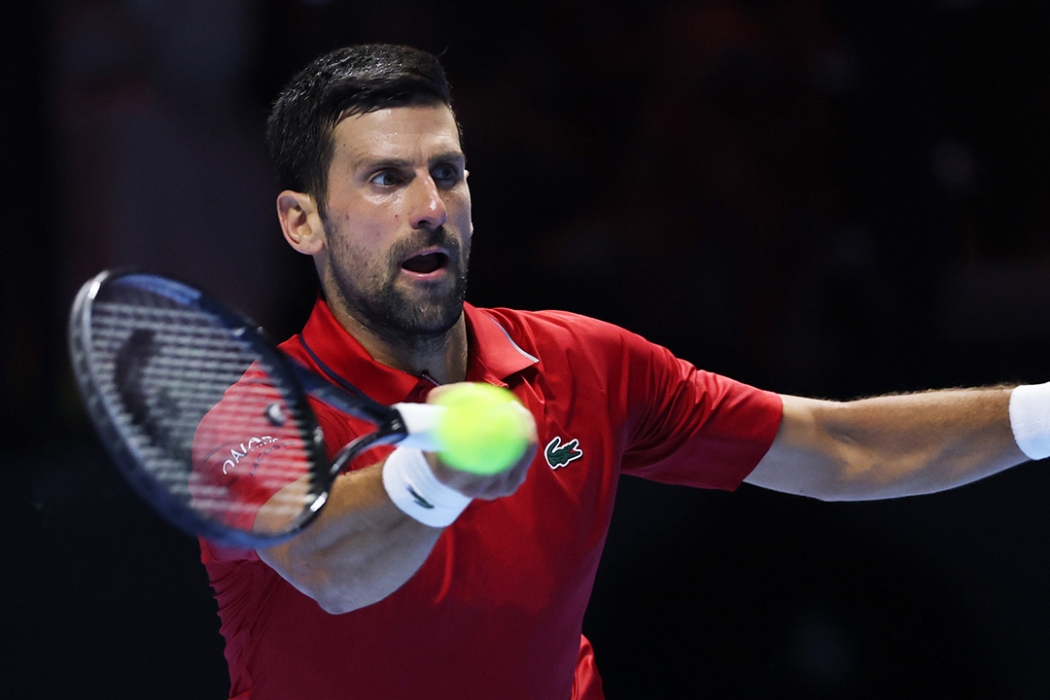
Sinner finished his season in the same soul-crushing fashion he began it, defending his ATP Finals crown with a straight-sets win over the world No.1, never dropping a serve across the tournament.
At 24, he became the youngest player to reach the final of all four Grand Slams and the ATP Finals in a single season.
Already four majors deep, Sinner has turned the year-end championships into a personal playground: two trophies from three appearances, a 15–2 record and ten-straight wins. By comparison, Roger Federer needed 18 attempts to collect his six season-ending titles, while Novak Djokovic required 17 appearances to amass his seven.
“I feel like a better player than last year,” Sinner said after completing his season with 58 wins – the second most on tour, despite missing a three-month chunk.
“A lot of wins and not many losses. And in the losses I had, I tried to see the positive thing and tried to use it to evolve me as a player.”
He may slot in at No.2, but metrics suggest Sinner was the game’s true benchmark, finishing the year No.1 in the ATP’s serve, return and pressure metrics. In his eighth year on tour, he refined his return positioning and grew more composed in long, high-stakes rallies.
Despite averaging a modest six aces a match, Sinner’s serve is unforgiving. His bendy frame coils, then snaps open, winning nearly 80% of points behind first delivery, 59% behind his second, and closes out a whopping 92% of service games.
At the other end, Alcaraz’s gifted anticipation gives him a slight edge on first-serve reads. But nobody punishes a missed first serve more ruthlessly than Sinner, who wins a tour-best 58% of second-serve points.
There are fleeting pockets of opportunity when facing Sinner. Nobody understands that better than Zverev, whose matches with the world No.2 are always tense.
“He had two chances to break me, and he used both of them. I had a lot of chances, and I didn't use any,” Zverev said after the ATP Finals, his third defeat to Sinner in less than a month.
“I felt like the match was closer than the score maybe says. I thought it was a very high-level match… Don’t always judge it by the score.”
Sinner erased 72% of the break points he faced in 2025, perhaps the clearest reason behind the hollow stares his opponents routinely carried into press conferences.
Yet it was Sinner himself whose blank expression after the Roland Garros final captured the year’s deepest heartbreak.
Up 5–3, 40–0 in the fourth set of a back-and-forth epic against Alcaraz, Sinner failed to convert, and the Spaniard rode a wave of momentum to claim his fifth Grand Slam title.
A lesser player might have let that moment haunt him, but a month later at Wimbledon Sinner returned unchanged, bludgeoning his way to the final and beating Alcaraz in four sets.
His coach, Darren Cahill, believes the key to this borderline robotic temperament is humility.
“He has great self-awareness. For a great champion in any sport… you have to know how to handle yourself, how to deal with disappointment, not to carry on like a porkchop if you win a match,” Cahill told Andy Roddick on the Served podcast.
“Yes you get a little bit excited when something good happens, but don’t get too down when something bad happens. Learn from it, move on, and get better. Jannik does all those things.” Sinner is remarkably honest for a competitor of his magnitude. After losing to Alcaraz in the US Open final, splitting the year’s Grand Slams 2–2, he admitted he had grown “predictable.”
“One thing is when the scoreline [or] matches before are comfortable but you always do the same things, like I did, for example, during this tournament, I didn't make one serve-volley, didn't use a lot of drop shots, and then you arrive to a point where you play against Carlos where you have to go out of the comfort zone,” he said.
“So I'm going to aim to maybe even lose some matches from now on, but trying to make some changes, trying to be a bit more unpredictable as a player.”
He did not lose a single match for the rest of the season, retiring only once due to injury.
It’s hard for mere mortals to imagine how Jannik Sinner – the first man ever to lead the ATP in both hold and break percentage in a single season – can become a better tennis player.
Four years ago, he was a modest prospect. Compared to Alcaraz’s instant superstardom, few would have predicted Sinner would already be mentioned alongside ten-time Australian Open champions.
Yet that is precisely his trajectory. Behind the headlines, the Federer-esque demeanour, the Djokovic-esque baseline brilliance, it’s relentless hard work that defines him – and it’s exactly why he will win Australian Open 2026.