Struggling to hear her team above the crowd deep into a Grand Slam final, Elena Rybakina accepted it was ultimately on her how she responded when her opponent found her second wind.
MORE: Rybakina v Sabalenka match statistics
For all the advice that was flowing from her corner courtside under a closed Rod Laver Arena roof on Saturday night, Rybakina took the initiative, found her inner calm and quietened the emotions swirling inside her head.
In the throes of the two-hour, 22-minute battle, her second Australian Open final against Aryna Sabalenka, Rybakina – above all the noise – took on board the simplest yet most crucial advice.
“Trust yourself, trust yourself, believe in yourself,” her team frequently relayed.
MORE: AO 2026 women's singles draw
Even down a break in the deciding set against the world No.1, the 26-year-old never doubted herself.
The fifth seed reeled off six of the last seven games to beat Sabalenka 6-4 4-6 6-4 for the Daphne Akhurst Memorial Cup, her second major crown after Wimbledon four years ago.
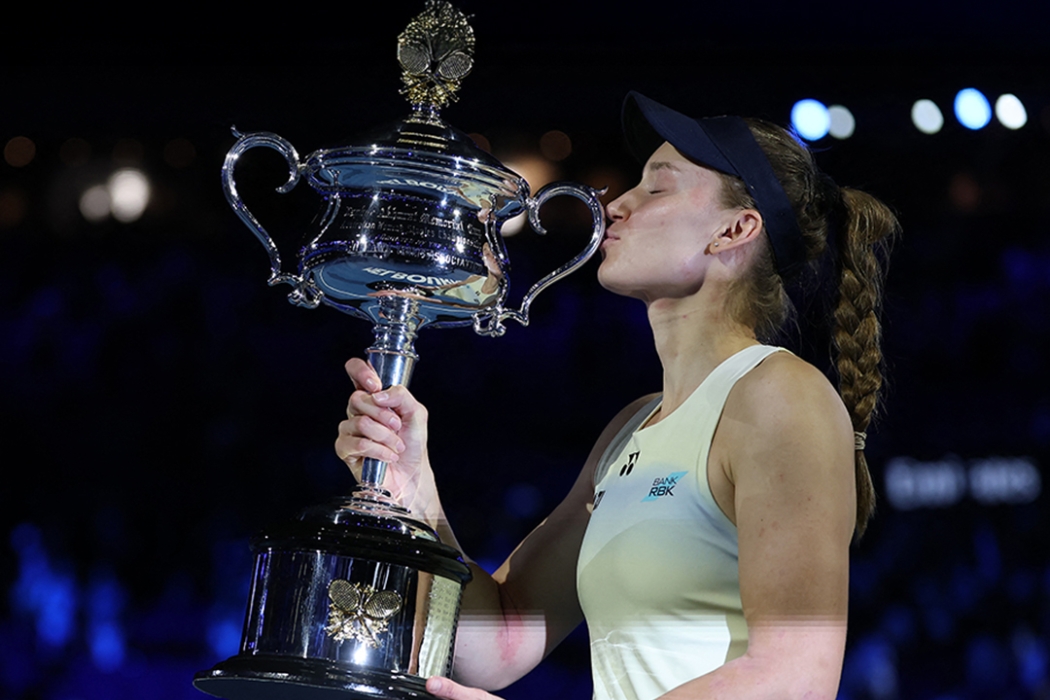
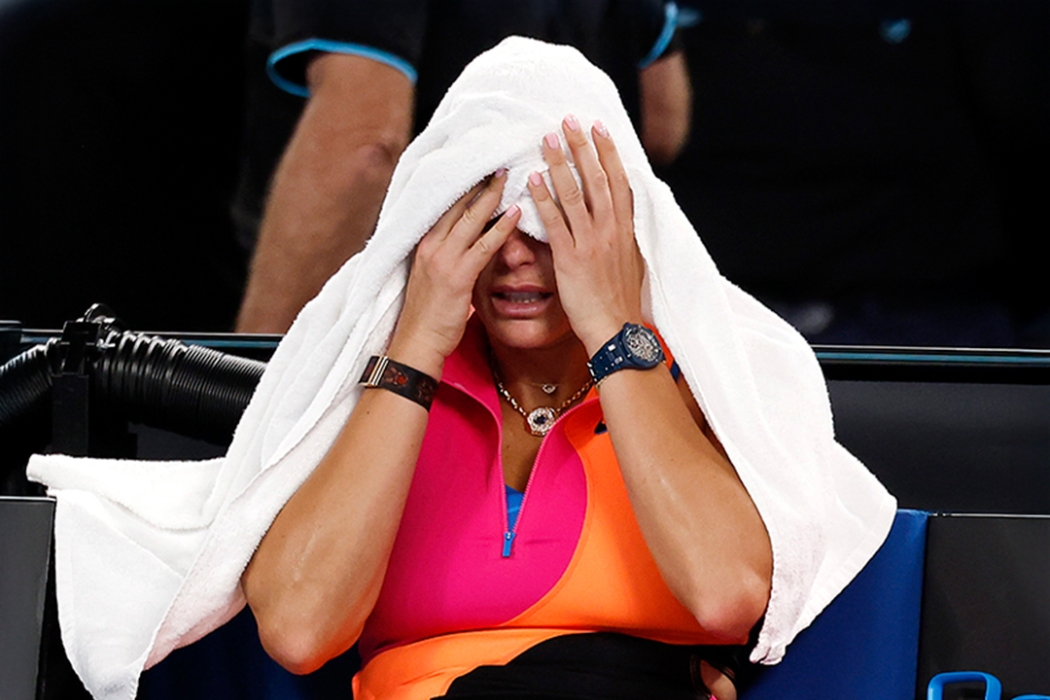
“I always believed that I can come back to the level I was. Of course, we all have ups and downs,” she said.
“Like I think everyone thought or maybe I will never be again in the final or even get a trophy, but it's all about the work.
“I think we've been putting a lot of work in with the team, and they were also very supportive. In the moments when I was maybe not that positive, they would be helping out on the side.
“Of course, when you are getting some wins, big wins against top players, then you start to believe more, you get more confident. That was the kind of way.”
After an emphatic breakthrough to claim her first Grand Slam title at the All England Club in 2022, Rybakina looked destined to become a fixture at the pointy end of the majors.
She reached that Australian Open decider just six months later in what was widely considered one of the most closely contested, high-quality women’s Grand Slam finals.
The modern benchmark in women’s tennis had seemingly arrived, but a string of health and off-court issues afflicted her confidence, and she reached just one Grand Slam semifinal in the interim.
Three years after her first Melbourne Park final, the Kazakhstani turned the tables on Sabalenka, a decisive exclamation point on her return to the world’s top three.
“It was a very close match in 2023. I felt that if I get my chances here that I need to maybe risk a little bit more and go for my shots,” Rybakina said.
“Second set was very tough, as much as the first one. I got a lead and the break early in the first set, so it kind of was easier, but then in the second it was very close. I didn't raise my level. She played well, and it was tough to come back in the third.
“I'm happy that being down, I was able to calm myself down, not being frustrated anymore, and just focus on each point and stay closer to the score.”
Having dipped as low as world No.14 last July, Rybakina’s form trended upwards late in the second half of last year, a welcome turnaround as she ended the year unbeaten at the WTA Finals.
When she arrived in Brisbane earlier this month, Rybakina was reminded others tipped her for greater success on the major stages in 2026 given her turnaround.
“The most important is to keep on being healthy, play from beginning to the end,” she said in Brisbane. “The goal is always the same: Be healthy, happy of course too, but yeah, win big titles.”
Having added world No.2 Iga Swiatek and No.6 Jessica Pegula to her victims en route, she became the first woman to down three top-10 opponents for the Australian Open crown since Naomi Osaka seven years ago.
Her ninth win against a world No.1 was also her 20th win from her past 20 tour-level matches.
Big title in the bag, further Slams and the world No.1 ranking were now well in the equation.
Four years on from her Wimbledon breakthrough, this was a decidedly less stressful ordeal.
“I think with the experience, with the years on tour, I learned a lot,” Rybakina said.
“Later on, of course, you have the same emotions. You want to win, but it's kind of different.”