Twenty-five years ago, Jennifer Capriati entered the Australian Open as the No.12 seed, looking to cement her comeback to the sport after years of trying to rediscover her rhythm.
In a life-changing campaign, the American triumphed in clashes against Monica Seles and Lindsay Davenport – both former world no.1s and Australian Open champions – before defeating Martina Hingis 6-4 6-3 in the final to secure her long awaited major breakthrough.
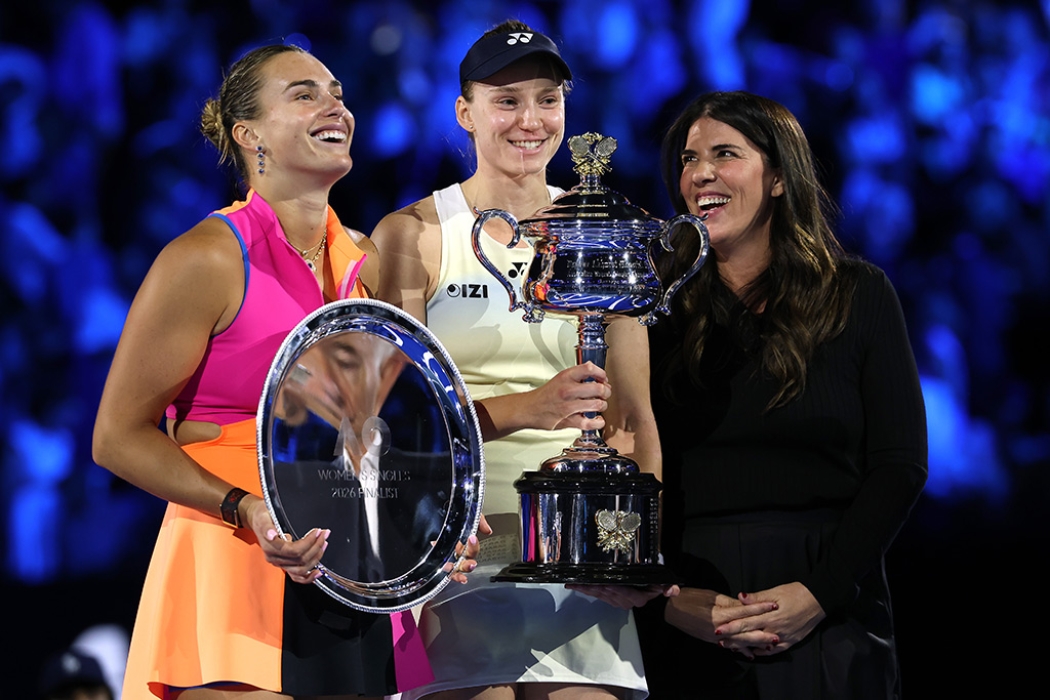
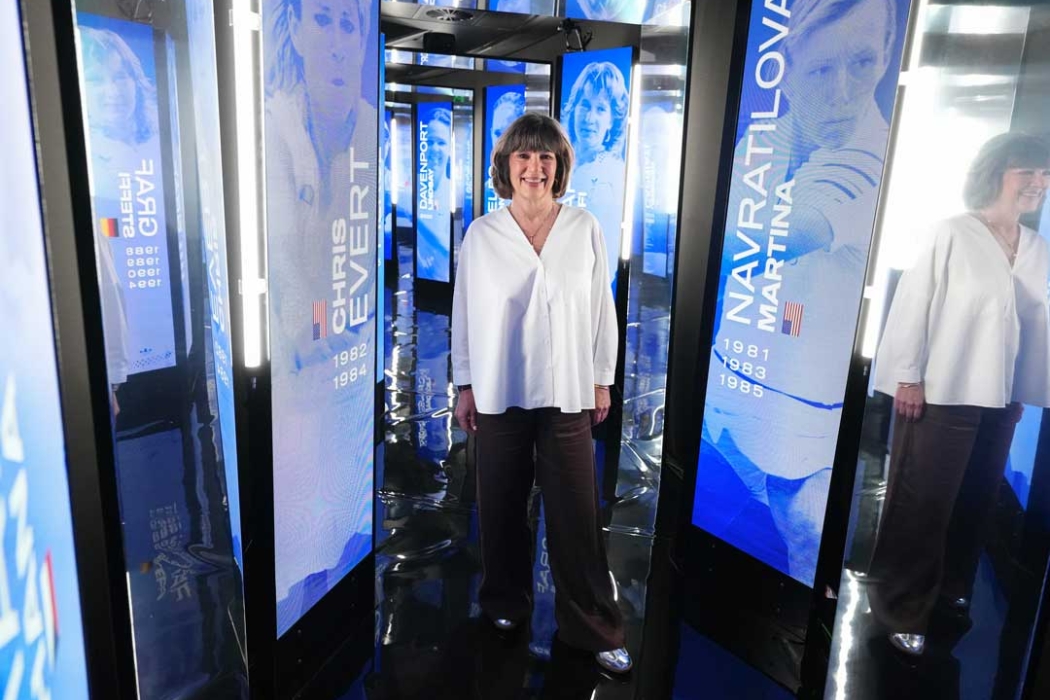
Capriati, a celebrated teen prodigy who made history by claiming an Olympic gold medal as a 16-year-old, joined The Sit-Down podcast on her recent trip to Melbourne. Now 49, the American shared how it was “pretty amazing” to win her first Australian Open and first Grand Slam title in Melbourne.
“That really just kicked off you know, a whole new career, whole new start for me. It couldn’t come at a better place,” she said.
“I knew I had to play and be in my best physical condition to be able to go through. It was like one match at a time and if I could just get through this one, I knew in my mind I had trained and I physically felt strong.”
The triumph saw Capriati become the lowest ranked seed to claim the Australian Open, while propelling her back into the top 10 for the first time since January 1994.
“I think it was the first Slam of the year and I was a little bit fresh, you know, mind rested, body rested. I love the conditions, thrived in the conditions. Being from Florida, I felt like it was kind of just like home, maybe a little even hotter if that’s even possible,” she said.
The Australian Open conquest was only the beginning of Capriati’s groundbreaking 2001 season. She went on to collect her second Grand Slam title just months later at Roland Garros, outlasting Kim Clijsters in an epic two-hour and 21-minute final.
Thank you @AustralianOpen @CraigTiley @Andre_Sa77
for the amazingly warm and kind welcome back. It has been such an honor. Everything was perfect. So much has changed, but the kind, happy vibes remain the same! #AO2026 pic.twitter.com/f65eCOPS1C— Jennifer Capriati (@JenCapriati) February 1, 2026
“It was just the year that really everything turned around and my mindset, you know, just getting in such great shape and just having the belief. I just felt so strong and even on maybe not my best surface,” she recalled.
In the defence of her AO 2001 title the following year, Capriati once again found herself across the net from Hingis in the final. Battling temperatures of more than 35 degrees, she battled through arguably the toughest matches of her career.
Recovering from 6-4 4-0 down, Capriati saved four championship points to claim her third, and final, Grand Slam.
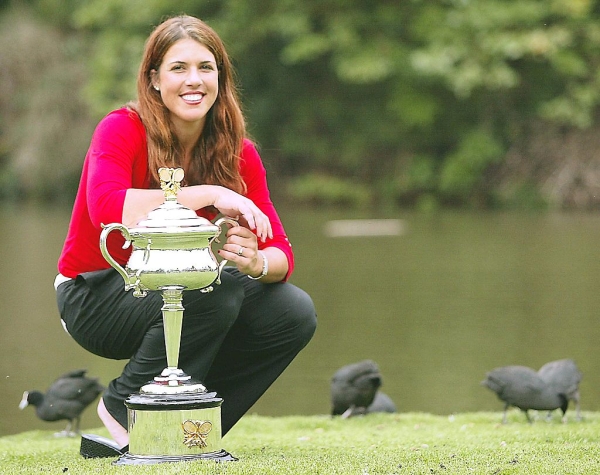
“It was different. I know she was playing really well. The conditions, I had never experienced anything like that, that kind of heat. I thought to myself, oh man, this is going to be tough. It was like another opponent out there. I had to really figure out how to pace myself a little bit too,” the former world No.1 explained.
“There were so many momentum shifts going on back and forth because you would give it all you could, then you’re completely depleted from all those points and then you had to almost rest. Then she would take over and I would take over. I just said this is an endurance game. Just hang in there and tough it out as best as you can.”
Capriati returned to the Australian Open final this year in a new capacity.
Celebrating the 25th anniversary of her first feat in Melbourne, the two-time AO champion was given the honour of presenting the Daphne Akhurst Memorial Cup to 2026 victor Elena Rybakina.
“I’m just happy I’ll be there, and get to touch it and hold it again,” Capriati smiled.
Listen to the full episode of The Sit-Down, a weekly podcast released each Monday featuring an in-depth interview with a notable tennis identity. Subscribe in your favourite podcast player so you never miss an episode.