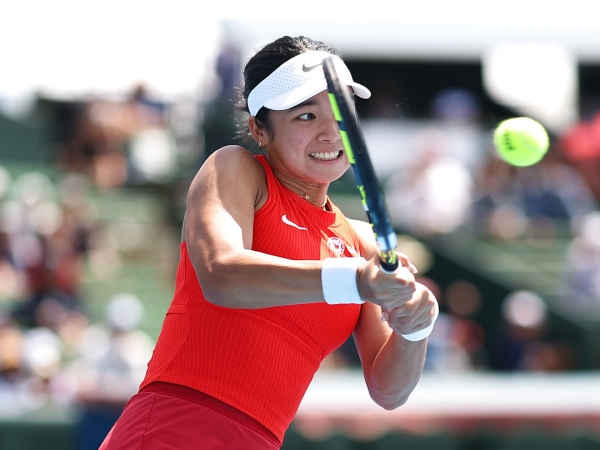
Squeezing through the pack from far-flung Court 22 at Melbourne Park, the world’s 49th-ranked women’s tennis player can barely keep up with her coach as they struggle to cut a swathe through the massed crowd after a practice session.
MORE: All the scores from Day 1 at AO 2026
Such is the soaring profile of the Philippines’ 20-year-old sensation, Alexandra Eala, that she draws a crowd wherever she plays.
It is something Eala and her coach, Joan Bosch, have fast become accustomed to, particularly since her breakout run to a WTA 1000 semifinal in Miami last year, following wins over the likes of world No.2 Iga Swiatek.
MORE: AO 2026 women's singles draw
As the highest-ranked player in her nation’s history – one of the leading lights among a new wave of Asian stars including Indonesia’s Janice Tjen, Rei Sakamoto, Shintaro Mochizuki and Jerry Shang – it is a mountain of attention for a prospect of humble beginnings in Quezon City.
“I try to take it in with as much gratitude as I possibly can because I know not a lot of players are able to have this platform and, you know, it's a blessing to have this support behind me,” Eala told The Sit-Down podcast. “So, yeah, I won't say that it comes without any pressure at all.”
Based at the Rafa Nadal Academy at Mallorca since she was 13, Eala doesn’t make it back to the Philippines as often as she would like.
Needless to say, life takes on a vastly different feel whenever she does make it home.
“I haven't been home a lot, unfortunately. The times I've been home though I've felt so loved, things have changed to say the least,” she said.
“Yeah, I, I try to avoid going out alone now, but then again, it's blessings. Yeah, just gratitude for it. There's something really cool about that.”
Only 10 spots below Eala in the WTA rankings, another rising South-East Asian star from an emerging tennis nation has made rapid progress in the past six months.
Tjen, whose free-flowing playing style shares an uncanny resemblance to Australian great Ash Barty, makes her Australian Open debut this year.
Where Eala’s game was nurtured at the Nadal academy, the Jakarta-born Tjen’s parents encouraged her to take the US college route before she turned professional.
Tjen beat Eala en route to her first WTA final in Sao Paulo last September before she became the first Indonesian since 2002 to land a title in Chennai in November.
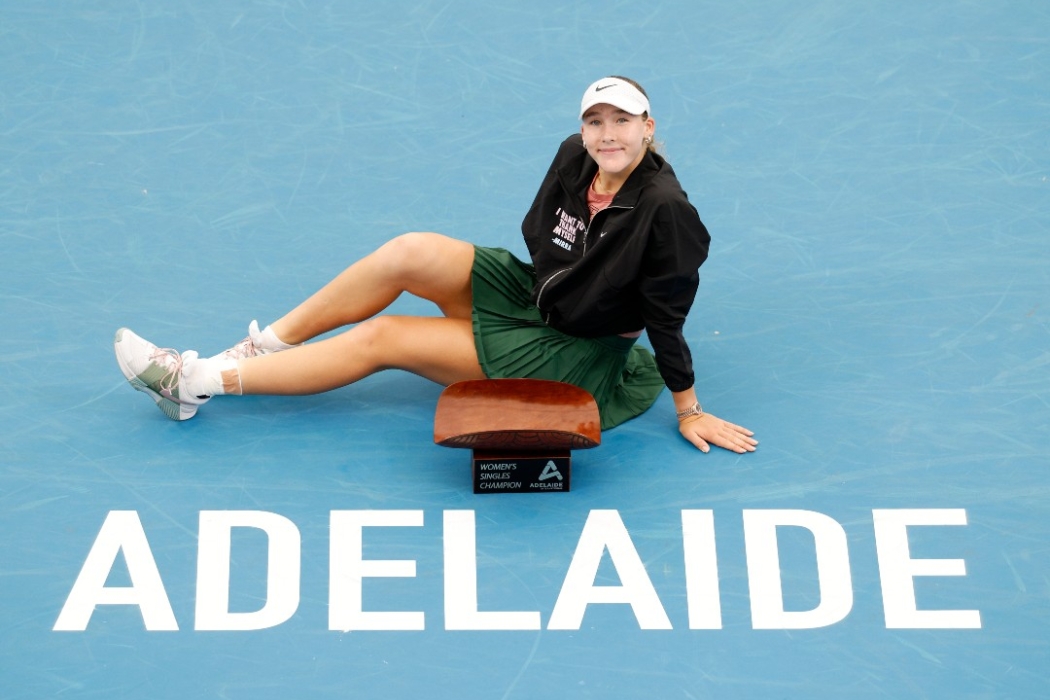
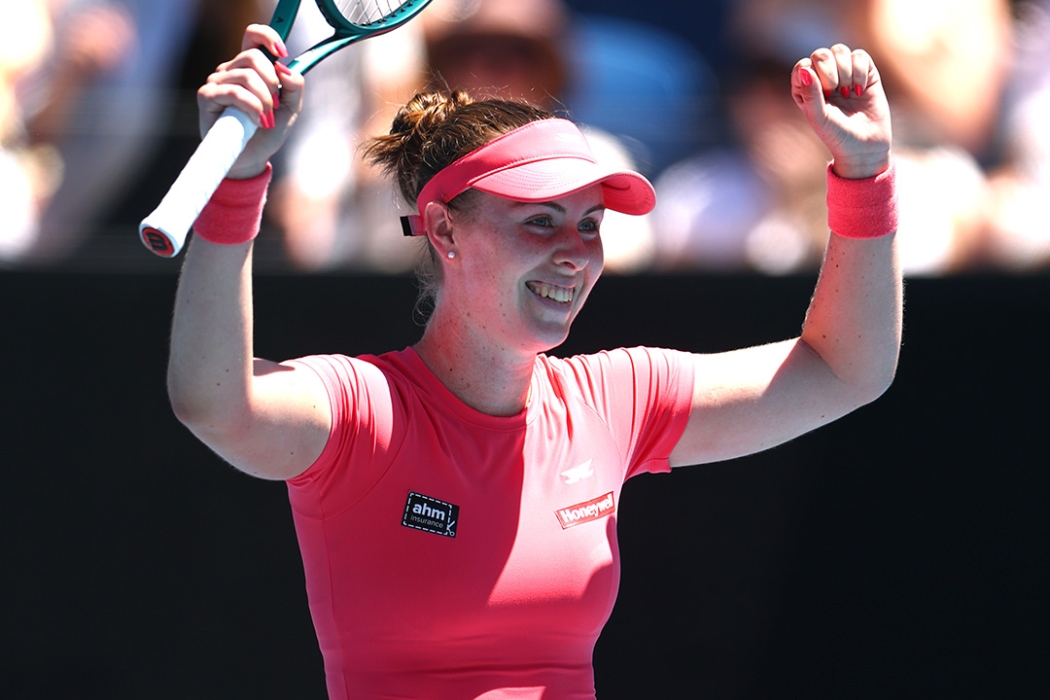
After reaching the second round at last year’s US Open, the 23-year-old paid tribute to her compatriot, doubles player Aldila Sutjiadi, who has played a crucial role in her growth.
“I am really close with Aldila,” she said. “She's always been like a good older sister to me, taking care of me, guiding me, and telling me, ‘This is what you need to do’.
“She's also one of the people that convinced me that I should give [becoming a pro] a try. It's very nice to be around another Indonesian [on tour]."
Established superstars such as four-time major winner Naomi Osaka and Zheng Qinwen – absent from this year’s Australian Open due to injury – remain the standard-bearers of Asian tennis.
Others such as Eala, Tjen and on the men’s tour, China’s Shang and a pair of Japanese contenders, Mochizuki and Sakamoto, are knocking on the door.
They join a swag of Asians aged 23 or under in the main draw at AO 2026, such as China’s Bu Yunchaokete in the men’s field and qualifier Bai Zhuoxuan in the women’s.
For the first time since the 2011 US Open, two Thai women – Lanlana Tararudee, 21, and Mananchaya Sawangkaew, 23 – will contest a Grand Slam main draw.
Since a shift to representing Uzbekistan in December, world No.150 Polina Kudermetova also joins this cohort at Melbourne Park.
The 20-year-old Shang became the first Chinese teenager to crack the top 100 in May 2024 and reached the third round at Melbourne Park that year – the first man from his nation to reach as far in the Open era.
Like Shang, former junior world No.1 Mochizuki made the difficult decision to move to the United States to the IMG Academy in Florida to further his development.
Culturally, it was a world apart and language barriers made the early years particularly challenging.
“I remember some guys asking me, ‘How old are you?’ I didn’t know anything, I didn’t understand,” Mochizuki told atptour.com. “Some Japanese guys helped me to tell them my age. It took a lot of time.
“There were some Japanese guys at IMG, so I was speaking a lot of Japanese. I had my Japanese coach with me in Florida. It took about three years to get used to the language.”
Mochizuki, who cracked the top 100 in November, represented Japan alongside Osaka at the United Cup leading in while his compatriot, former AO boys’ champion Sakamoto, turned his focus to an ultimately successful qualifying campaign.
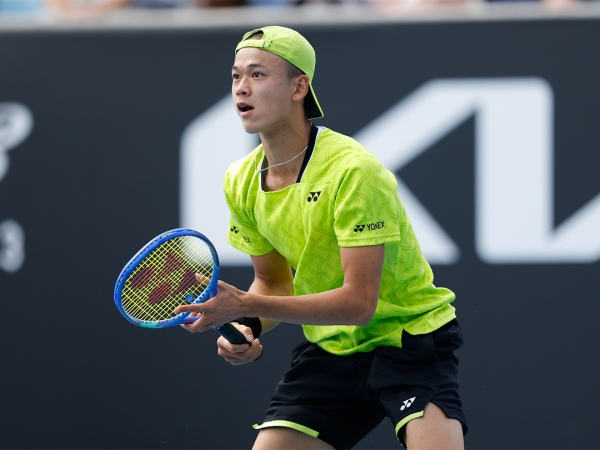
“I am playing the best tennis of my life since last week, I am trusting myself,” Sakamoto said.
While yet to draw quite the same crowds as Eala, all understand the pressures that come with greater success.
It is par for the course with a growing profile among Asia’s next crop.