Tens of thousands of Dunlop tennis balls are used at every Australian Open.
This means tens of thousands of ball tubes, which carry the yellow, fuzzy heroes of the sport, are also used. Once those tubes are cracked open, the balls removed and tubes cast aside, then what?
They’re sent to recycling, right? Sadly, it’s not that simple. Made of a composite of plastic and aluminium, the canisters are perfect for protecting their precious cargo but because of the aluminium ring at the mouth of the tube, standard recycling is not an option.

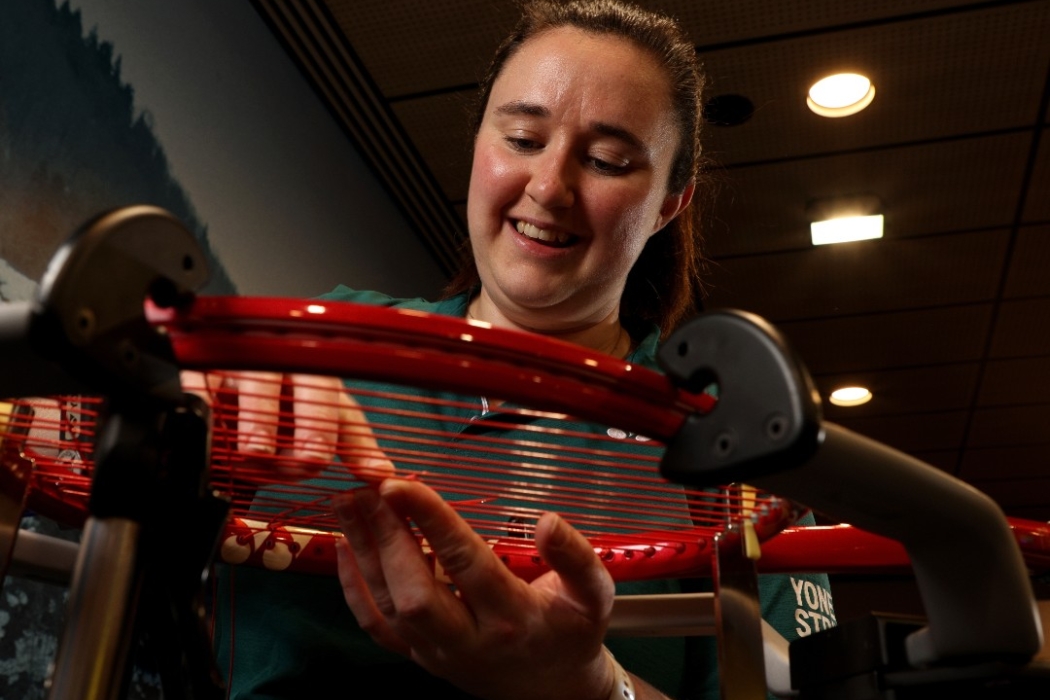
“I think sporting events have a huge challenge with linear consumption,” Matthew Nicholas, Director of Sustainability at Tennis Australia said. “We are no different. For example, we have a huge temporary build for the AO, so a large part of what we do really is linear. But wherever we can add circularity, we reduce our environment impact.”
Dunlop and Tennis Australia have developed a circular design initiative that takes these hard-to-recycle canisters and turns them into the tabletops you can see throughout the Western Courts and in the player areas of Melbourne Park. These durable tables have been heat tested and are UV safe and DDA-compliant for wheelchair users, so everyone can enjoy them.
But how do you go from ball tubes to tables? That is where the magic happens.
Following Australian Open 2025, several hundred ball canisters that had been individually separated from other materials were sent to a trusted AO supplier, Valiant. There, they were shredded and refabricated into the tabletops at Melbourne Park for this year.
This year, we’re going further.
For the first time, our friends at Resourceful Living – based in a circular plastic processing plant in Newcastle – are moving down to Melbourne for the final week of the AO to operate a micro factory at the AO Warehouse in Altona. There, they will separate and shred the ball tubes and create even more opportunity for sustainability projects, specifically looking ahead at AO 2027.
It’s another step that Dunlop have taken to improve the sustainability of the canisters. Previously, the tubes were coated in a branded film that couldn’t be recycled. Between 2023 and 2024, this was rectified by replacing the plastic film with a branded paper insert slipped inside the tube. The insert could be easily removed and recycled, leaving the tube ready for individual processing.
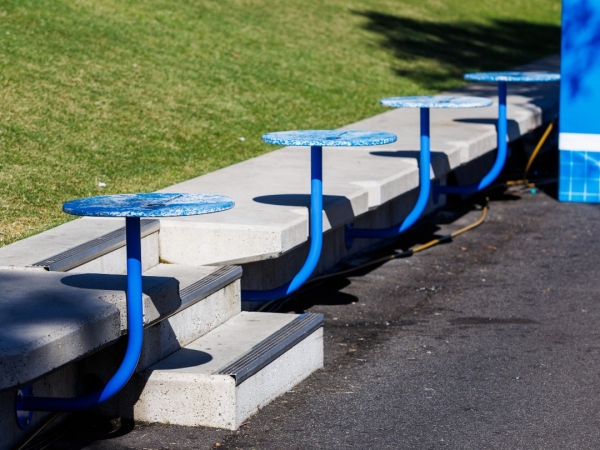
Tennis Australia upholds its vision of “Maximum Play Minimum Footprint” to support its participation in the United Nations Sport for Climate Action Framework, and it’s one of the reasons the Australian Open is proving to be the Grand Slam with a difference.
“That's where circular design and circular economy comes in,” Nicholas said. “It's about measurably reducing [the percentage of] waste that goes to landfill. We want to make sure that we're improving year on year. I think that's an important measure for a good event.”
The Australian Open has a small team dedicated to reducing the tournament’s environmental impact. For the third consecutive year, AO 2026 will be backed by 100% renewable grid electricity and feature the AO Kia fleet of electric vehicles. In an effort to reduce single-use plastic, the tournament has introduced reusable tableware including plates and bowls at street mezze outlet, Layla. These circular items are washed offsite and returned to Melbourne Park.
And it’s not just the ball canisters where Dunlop and Tennis Australia are teaming up on sustainability. Those tens of thousands of difficult-to-recycle AO match balls are given a second chance of life. Fans can purchase used balls at the AO Shop, with proceeds going to the Australian Tennis Foundation. Otherwise, balls are distributed to local coaches or collected by an industry program called “Tread Lightly”.
As we turn our focus to the future, circular design remains a pivotal part of Tennis Australia and Dunlop’s sustainability strategies.
“For AO 2027, we want a significant uplift in the visibility of this particular project,” Nicholas said. “The visibility of [the ball tube initiative] in 2026 is just from a comparatively small amount of ball tubes that were able to be set aside during AO 2025 … [This year,] the majority of the volume is going into this project.”
That’s at least 16 times the volume of ball canisters that were used last year, which means you can expect to see more of the innovative and sustainable tabletops across the precinct next year.