Although he walked away from the All England Club with the runner-up plate, Alexander Zverev had plenty to celebrate from a career-best Wimbledon campaign.
Never before had he gone beyond the fourth round, yet behind the most aggressive and confident tennis of his career he powered into the decider, meaning he has now appeared in all four major finals.
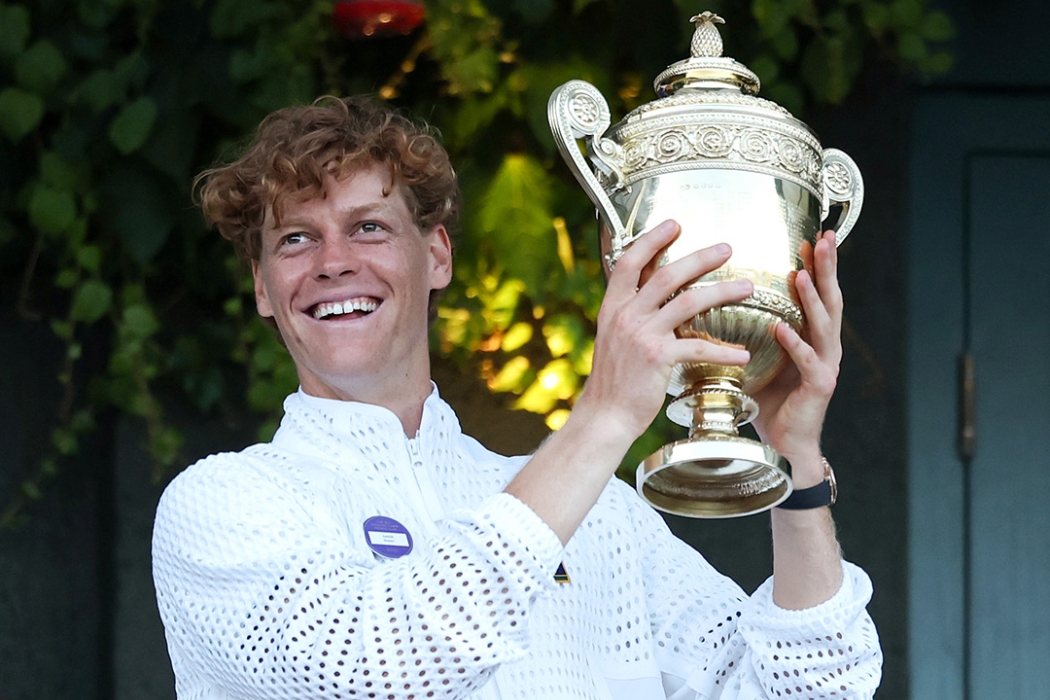
The reigning Roland Garros champion also extended his Grand Slam winning streak to 13 matches before he was stopped in four tight sets by world No.1 and defending champion Jannik Sinner.
Even then, he pushed Sinner closer than he had in months, snapping a 14-set losing streak to the Italian by clinching the opening set.
“I've said it at the beginning of the year, and I've stuck to it. That's the tennis I want to play. That's the game style I want to play,” said Zverev, who 12 months ago fell in the first round of Wimbledon to Arthur Rinderknech.
“There were matches in the beginning of the year where I was struggling a bit more with this style, but I was consistently doing it.
“The more I do it, the better I'll become hopefully. I won a Grand Slam for the first time in my career in Paris. I made it to the finals here for the first time in my career. Of course, something has to be working.
“Is it perfect yet? No. But I think we're going towards the right direction with it.”
Incredibly, Zverev came within two sets of becoming the first man in the Open era to win his second major at the very next Slam after winning his first.
At 29 years old, such a late-blooming breakthrough has been made possible by this commitment to more assertive tennis, evidenced in his numbers throughout the Wimbledon fortnight.
In all seven matches he landed at least 70 per cent of his first serves – an extraordinary number – and averaged speeds of more than 200km/h on those serves, peaking at 207km/h in his semifinal domination of Arthur Fery.
He also thrived when approaching the net and in all but two of his matches had a positive winner-to-unforced error differential.
“I think if you can always manage to hit your forehand as hard as you can, it's always a good thing. I think it's definitely something that I've worked on,” Zverev said.
“When I have the opportunity, I hit it. Whether I make it or miss it, that depends on the day. But I definitely go for it. That's my goal, that's my aim for this year, that's my aim for hopefully the rest of my career.
“I feel like with every month, it's starting to work better and better. We'll see where I'll be at in the next couple of months.”
For all his improvements, Sinner remains a level above as an elite returner and powerful ballstriker with an equally-effective serve.
Zverev’s potency dipped somewhat in the final; Sinner out-served him, hit more winners, was more successful at net and committed 25 unforced errors to Zverev’s 45 – the German’s highest tally of the tournament.
Zverev has now lost 10 straight matches against the Italian, while falling to 1-4 in major finals and 1-15 against top-five players at Grand Slam events.
Still, he sees tangible progress in both his results and game this year that may see him begin to chip away at those deficits.
“I think I've been pushing those guys. I haven't beaten them this year, but I've pushed them to the limits, I would say. [Carlos] Alcaraz in Australia, Jannik maybe here,” said Zverev, who overtakes Alcaraz as world No.2 in this week’s rankings.
“Even though it was four sets, I think it was a very close four sets, which could have gone five as well.
“I think that's the goal. That's what I'm working on my game for… If I get closer to them, if I can be in the mix of competing and winning the big tournaments with them, alongside them, it would be great.
“[Sinner is] still the best player in the world. I do believe that… I think I've challenged him today. Not enough, obviously, 'cause I still sit here as the loser of the match. I will continue doing that.
“The big tournaments are still around the corner.”