Major international sporting tournaments have a tangible rhythm, like a collective pulse running through the arena, affecting and connecting everyone involved.
It could be compared to a ballad, which as the competition progresses builds toward a big, loud, emotive crescendo. But at the Australian Open, as finals approach and the crowds get bigger and louder, the atmosphere for players, outside the arenas, gets smaller, quieter.
MORE: All the scores from AO 2026
Players don’t often mix with the record crowds that pack out Melbourne Park during the first 10 days of competition, moving between alternating matches, food and beverage stalls, a waterslide, paddle courts, retailers and live music acts.
“I don't even know what goes on out there, because I don't walk and watch matches,” said American Jessica Pegula, who ended Madison Keys’ title defence on Monday.
“I saw some reports that it's the busiest they have ever been, which is great. I think [Alexandra] Eala is the match that I was looking at, and there were people wrapped around the stadium just trying to get in, which is pretty crazy.
“It's cool to see, and it's exciting, but obviously for a fan experience, because I'm not living that same experience.”
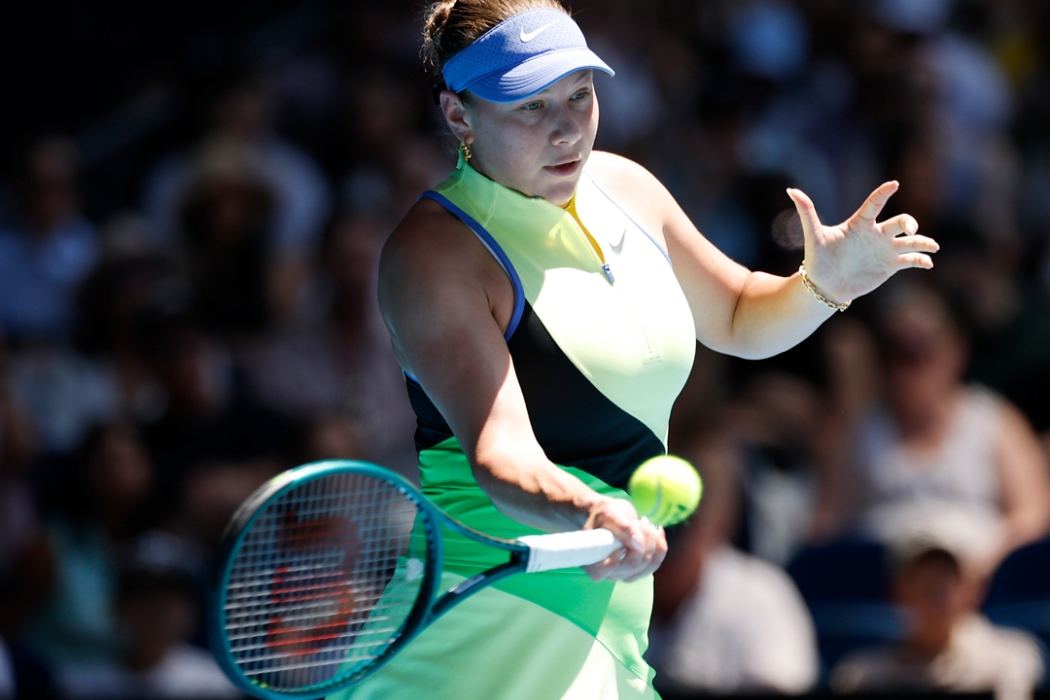
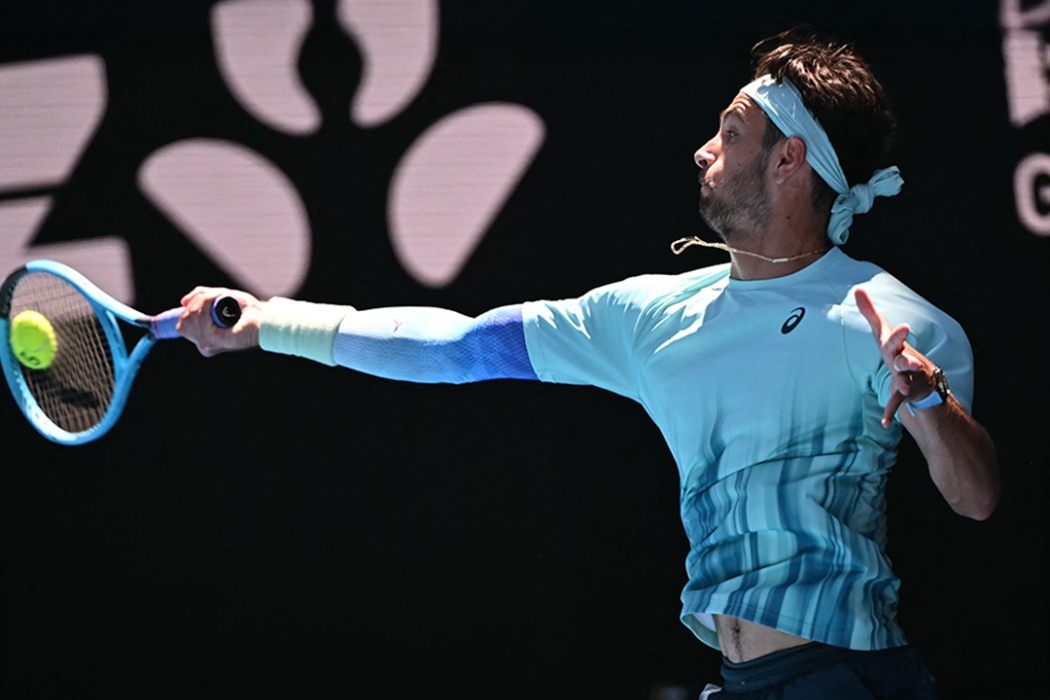
For the players, much of their daily life is spent, if not on the court, then underground, in the vast network of cool, quiet, dimly lit tunnels and rooms underneath Rod Laver Arena that contrast with the bustle above ground.
There’s a lot of foot traffic in the tunnels at the beginning of the tournament. Qualifiers emerge from glass doors to the locker room and greet security guards holding blue and white paddles that designate the court they’ll be escorted to.
At the same time, coaches and top seeded players come and go, from practice, to PR and media, or one of the service rooms that cater for everything from medical to make-up. But no one really speaks, and if they do it’s in the hushed tones you’d hear at a library.
“The week of quallies and the first few days of main draw you can barely find a table to eat lunch, and now you walk in there and it’s almost like a ghost town,” said 2011 US Open champion Sam Stosur.
“The atmosphere and dynamics change in the corridors, but probably a good thing to be in that calmer space as you get into the pointy end of these tournaments.
“Obviously because [at a Grand Slam] you start with 128 in there, as opposed to 32 or 64 in a normal tournament, but ultimately, it’s all the same. I played the final of a tournament in LA once and they were already taking the fridge away before we’d even walked on the court and you’re like, ‘Wow, we really are the last two here, we can’t even get a cold drink now!’ So, we’re used to it.”
Roger Federer coined the AO as the Happy Slam, because, he said, players would return from the Christmas and New Year, refreshed from a break from one another and with new stories to share. The locker room is one of the areas that provides space for that.
“Even though you're sharing a locker room with your opponents, you're also sharing a locker room with friends,” Keys said.
“There has been moments where I know that either myself or other players have had really tough moments, and you always have someone around you who can give you a hug and talk you through it.
“There is just kind of that immediate support. Other sports have that, but it's your own teammates. I more so look at it in the sense of it's nice that there's kind of an immediate sense of community versus you're kind of isolated.”
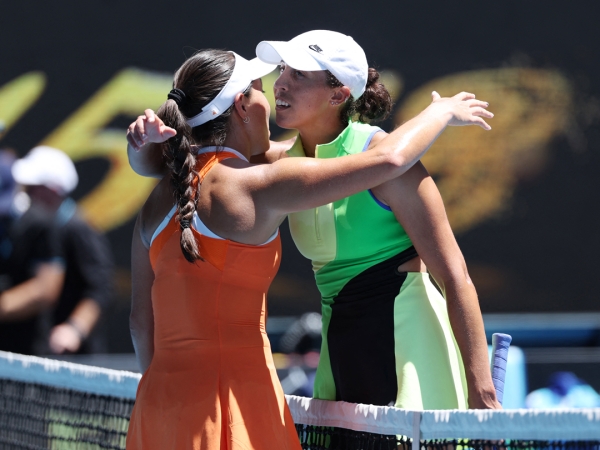
Isolation is part of the rhythm of the AO though, especially as you get deeper into the competition, where attention turns solely to centre court.
“Down in the locker room you notice a lot more, because a lot clears out,” said two-time Grand Slam champion Lleyton Hewitt. “And then towards the end, the semis and finals, there’s very few people around, so you’re kind of always seeing the guys you’re going to play as well, which at the start of the tournament you can sort of avoid people a bit more because it’s really crowded and people are going different ways.
“It is an unusual situation,” Hewitt continued. “I think guys that have been through that experience then it’s a lot easier for them to come back and do that again because they understand what it’s like. But it’s something you want to be thrown in, in the deep end doing that.
“It gives you a chance to sit back and actually think what you’re doing there as well and try and enjoy the big moments a little bit more.”
Instead of building toward a big crescendo, there is a sense of stillness underground at the AO, though that doesn’t necessarily match what a player is internally feeling, as Stosur points out.
“That might be happening on the outside but on the inside it’s still all bubbling away and you do get excited, especially doing it for the first time,” she said.
“I know what someone like Maddi [qualifier Maddison Inglis who meets Iga Swiatek in the fourth round] is feeling right now and it can be a little bit daunting, it can be a bit scary, a bit of everything, but then ultimately, it’s exciting to be in this position. Everyone really relishes the opportunity to be at the end of these tournaments, albeit sometimes not easy to handle.”
Frances Tiafoe believes being comfortable in the stillness is crucial to performance, not to mention rewarding, if you can do it.
“I think that’s the exciting part. I went deep in majors and those are the times, that’s what you work for,” Tiafoe said.
“It gets quiet but that’s why you’ve got to have an impeccable team around you. It gets quiet, the courts get bigger, the stadiums get bigger, the stadiums get louder the moment gets bigger, so I think the only lonely thing is essentially the locker room or eating, whatever the case may be.
“But everything else is very much so loud,” Tiafoe continued with a smile, “and very much so like, man in the arena.”