There’s a theory in tennis that tough opening matches at big tournaments can prepare a player for a deep run in the draw, and maybe that will be the case for Mirra Andreeva in Melbourne after she banked an eighth win of the season on Wednesday evening.
MORE: All the scores from Day 4 at AO 2026
After a tough first-round assignment when she came back from a set down to beat the experienced Croat Donna Vekic, the eighth seed was fully locked in during a match of two halves against former world No.3 Maria Sakkari.
The 18-year-old won the first eight games and then raised her level, energy and intensity when required in a tighter second set to see off Sakkari 6-0 6-4 in 67 minutes at Margaret Court Arena.
Overall, Andreeva was more effective in every department. A better base level of tennis early on, heavier serving, more winners and more composure when it mattered allowed the teenager to move into the third round for the third time in three visits to Melbourne Park.
Her reward is a meeting on Friday with Romania’s Elena-Gabriela Ruse, who beat Aussie Ajla Tomljanovic earlier on Day 4.
MORE: AO 2026 women's singles draw
Afterwards, the world No.7 admitted she had no option but to find her best tennis from Day 1.
“When I saw the draw I was like, ‘Wow, it’s not the easiest draw you can have.’ I think it helps to be 100 per cent since the first match that you’re playing,” admitted Andreeva, who arrived in town on the back of winning her fourth title in Adelaide last weekend.
“Sometimes you want some time to get into the tournament, but here I didn’t really have that time, I needed to start 100 per cent right away and I guess the tough draw is for [helping] this.
“Having a great week of playing before a Grand Slam helps a lot, it gives a lot of confidence. I was feeling great on the court. For sure the conditions here are a little bit different – it’s more windy and we don’t have the roof.
“It helps to get into the match rhythm. You know opponents are going to be tough from the first match. I know the statistic that winners of Adelaide do not do bad here but I’m not going to think about it – we’ll see if that statistic works for me.”
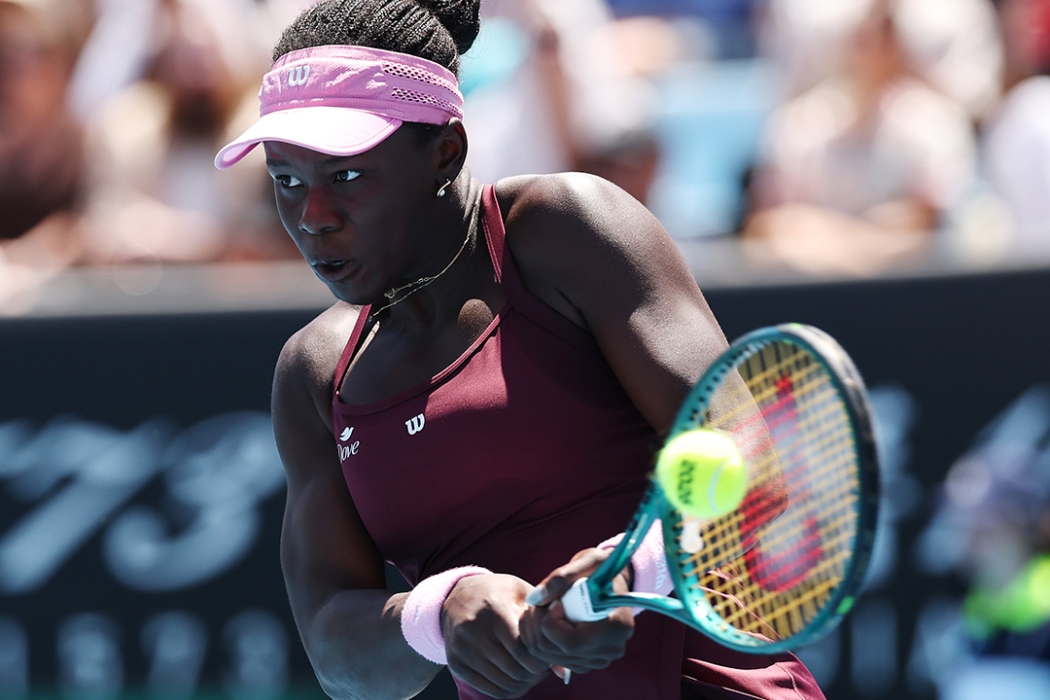
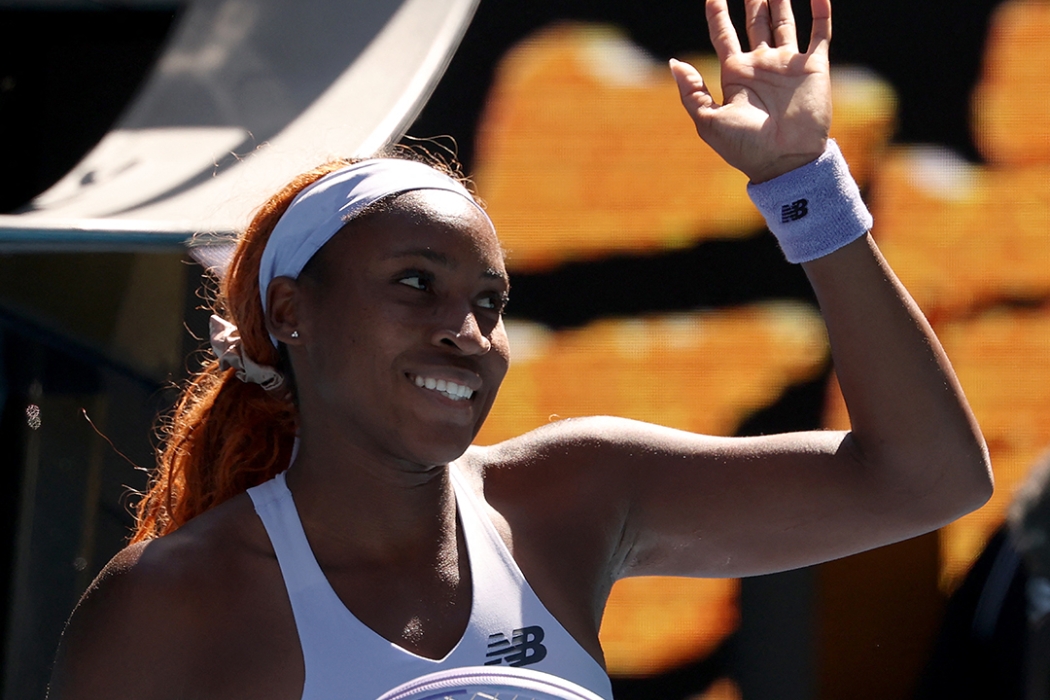
In truth, the early stages were very comfortable for Andreeva simply because Sakkari didn’t show up until midway through the second set.
The youngest member of the top 10 was the quicker to settle, while Sakkari sprayed 10 unforced errors during the opening 15 minutes.
Even on her own delivery the Greek couldn’t find a routine, and by the time she’d been handed a ‘bagel’ in just 26 minutes she had won only two of 13 first serve points.
The large group of Greek fans inside the stadium desperate to get behind Sakkari will have been wondering whether she was ever going to win a game when Andreeva built a 6-0 2-0 lead, only for the world No.53 to suddenly burst into life.
With no option other than to take a few risks and attack her opponent, a more aggressive approach started to pay off. Sakkari finally held serve for the first time after 40 minutes, broke to love and then held to love for a surprise 3-2 lead.
Now it was time for Andreeva to dig her heels in as Sakkari gained momentum and those Greek fans started to make some noise.
The former Roland Garros semifinalist began to celebrate each of the big points she won with more volume and when it came to the crunch, perhaps the confidence gained from all those match wins so far this year helped her stay on track.
Sakkari, under pressure serving at 4-4, cracked under the strain.
She missed two groundstrokes to drop serve before Andreeva held her nerve in a tense 10th game to serve out the match for a sixth consecutive victory of 2026.