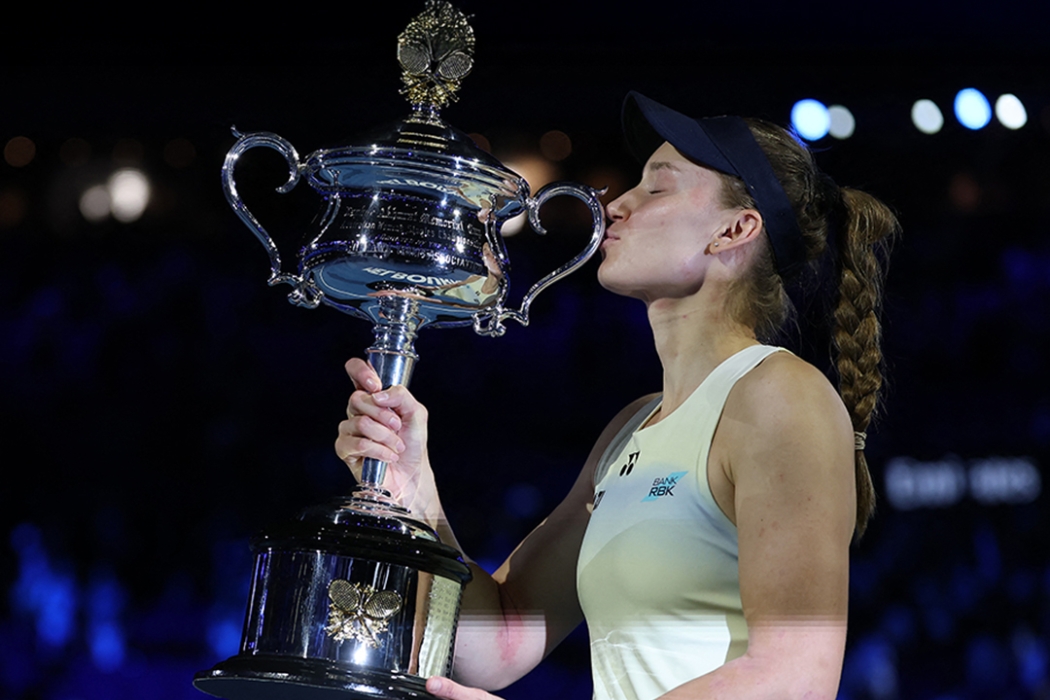
In a match that had dramatic ebbs and flows, Elena Rybakina stood tall when it mattered most to claim her first Australian Open crown.
MORE: Rybakina v Sabalenka match statistics
The world No.5 was rewarded for a strong finish to the 2025 season and a fast start to 2026 with a maiden hardcourt major, a surface where she has won 20 of her past 22 matches.
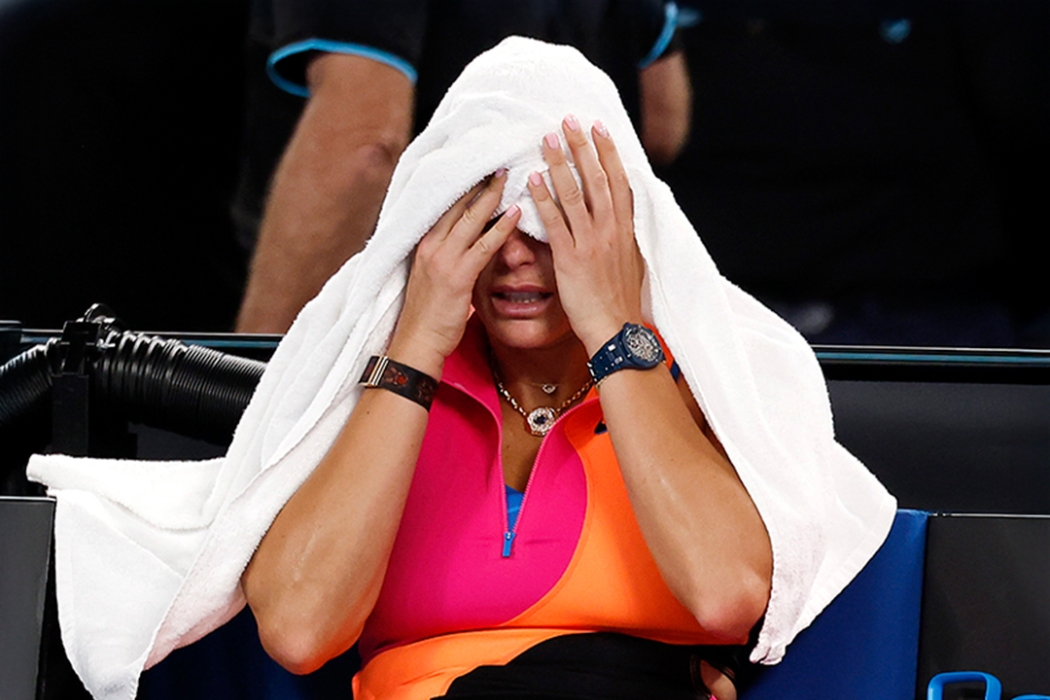
Saturday night’s 6-4 4-6 6-4 triumph over world No.1 Aryna Sabalenka saw the Kazakh record back-to-back victories against the two-time Australian Open winner for the first time since 2023 – Indian Wells and Beijing.
This is how Rybakina won the second Grand Slam title of her career.
Groundstroke speed
It’s no secret that both players are punchy with their groundstrokes, and it was on full display in the AO 2026 women’s singles final.
MORE: AO 2026 women's singles draw
Sabalenka and Rybakina were crunching their shots with pace on both sides of the body, hoping to draw an error from their opponent. While the average speeds were relatively even, Rybakina hit her backhand 5km/h quicker than the world No.1, at an average of 116km/h.
Speed was also telling in the forehand winners category, with Rybakina striking the ball at 126km/h.
Dictating the rally early
Entering this final, the winner was always going to be the player who could swiftly jump on the counterattack, regardless of who was serving.
While Rybakina lost the winners count 35 to 28, a key aspect of controlling play in this match, she dominated in the short rallies. The Kazakh won 79 rallies in four shots or less, compared to Sabalenka’s 72, including 28 in the final set.
This also added to the strength of Rybakina’s serve, quickly forcing errors with perfect service placement. The forced error statistic was won by the player who won each set, with Rybakina ultimately leading the stat 38 to 32
Attacking on serve
With Sabalenka and Rybakina both playing with attacking mindsets, the key to success on Saturday night was to have a strong first serve. In a match where quick service games placed perceived pressure on their opponent, serving was critical.
Like the forced error statistic, the person who won the set also won the bulk of their first-serve points. This helped Sabalenka claim the second set, winning 95 per cent of points on first serve.
However, Rybakina was better for longer. A comprehensive serving performance in the final set, despite being broken at 1-0, saw the AO 2026 champion win 81 per cent of points on her first serve, better than Sabalenka in this statistic by 28 per cent.
Fittingly, Rybakina closed out the match with her sixth ace.
Calm under pressure
Whenever Rybakina faces a difficult task, she shows little outward sign of feeling pressure.
Mental toughness in the tight moments was a point of difference for the 26-year-old, winning 24 pressure points to 15. She also rallied from a 3-0 deficit in the final set to secure victory.
With a ninth triumph against a world No.1 in 15 matches, her winning percentage of 60 per cent is the greatest against the top-ranked WTA player in history, now surpassing Serena Williams – 58.6 per cent – and Steffi Graf – 57.9 per cent.
The staggering aspect of this stat is that of the players with at least a 50 per cent winning record against the women’s world No.1, Rybakina is the only player to have never been a world No.1 herself.
Now climbing to world No.3, could this be a sign of things to come in 2026?